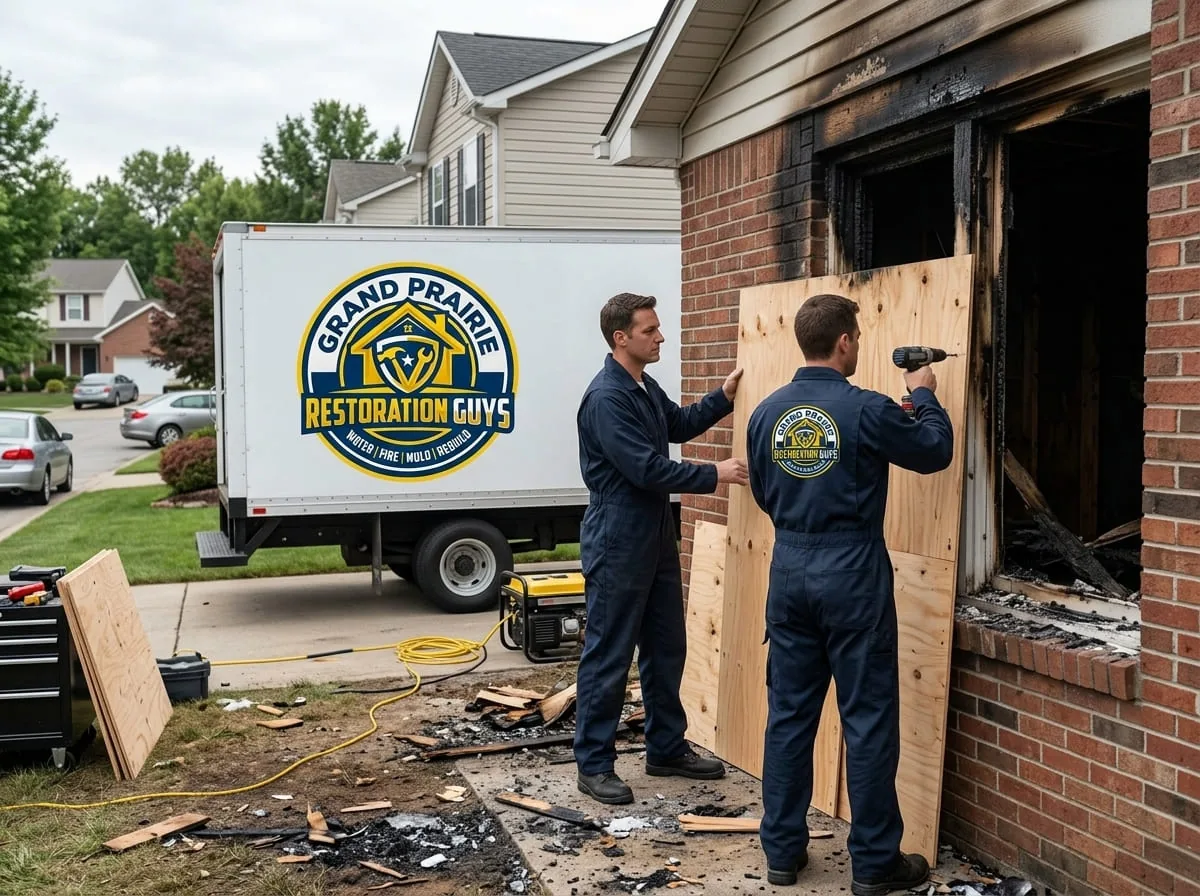
Fire and the firefighting response that follows it often leave a structure physically open — windows broken by heat or venting, doors forced during entry, sometimes a section of roof opened to fight the fire from above. An open structure is exposed to rain, wind, animals, and unauthorized entry, adding a second layer of damage on top of the fire. Board-up and tarping is the fast, temporary fix that closes those openings until permanent repairs begin.
Signs You Need Immediate Board-Up or Tarping
Signs a property needs board-up or tarping right away:
- Broken or missing windows
- Doors that won't close or lock properly
- Any opening in the roof
- Visible daylight through walls or the roofline
This applies even to small openings — wind-driven rain travels further than expected, and even a modest gap is enough for an animal or intruder to get in.
Why This Can't Wait
Weather Risk
Rain through an unsecured roof or window adds new water damage on top of firefighting water that may already be present, and in North Texas a sudden thunderstorm can arrive with very little warning.
Security and Liability Risk
An open property is also a security concern — for a home, that means exposure to theft of remaining belongings; for a business, exposure to inventory, equipment, and liability if someone is injured entering an unsecured site. Board-up and tarping addresses both risks within hours of the initial response.
The Board-Up and Tarping Process
The Response Steps
- Assessment of openings — identifying every point where the structure is exposed, not just the most obvious one
- Window and door board-up — securing openings with plywood or similar materials, fitted and fastened to resist wind and forced entry
- Roof tarping — installing heavy-duty tarps over roof openings, secured against wind uplift, as a temporary weatherproofing measure
- Securing entry points — reinforcing or temporarily replacing damaged locks and access points
- Documentation — photographing the property's condition before and after board-up, which supports the insurance claim
What Board-Up Is (and Isn't)
Board-up and tarping is a temporary, protective measure — meant to stabilize a property against weather and intrusion until proper repairs can begin, not a substitute for permanent window, door, or roofing work. Materials are chosen for how well they hold up over the following days or weeks, not appearance. Once secured, coordinated cleanup — smoke, soot, water, contents — can move forward without the openings making things worse.
Residential and Commercial Board-Up
Homes typically need board-up on windows and doors and tarping over roof damage from the fire or the venting process firefighters used. Commercial buildings often have larger openings, storefront glass, loading dock doors, or multiple entry points, and may need extra security given inventory or equipment inside — see the commercial fire damage restoration page for that context.
Before Help Arrives: What to Avoid
- Don't board up windows, doors, or roof openings yourself, especially in a structure that hasn't been cleared — weakened framing, debris, and electrical hazards make DIY genuinely dangerous
- Don't wait until a storm is already approaching — schedule board-up as soon as the property is cleared
- If safe, photograph the openings from outside before they're covered, for insurance documentation
Frequently Asked Questions
How fast can board-up service happen after a fire?
Restoration professionals connected through Grand Prairie Restoration Guys are equipped for 24/7 emergency response, and board-up or tarping is typically scheduled as soon as the property has been cleared for entry after the fire.
Is board-up a permanent repair?
No — board-up and tarping are temporary, protective measures meant to secure a structure until permanent window, door, or roof repairs can be completed as part of the full restoration and reconstruction process.
Will insurance cover emergency board-up?
Most homeowners' and commercial property policies cover reasonable emergency measures taken to prevent further damage, which typically includes board-up and tarping, though you should confirm specifics with your insurer.
Can I board up my own windows after a fire to save time?
It's not recommended, particularly in a structure that hasn't been officially cleared. Weakened framing, unstable debris, and remaining electrical hazards make this genuinely unsafe to do yourself, even for a seemingly simple opening.
What happens if a property isn't boarded up in time?
An unsecured property is exposed to weather damage, unauthorized entry, and in North Texas, sudden storms that can arrive with little warning — all of which can add new damage on top of what the fire already caused.