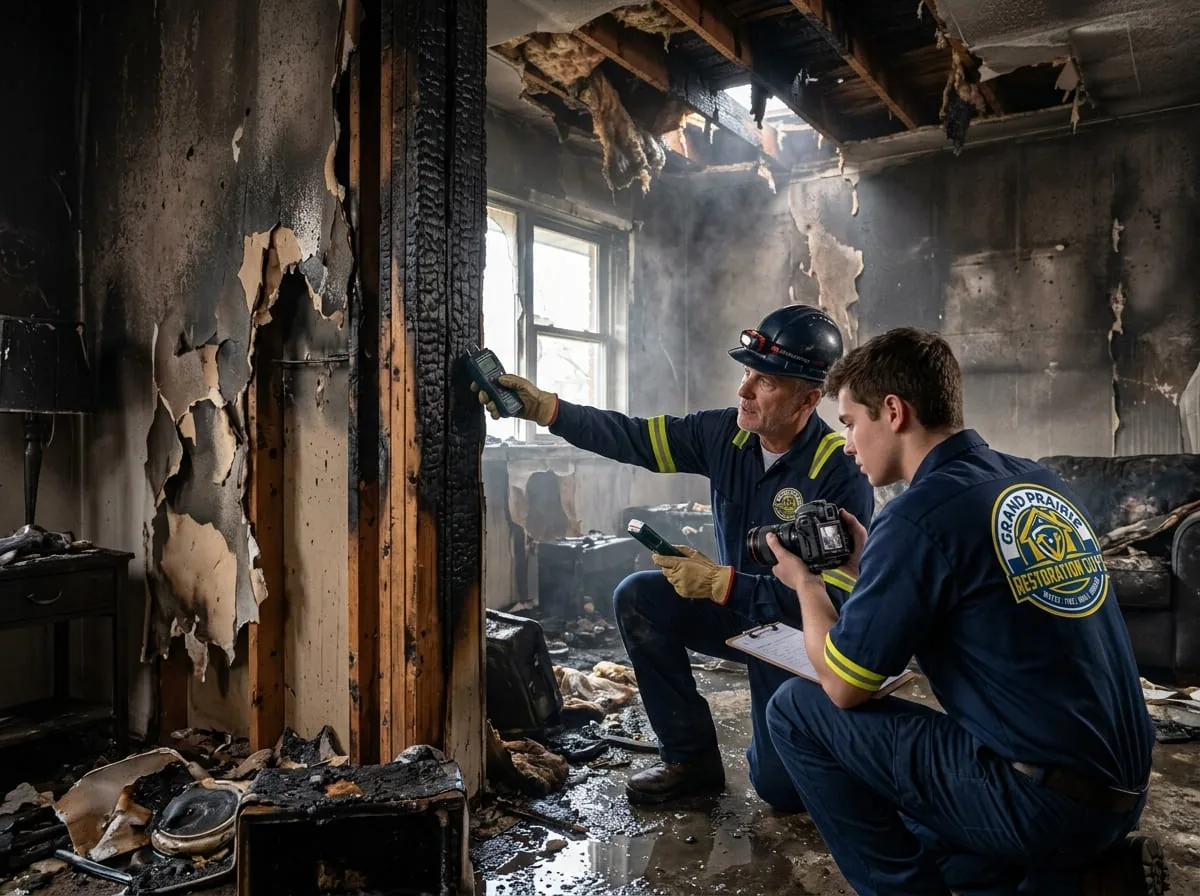
Once the fire trucks leave, a property is often open to weather and break-in, and full of standing water, soot, and smoke residue that keeps causing damage every hour it sits. Emergency fire damage restoration fills that gap — after the life-safety emergency ends but before full cleanup and rebuilding start. It's the difference between a controlled, documented restoration and a property left to deteriorate.
Signs You Need Emergency Restoration Right Now
If a fire department responded to your property — even for a small, contained fire — you likely need emergency restoration, not just cleanup. Watch for:
- Water pooling on floors or dripping through ceilings from hose lines
- Broken windows or a compromised roof letting in rain or intruders
- Smoke odor noticeably stronger than right after the fire
- Soot residue starting to run or smear on walls and surfaces
Any of these means the property needs an emergency response, not a wait-and-see approach.
What Emergency Fire Damage Restoration Involves
The Response Sequence
- Safety and structural check — confirming with the fire department or an inspector that the structure is safe to enter and work in
- Board-up and tarping — securing broken windows, doors, and roof openings against weather and unauthorized entry
- Water extraction — removing standing water left by firefighting efforts before it soaks further into flooring and framing
- Initial soot and smoke assessment — identifying which areas and materials are affected and how severely
- Contents triage — separating items that need immediate attention (like wet upholstery or electronics) from those that can wait
- Documentation — photographing and recording damage to support the insurance claims process
From there, the property typically moves into the phases covered on the smoke damage cleanup, soot removal, and firefighting water damage cleanup pages.
Why Waiting Makes It Worse
Every category of fire damage gets harder to fix the longer it sits.
- Soot is acidic and keeps etching into glass, metal, and painted surfaces.
- Smoke odor migrates deeper into drywall, insulation, upholstery, and wood the longer it's left untreated.
- Firefighting water, often substantial, starts the same mold-risk clock as any other intrusion — one that closes faster in North Texas's hot, humid climate.
A same-day or next-day response keeps these three problems from compounding into a larger, costlier job.
Residential vs. Commercial Emergency Response
For a home, emergency response mainly means stabilizing the property so a family isn't dealing with an open, exposed structure on top of everything else. For a business, it often has to happen alongside insurance adjusters, security concerns for inventory or equipment, and pressure to reopen — see the commercial fire damage restoration page for that side of the process.
Before Help Arrives: What to Do and What to Avoid
What to Do
- Wait for official clearance before re-entering the structure
- Contact your insurance company to start the claims process
- If safe to do from outside, photograph visible exterior damage
- Keep paperwork related to the fire department response
What to Avoid
- Don't re-enter an uncleared structure, even to grab valuables — smoke inhalation, collapse, and electrical hazards remain real risks
- Don't turn on electrical systems, HVAC, or appliances until inspected
- Don't wipe down soot yourself — dry-wiping or the wrong cleaner can grind it in and make professional cleaning harder
Frequently Asked Questions
How quickly can emergency fire damage restoration start?
Restoration professionals connected through Grand Prairie Restoration Guys are equipped for 24/7 emergency response and can typically be dispatched as soon as you call, once the fire department has cleared the property for entry.
Is emergency board-up included in emergency fire restoration?
Yes, securing the property with board-up and tarping is usually one of the first steps in an emergency response, since a fire-damaged structure is often left open to weather and intrusion. See the emergency board-up & tarping page for more detail.
What if the fire only damaged one room — do I still need emergency service?
Often yes, particularly if firefighting water reached other areas, if smoke odor has spread through the HVAC system, or if a window or door was broken to fight the fire. A quick assessment can confirm the actual scope before it's assumed to be a one-room problem.
Will emergency responders document the damage for my insurance claim?
Thorough photo and written documentation is a standard part of an emergency response and is used to support the insurance claims process, though you should also contact your insurer directly as soon as possible after the fire.
What should I not do before the restoration crew arrives?
Don't re-enter an uncleared structure, don't turn on electrical or HVAC systems, and don't try to clean soot yourself — improper cleaning can drive it deeper into surfaces and fabrics.