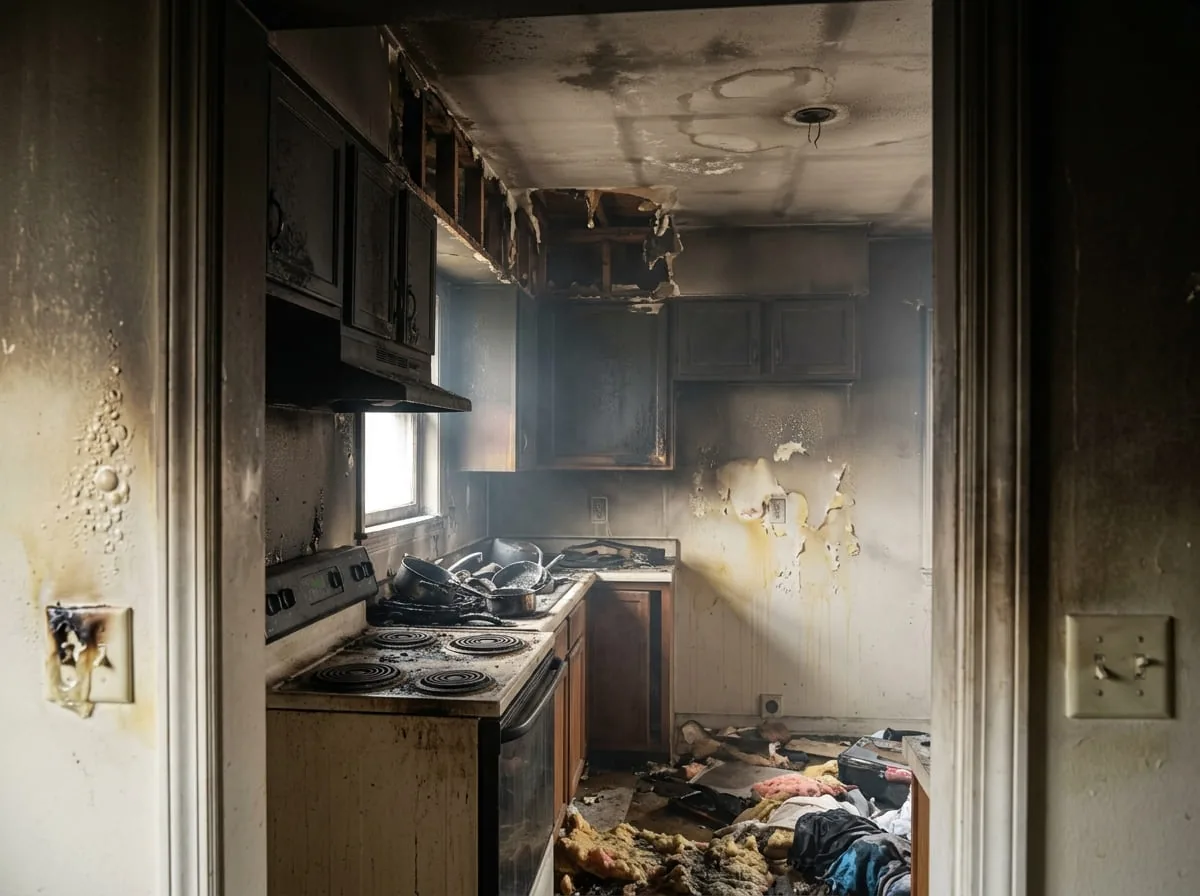
Smoke moves through a building the way air does — up stairwells, through HVAC ducts, under doors, into closets nowhere near the flames. A fire contained to one bedroom can still leave residue and odor in a kitchen two rooms away, or throughout an entire floor. Smoke damage cleanup addresses that spread: the residue, discoloration, and odor left in rooms the fire itself never touched.
Signs of Smoke Damage
Smoke damage isn't always obvious at a glance. Common signs include:
- A persistent smoky smell in rooms away from the fire
- A thin yellowish or gray film on walls, ceilings, or countertops
- Discoloration around air vents and light fixtures
- Fabric or upholstery that smells smoky even after airing out
- A metallic or acrid odor from HVAC vents when the system runs
Because residue is often invisible until it builds up, a professional inspection is more reliable than a visual check alone.
What Causes Smoke to Spread So Far
Several factors drive how far smoke travels: how long the fire burned before extinguishing, what materials were burning (synthetics like plastics and foam produce especially persistent, oily residue), whether the HVAC system was running, and the structure's layout — open floor plans and shared ducts carry smoke much further than a compartmentalized building.
The Smoke Cleanup Process
The Cleanup Sequence
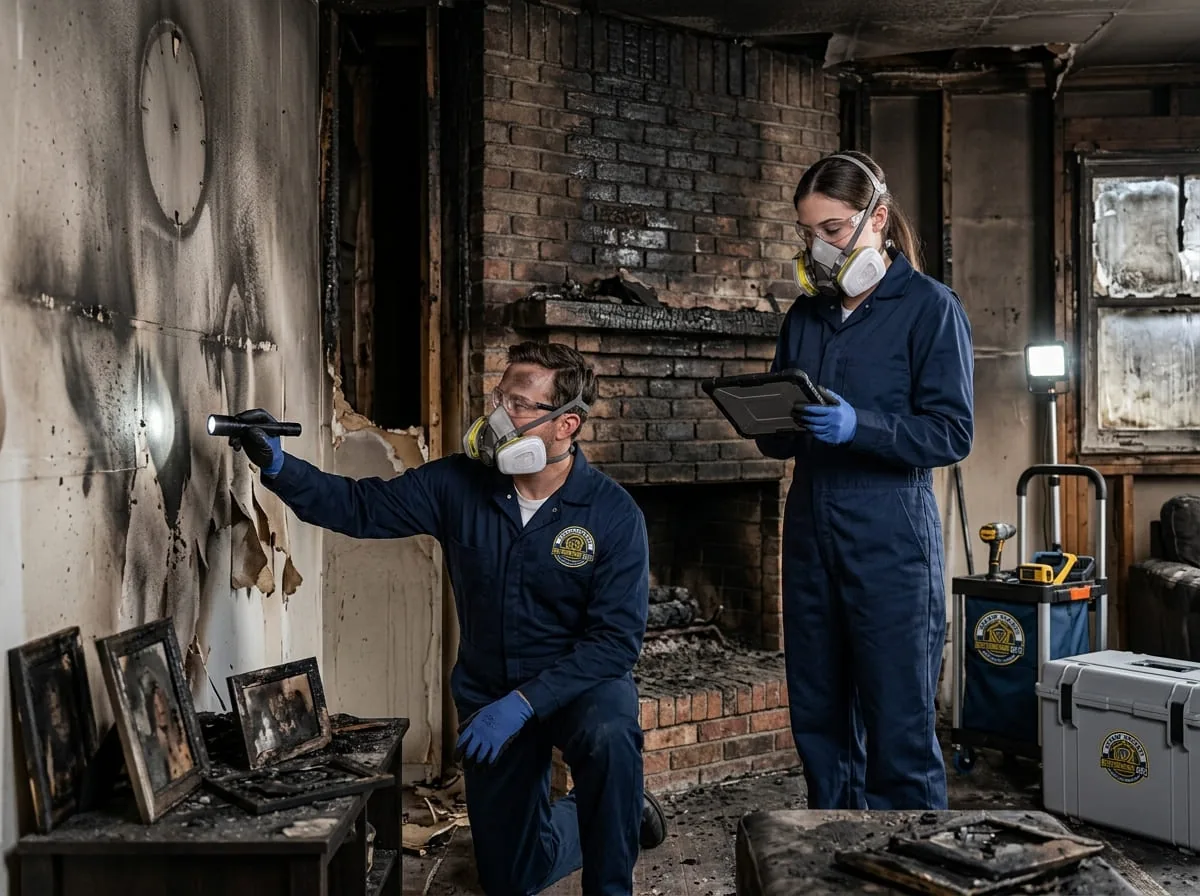
- Inspection and testing — identifying which rooms and surfaces were actually affected, since smoke damage often extends further than it appears
- Ventilation — using air scrubbers and negative air equipment to remove airborne smoke particles and improve air quality before hands-on cleaning starts
- Surface cleaning — cleaning walls, ceilings, trim, and fixtures with methods matched to the surface and residue type
- HVAC and duct cleaning — clearing smoke residue from ductwork and system components so it isn't recirculated once the system runs again
- Odor treatment — deep deodorization once visible residue is cleared, covered in detail on the smoke odor removal & deodorization page
What's Salvageable vs. What's Not
What Usually Cleans Up
Hard, non-porous surfaces — glass, metal, sealed wood, tile, most countertops — clean up well with the right products and technique. Painted drywall often cleans successfully if residue hasn't set in for long.
The Harder Cases
Porous materials are the tougher call: soft furniture, carpet, drapery, and some clothing may need specialized cleaning, and heavy or prolonged exposure can leave some items unrestorable, making replacement more practical. An on-site assessment is the only reliable way to know which category applies — it can't be guaranteed sight unseen.
Residential and Commercial Smoke Cleanup
In a home, smoke cleanup means working room by room, with care around fabrics and areas a family spends the most time. In a commercial building, it has to account for larger HVAC systems, inventory that may have absorbed odor, and documenting the extent of smoke migration for insurance — see the commercial fire damage restoration page for more.
What to Avoid Before Crews Arrive
- Don't wipe smoke residue with a household cleaner or dry cloth — dry-wiping can grind soot in, and the wrong product can set it permanently
- Don't run the HVAC system until it's inspected — it can spread residue to unaffected rooms
- Keep windows closed if outside air quality or weather would make things worse
- Leave detailed surface cleaning to professionals who can match method to material
Frequently Asked Questions
Can smoke damage a room the fire never reached?
Yes. Smoke travels through air, HVAC ducts, and openings under doors, so rooms and even entire floors away from the fire can still show smoke residue, discoloration, and odor.
How do I know if my HVAC system needs to be cleaned after a fire?
If smoke was present anywhere in the structure while the HVAC system was running, the ductwork very likely carried smoke residue into other rooms. A professional inspection can confirm whether duct cleaning is needed before the system is used again.
Will smoke stains come out of walls and ceilings?
Many painted surfaces clean successfully with the right products and technique, especially when addressed promptly. Heavier or longer-standing residue may require repainting after cleaning rather than cleaning alone.
Can smoke-damaged clothing and fabric be saved?
It depends on the material and how much smoke exposure occurred. Many fabrics can be professionally cleaned and deodorized successfully; heavily saturated or delicate items sometimes cannot be fully restored, and that's assessed case by case rather than guaranteed in advance.
Is smoke cleanup covered by homeowners insurance?
Most homeowners' policies cover smoke damage from a fire, though you should confirm the specifics with your insurer. Detailed documentation from the restoration process helps support that claim.