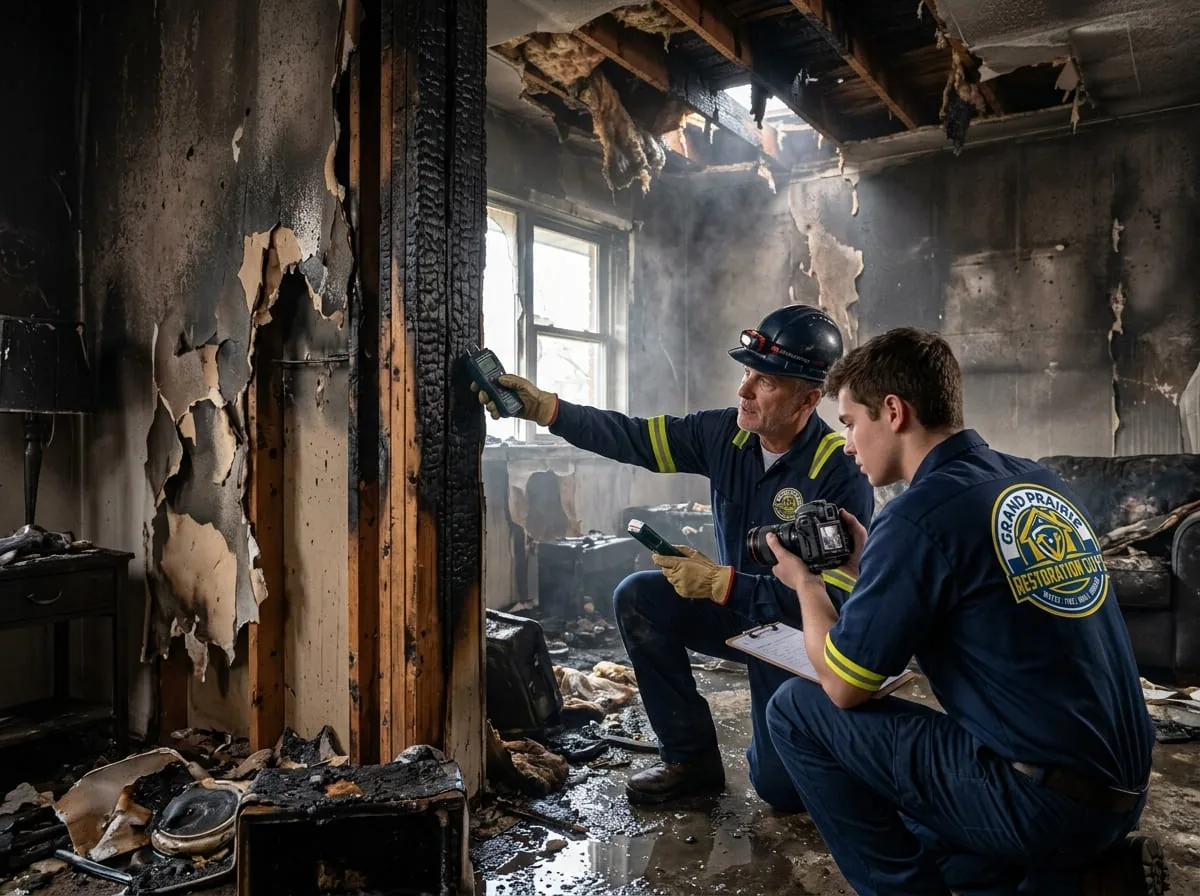
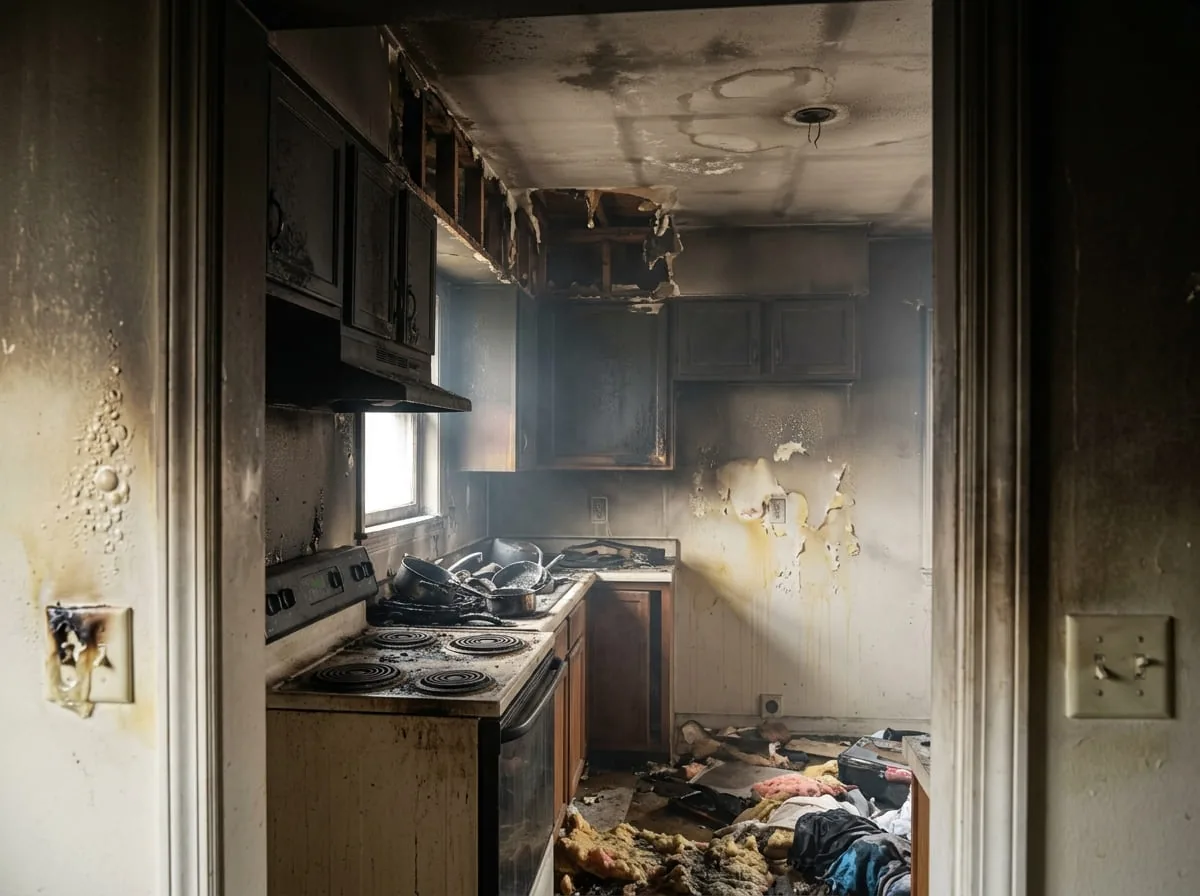
Smoke odor is one of the most stubborn parts of fire damage because the smell isn't on the surface — it's microscopic particles and gases worked into drywall, insulation, framing, carpet padding, and fabric fibers. An air freshener or scented plug-in might mask it for an afternoon, but the odor returns because the source was never addressed. Professional deodorization targets that source directly.
Signs Odor Treatment Is Needed
Warning Signs
A lingering smoke smell days or weeks after a fire — especially one that's stronger on humid days or when the HVAC runs — is the clearest sign. Other indicators:
- Odor that returns after cleaning visible soot and residue
- A smell noticeable in rooms that weren't directly burned
- Fabric, carpet, or upholstery that still smells smoky after airing out or a standard cleaning
If cleaning the visible damage didn't resolve the smell, it has likely penetrated porous materials and needs targeted deodorization.
Why Masking Doesn't Work
Consumer odor products add a competing scent or, at best, a mild deodorizer to the air — they don't reach particles embedded in porous materials or change the chemistry causing the smell. That's why a masked odor tends to come back, sometimes stronger, once the product wears off or humidity releases more particles. Effective deodorization has to neutralize the odor at the source, usually through a combination of methods rather than a single spray-and-done fix.
The Deodorization Process
How Deodorization Works
- Source removal first — cleaning or removing heavily saturated materials, since no odor treatment works well over an unaddressed source
- Thermal fogging — using heat to open the pores of surfaces and carry a deodorizing agent into the same paths smoke particles took
- Ozone or hydroxyl treatment — using specialized equipment to break down odor-causing molecules in the air and on surfaces (used in unoccupied spaces with appropriate safety protocols)
- HVAC and duct treatment — addressing odor trapped in ventilation systems so it isn't recirculated
- Sealing — in cases of deep penetration into wood or drywall, sealing the surface after treatment to lock in the result before repainting
What's Salvageable vs. What's Not
Hard surfaces and sealed materials typically respond well to deodorization. Many fabrics, carpets, and upholstered items can be successfully treated, especially with prompt attention. Items with deep, prolonged saturation — some carpet padding, certain foams, heavily exposed soft goods — sometimes can't be fully deodorized, and replacement becomes more realistic. That's determined during an on-site assessment, since penetration varies a lot by material and exposure time.
Residential and Commercial Odor Treatment
In homes, odor treatment often needs to reach bedding, closets, and HVAC systems that carry smell throughout living spaces. In commercial buildings, odor can affect inventory, office furniture, and larger HVAC systems, and lingering smell after reopening is a real concern for customer-facing businesses — see the commercial fire damage restoration page for more.
Before Professionals Arrive
- Don't rely on air fresheners, candles, or scented sprays — they add another layer of scent that complicates later professional deodorization
- Ventilate the space if it's safe and clear to do so
- Don't attempt DIY ozone treatment — it requires specific safety protocols and equipment settings
- Leave heavily smoke-saturated fabrics for a professional assessment rather than a standard household wash, which often isn't enough
Frequently Asked Questions
Why does smoke odor keep coming back after I clean?
Surface cleaning removes visible residue but often doesn't reach the smoke particles that have worked into porous materials like drywall, insulation, and fabric. Odor from those embedded particles can resurface over time, especially in humid conditions, which is why targeted deodorization is usually needed alongside cleaning.
How long does professional deodorization take?
It varies with how much smoke penetration occurred and which materials are involved. Lighter cases might resolve in a day or two of treatment; deep penetration into framing or extensive fabric saturation can take longer. An on-site assessment gives a realistic timeline for a specific property.
Is ozone treatment safe?
Ozone treatment is typically performed in unoccupied spaces with specific safety protocols, since ozone at treatment concentrations isn't safe to breathe. It's one of several methods professionals may use depending on the situation, applied with the appropriate precautions.
Can carpet and upholstery be deodorized instead of replaced?
Often yes, especially with prompt treatment. Deep or prolonged smoke saturation is the harder case, and whether an item can be fully deodorized versus needing replacement is usually determined during an on-site assessment rather than guaranteed in advance.
Will painting over smoke-damaged walls get rid of the smell?
Not on its own, and in some cases it can trap odor underneath, making the problem harder to resolve later. Deodorizing and sealing the surface properly before repainting gives a more reliable, lasting result.