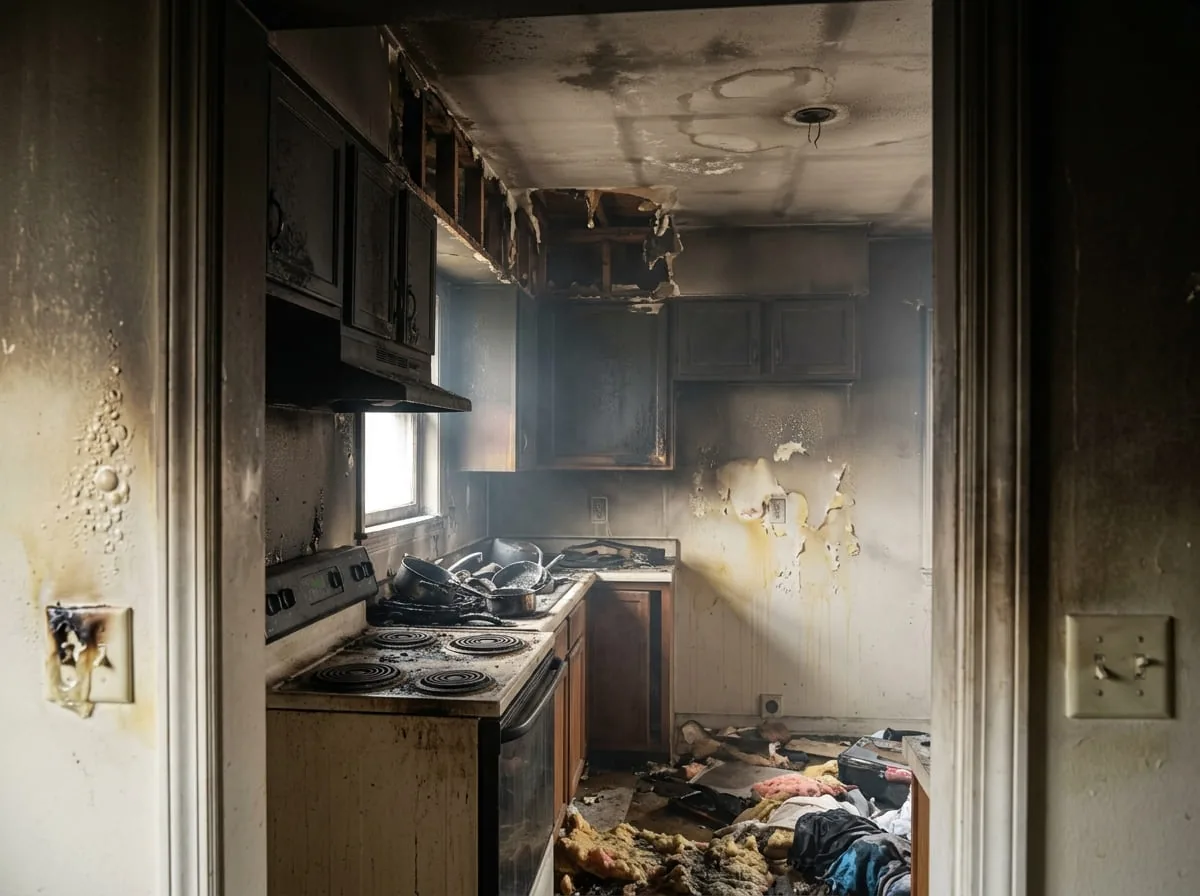
Soot is the fine, dark, often oily particulate left after combustion, and it's chemically different from smoke odor or general debris — it's acidic, so it doesn't just sit on a surface, it reacts with it over time. That's why soot removal is treated as its own step in fire restoration, with its own timeline and techniques, separate from odor treatment or general cleanup.
Signs You Have a Soot Problem
Soot shows up as dark, sometimes greasy residue on walls, ceilings, countertops, and fixtures — usually concentrated near the fire but capable of settling throughout a structure depending on airflow.
- Buildup inside light fixtures and on window glass
- Residue on metal hardware, where it accelerates tarnishing and corrosion
- Soot inside HVAC components
- A slightly gritty or oily texture, tested carefully on an inconspicuous spot
Why Soot Type Matters
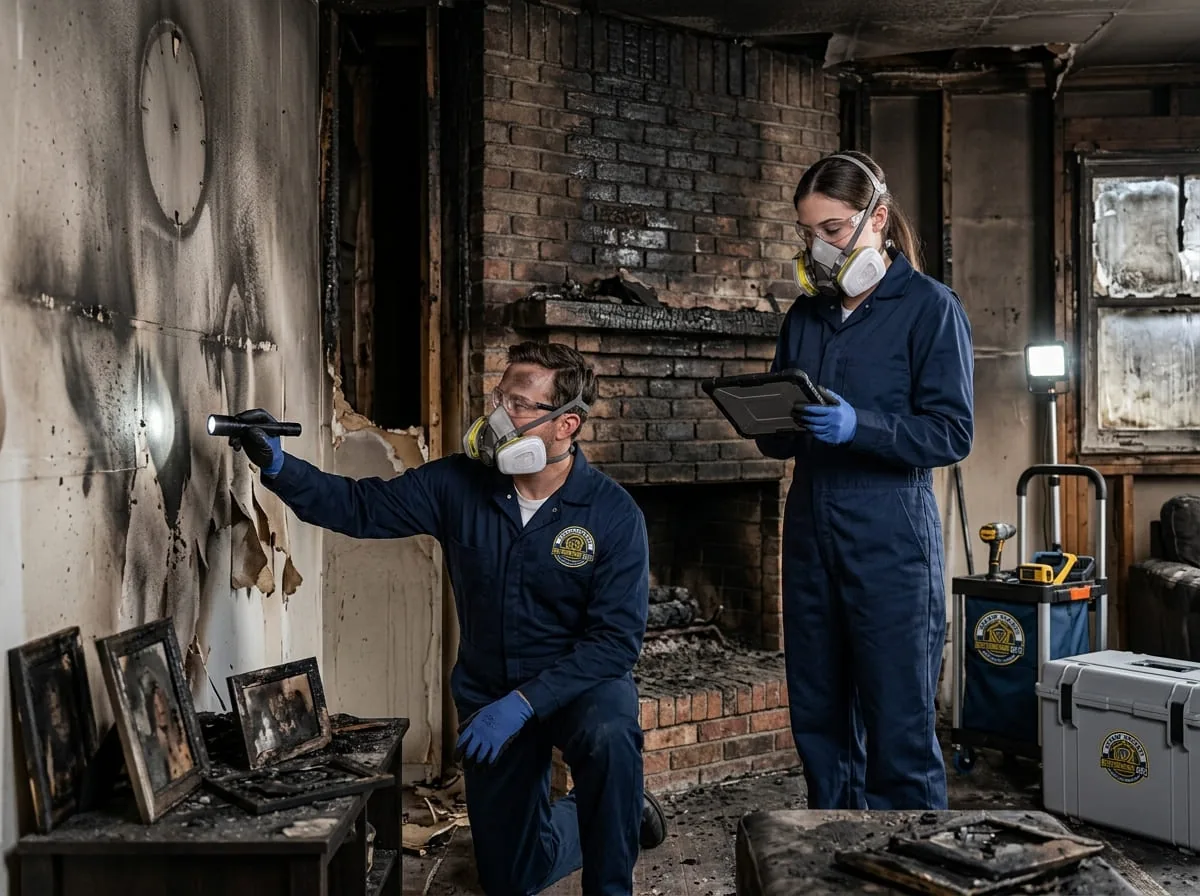
Not all soot behaves the same way, and the type present changes the cleaning method needed.
- Wet soot (from smoldering, low-oxygen fires) is sticky and oily — it smears rather than lifting cleanly
- Dry soot (from fast, hot-burning fires) is powdery and lifts more easily but can still stain if wiped incorrectly
- Protein-based soot (from cooking fires) is often nearly invisible but carries a strong, persistent odor
This is one reason DIY cleanup often makes soot removal harder, not easier.
The Soot Removal Process
The Removal Sequence
- Assessment — identifying soot type and which surfaces and materials are affected
- Dry cleaning first — using dry chemical sponges and specialized tools to lift loose soot before any liquid or moisture is introduced, since water can set some soot types permanently
- Wet cleaning — for residue that dry methods can't fully remove, using cleaning agents matched to the surface and soot type
- HVAC and duct cleaning — removing soot from ventilation systems so it isn't recirculated
- Corrosion check — inspecting metal fixtures and hardware for acid damage from extended soot exposure
What Can Be Saved vs. What Can't
What Cleans Up Well
Hard, sealed, non-porous surfaces — tile, glass, sealed hardwood, most countertops, uncorroded metal — generally respond well to professional soot cleaning. Painted walls and ceilings often clean up if addressed before soot has time to etch in.
The Harder Cases
Unsealed wood, some fabrics, and heavily corroded metal hardware are tougher. Depending on how long soot has sat and how acidic it is, full restoration isn't always possible, and replacement can be more realistic — determined case by case during an on-site assessment.
Residential and Commercial Soot Removal
In homes, soot removal often focuses on living spaces, kitchens (where cooking-fire soot is common), and personal belongings. In commercial buildings, soot can affect larger surface areas, specialized equipment, and inventory — fast response matters especially for electronics and metal fixtures. See the commercial fire damage restoration page for business-specific handling.
Before Help Arrives: What to Avoid
- Don't wipe soot with a wet cloth or household cleaner — moisture can set it permanently into a surface
- Don't use a standard vacuum on soot-covered fabric or carpet — it can grind particles deeper in; a HEPA vacuum used correctly is different from a household unit
- Avoid touching soot-covered surfaces more than necessary — skin oils can also help set residue
- Leave soot-covered walls, fixtures, and belongings for a professional assessment
Frequently Asked Questions
Why is soot removal treated differently from smoke odor removal?
Soot is a physical, acidic residue that etches into surfaces over time, while smoke odor is a separate issue caused by microscopic particles and gases absorbed into porous materials. Both usually need attention, but they call for different techniques, which is why they're often handled as distinct steps.
Can I clean soot myself with household products?
It's not recommended. Wiping soot with a wet cloth or standard household cleaner can set the residue permanently into the surface rather than lifting it, and using a regular vacuum on soot-covered fabric can grind particles deeper in.
How quickly does soot need to be removed?
As soon as safely possible. Because soot is acidic, it continues reacting with surfaces the longer it's left in place, which means delays can turn a cleanable surface into one that needs replacement.
Does soot damage metal fixtures and hardware?
Yes — soot's acidity accelerates tarnishing and corrosion on metal surfaces, which is one reason a fast professional response matters for fixtures, hardware, and appliances near the fire.
Is soot removal covered by insurance?
Soot damage from a covered fire is typically included under most homeowners' and commercial policies, though you should confirm the specifics of your coverage with your insurer.