Most homes across Grand Prairie and the wider DFW area sit on a concrete slab, not a crawl space, given the region's high water table and clay soil. But the city's older neighborhoods, built during its aviation-era tract-housing boom of the 1940s–1960s, include genuine pier-and-beam construction with a real crawl space underneath — a different foundation type with a different failure mode, deserving its own page.
Signs of Crawl Space Water Damage
- A musty odor rising up into the living space above
- Floor sections that feel sagging or springy underfoot
- Visible standing water or damp mud when the crawl space is accessed
- Dark staining or soft, rotted spots on wood floor joists
- Noticeably higher humidity in the rooms directly above the crawl space
Why Older Grand Prairie Homes Are More Exposed
- Pier-and-beam framing sits directly over bare or lightly vented ground, with far less separation from soil moisture than a slab
- Original vapor barriers from this era are often missing, degraded, or never installed to today's standard
- The same expansive clay soil that stresses slab plumbing elsewhere can shift piers over time, opening gaps for water and pests
Common Causes
- Poor site drainage or grading that directs rainwater under the house instead of away from it
- Plumbing leaks running along joists beneath the floor
- Flash flooding pushing water under a low-clearance foundation during heavy rain
- Condensation from inadequate crawl space ventilation
Risks of Waiting
Wood rot in floor joists and support beams compromises the structure holding the floor above. Persistently damp wood attracts termites and other pests, a real concern in North Texas. Mold can travel into the living space through gaps, vents, or ductwork, and humid summers accelerate every one of these problems.
The Crawl Space Restoration Process
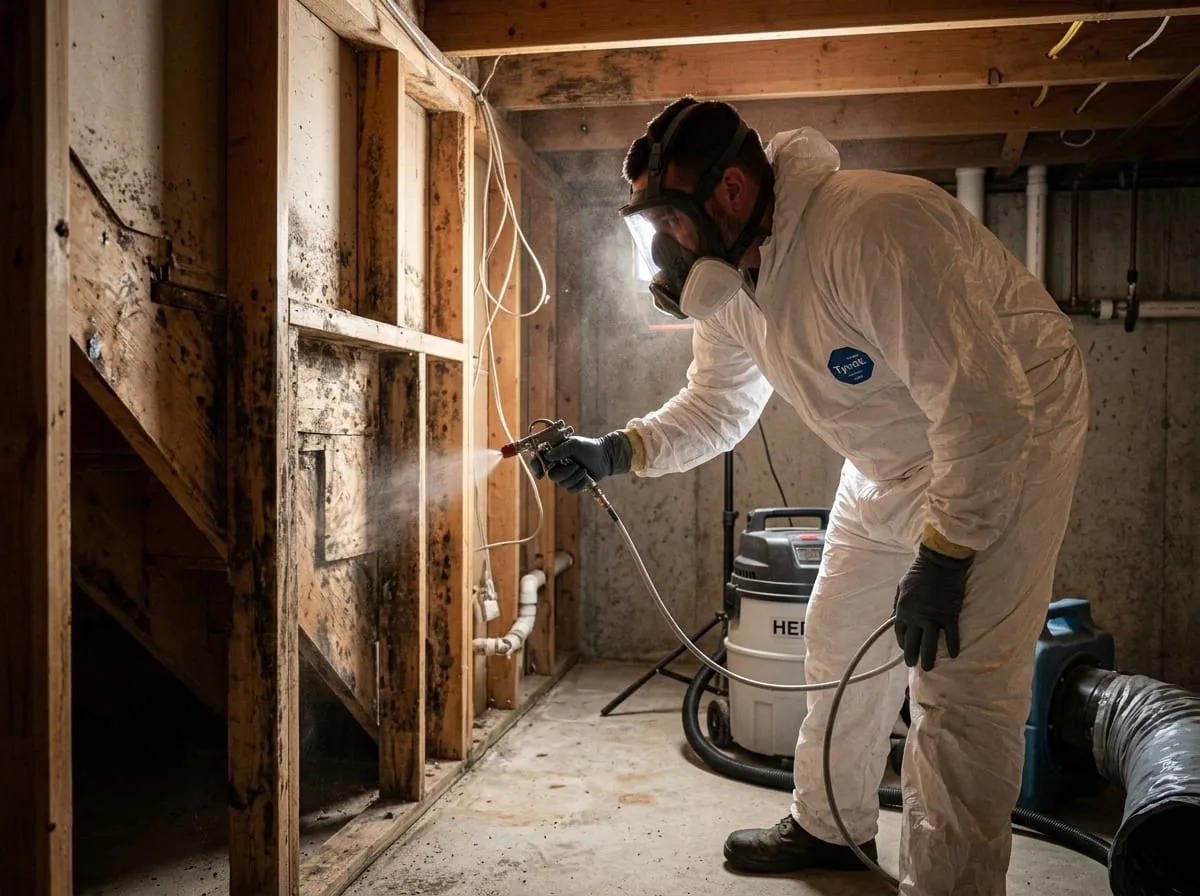
A technician accesses and inspects the crawl space first, then extracts standing water. Saturated insulation is removed and replaced rather than dried. Framing is dried using air movement adapted to the space's limited clearance, since standard equipment placement often doesn't work there. A vapor barrier is repaired or installed where missing, and the underlying water source is addressed so the problem doesn't return.
What's Salvageable
Framing lumber caught with early-stage moisture usually dries out and stays structurally sound. Sections already showing active rot or termite damage need structural repair, not just drying. Insulation is almost always replaced once wet.
Residential Notes: This Is Mostly a Home Issue
Crawl spaces are rare in Grand Prairie's newer slab-built construction, so this is mostly a concern for the city's older housing stock rather than something most commercial properties or newer subdivisions need to think about.
Before Crews Arrive
- Don't enter a crawl space yourself if there's standing water and any doubt about electrical wiring running through it
- Note where you notice moisture or odor from inside the house to help pinpoint the area
- Avoid closing up an access panel on a wet crawl space and assuming it'll dry on its own
Frequently Asked Questions
Does my Grand Prairie home even have a crawl space?
Most homes in Grand Prairie sit on a concrete slab. If your home was built before roughly 1960, or you know it has pier-and-beam construction, it likely has a crawl space; newer homes almost always don't.
How do I know if my crawl space has water damage without going under the house?
A musty odor inside the home, floor sections that feel springy or uneven, and unexplained higher humidity in rooms above the crawl space are all signs worth having checked.
Can a wet crawl space cause mold inside my house?
Yes. Mold and moisture can travel up into living space through gaps, vents, or ductwork that runs through the crawl space.
Is crawl space water damage related to foundation problems?
It can be. The same clay soil movement that causes foundation and slab leak issues elsewhere in Grand Prairie can also shift piers, which is worth flagging to a foundation professional if you see both moisture and structural settling signs.
How is this different from basement water damage?
Basements are rare across the DFW area given the local water table and clay soil, so this isn't a basement issue. A crawl space is a much shallower, ventilated space under the floor, common only in the area's older pier-and-beam homes.