
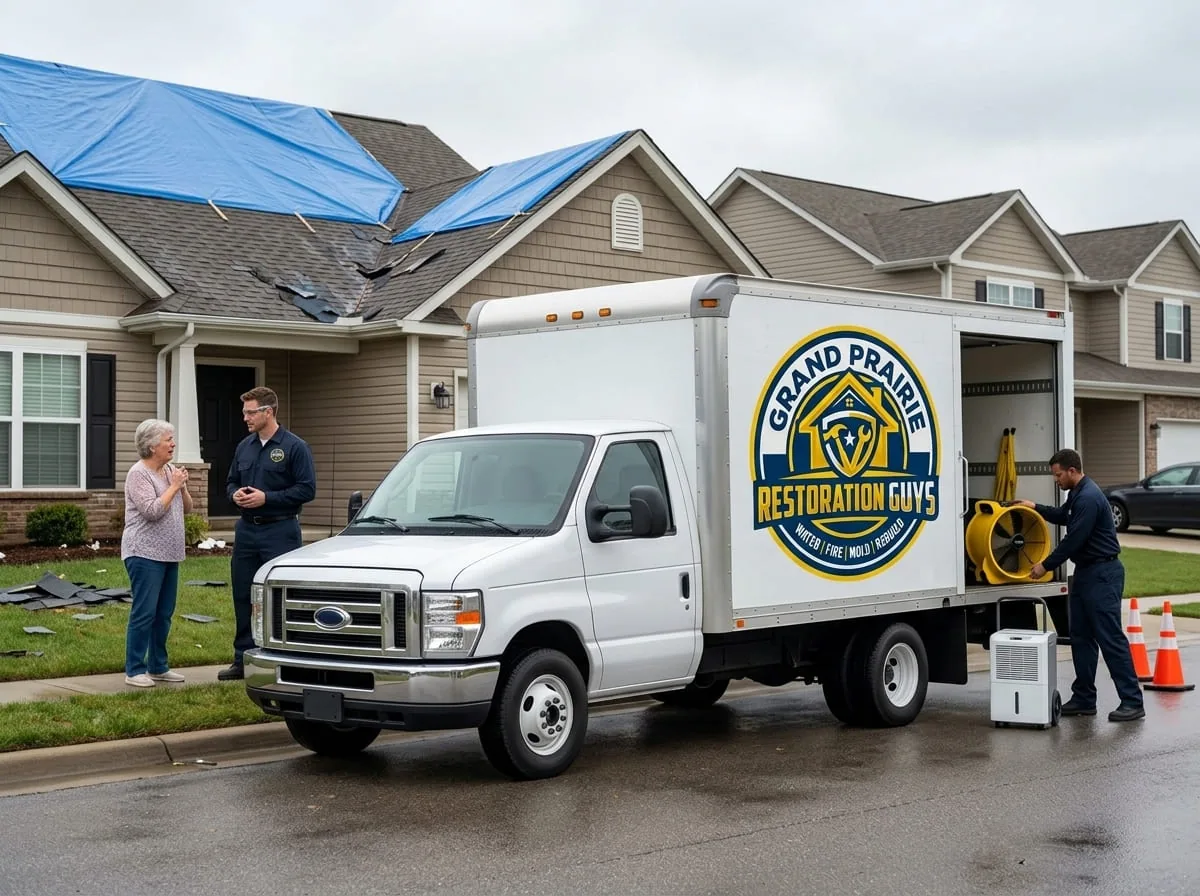
Mansfield has changed more in the last thirty years than almost anywhere else in this part of the Metroplex, growing from a small town straddling the Tarrant, Johnson, and Ellis county lines into one of the fastest-growing suburbs in the southern half of North Texas. Most of what's standing in Mansfield today is genuinely new construction — which matters for water damage, because it changes which risks apply and which ones don't.
New construction doesn't mean no risk, though, and Mansfield sees its share of emergencies: storm-driven flooding, appliance failures, and burst pipes in homes barely old enough to need their first major repair. Whatever the cause, calling (817) 618-7675 gets a restoration crew moving toward you, day or night.
A quick safety note while a crew is on the way: keep clear of standing water anywhere near an electrical outlet, exterior outlet, or an appliance that's still plugged in, and don't drive or walk through flowing water during a storm, even if it looks shallow. If a room has water coming through the ceiling, move anything valuable out of the drip zone and leave the ceiling itself alone until a technician can check it.
Water Damage Restoration in Mansfield, TX
Two Kinds of Water Emergencies
A water damage restoration response in Mansfield usually means one of two things: a storm event that pushed water into a home faster than the property's drainage could handle, or an internal failure — a pipe, a water heater, an ice maker line — inside a home that otherwise looks nothing like the "old plumbing" story that drives a lot of North Texas water damage calls.
The Extraction and Drying Process
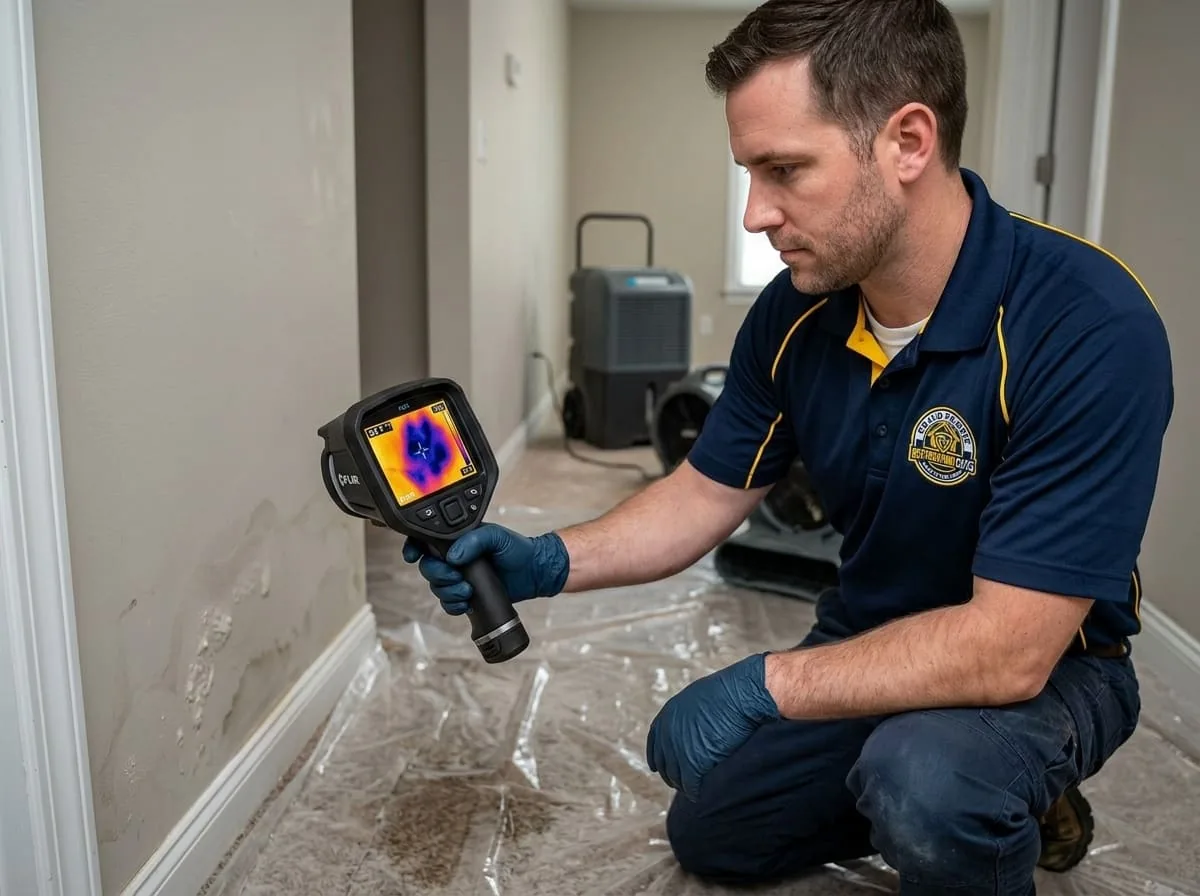
Either way, the process starts the same: water extraction to remove standing water before it soaks further into flooring and drywall, followed by structural drying and dehumidification monitored with moisture meters until the structure reads genuinely dry, not just dry to the touch. For storm-specific events, the flood damage cleanup and storm and rain water damage pages go into more depth on how that response differs from an internal pipe failure.
Check for a Builder's Warranty
One detail that comes up often in newer Mansfield subdivisions: a home built within the past decade can still have a builder's warranty on certain systems, and it's worth checking whether a failure might be a warranty claim before assuming it's purely an insurance matter. That doesn't change the urgency of extraction and drying — water damage doesn't wait for a warranty determination — but it's a genuinely useful thing to flag with your insurer and, where applicable, the builder.
Mansfield's Growth and What It Means for Water Damage
Newer Plumbing, Real Advantage
Mansfield's rapid growth over the past three decades has been driven almost entirely by new suburban subdivision development, and that shows in the housing stock: far fewer mid-century homes than a city like Arlington or Duncanville, and far more construction from the 1990s through today. That newer construction generally means updated plumbing materials — PEX and modern copper rather than the polybutylene piping found in some homes from the 1978–1995 window — which is a genuine advantage for Mansfield homeowners.
Same Soil, Untested Drainage
What newer construction doesn't change is the ground underneath it. Mansfield sits on the same expansive clay soils found across North Texas, and a slab foundation poured five years ago is subject to the same seasonal swelling and shrinking as one poured fifty years ago. Rapid subdivision-scale development also means drainage infrastructure — storm drains, retention areas, graded lots — has had less time to prove itself under a genuinely severe storm than it has in an older, more established city, which is part of why storm-driven flooding is a real and recurring concern here.
A City Still Under Construction
Mansfield's continued build-out also means the city is, in a real sense, still a work in progress — new phases of existing subdivisions and entirely new developments continue to open on what was recently open land, especially toward the city's southern and eastern edges. That ongoing construction means a wider range of "newest" homes than a city that finished growing decades ago, and it's worth remembering that a two-year-old home and a twenty-year-old home in Mansfield can both reasonably be called part of the same growth boom.
Common Water Damage Scenarios We See in Mansfield
A few scenarios come up again and again in a newer-growth suburb like Mansfield:
Typical Causes We See
- Flash flooding during intense storms — North Texas's flat terrain and clay soil shed rainfall quickly, and newer subdivisions with grading or drainage that hasn't been tested by a truly severe storm can see fast-moving water at the foundation line.
- Slab leaks even in newer homes, since expansive clay soil movement affects slabs regardless of the home's age.
- Sprinkler and irrigation system leaks at the foundation, common in newer subdivisions with in-ground irrigation systems installed close to the home.
- Appliance and supply-line failures — washing machine hoses, ice maker lines, and water heater connections, which fail regardless of a home's age.
- Roof and gutter-driven water intrusion after hail or wind-driven storms, a documented regional risk across the Metroplex.
- Grading-related pooling around a foundation where a newly graded lot hasn't settled evenly, occasionally seen in the first year or two after a home is built.
Residential and Commercial Water Damage Response
Residential Response
Residential water damage restoration is the bulk of the work in Mansfield, reflecting the city's largely residential subdivision growth. Crews are equipped for single-family homes across every era of Mansfield's recent construction boom, from the earliest 1990s subdivisions to the newest phases still being built out.
Commercial Response
Commercial water damage restoration covers Mansfield's growing retail and office footprint along its main commercial corridors, where the same extraction-and-drying standard applies to protect flooring, fixtures, and inventory.
As Mansfield's population has grown, so has its retail and service footprint along the main corridors connecting older sections of the city to its newest subdivisions, and that commercial growth is following the same rapid timeline as the residential side. New retail buildings carry the same slab-and-clay-soil risk as new homes, and the same fast response standard applies whether the loss is in a house or a storefront.
Fire Damage Restoration in Mansfield, TX
Standard Fire Response
Fire damage restoration in Mansfield follows the same residential-first pattern as water damage, covering smoke, soot, and odor cleanup after a house fire, along with emergency board-up and tarping after storm or fire damage leaves a structure exposed to the weather — a real concern in a region with frequent severe thunderstorms.
Newer Homes, Faster Spread
Newer homes are not immune to house fires, and modern building materials and open floor plans can actually change how quickly smoke and soot spread through a structure compared to an older, more compartmentalized home. Where a fire causes structural damage, the fire damage repairs and reconstruction page covers the rebuild phase of that work.
Mold Remediation in Mansfield, TX
Mold After a Flood
Because so much of Mansfield's water damage risk is storm-driven, mold after water damage is a particularly relevant service here — a flooded garage or a slow foundation-level leak that isn't caught and dried quickly can develop mold within days during North Texas's hot, humid summers. Residential mold remediation covers the follow-up work when a water event isn't addressed fast enough to prevent it, and mold remediation crews serving Mansfield are equipped to assess and remediate both new and older construction.
New Homes Aren't Mold-Proof
A common misconception in newer homes is that modern construction somehow resists mold better than older construction. It doesn't — drywall, wood framing, and insulation in a brand-new home are just as capable of supporting mold growth as the same materials in a fifty-year-old home once they're wet for long enough. The age of the house has very little to do with it; how long the material stayed wet has everything to do with it.
The Restoration Process, Step by Step
Whether the cause is a storm or an internal failure, the response follows the same sequence:
- Call and dispatch — (817) 618-7675 connects to a 24/7 line covering Mansfield and the surrounding area.
- Assessment — identifying the water source and mapping how far it's traveled with moisture meters and, where needed, thermal imaging.
- Extraction — removing standing water before it soaks further into flooring, drywall, and insulation.
- Drying and dehumidification — air movers and dehumidifiers run until moisture readings confirm the structure is genuinely dry.
- Cleaning and sanitizing — especially important after any storm or floodwater intrusion.
- Repairs or reconstruction — carried out, where needed, by a contractor holding a general contractor licence, from initial extraction through full reconstruction and repairs.
Documentation for Claims and Warranties
For a storm-driven loss especially, photo and moisture documentation gathered during the assessment and drying stages becomes important later, both for an insurance claim and, where relevant, for a conversation with a builder about warranty coverage on a newer home.
Serving Mansfield and Nearby Communities
Coverage extends beyond Mansfield itself into Arlington to the north, Kennedale to the northwest, and Crowley to the west.
Coverage Across Three Counties
Mansfield's position spanning three counties also means response has to work across jurisdictional lines as a matter of course — something the dispatch process is built to handle without adding delay.
That cross-county footprint is also why response times matter more here than the raw map distance might suggest: a call from a subdivision near the Ellis County line and a call from a home closer to the Arlington border are both treated as Mansfield calls, dispatched with the same urgency regardless of which county line they happen to sit closest to.
Frequently Asked Questions
Does newer construction in Mansfield still have slab leak risk?
Yes. Expansive clay soil movement affects slab foundations regardless of the home's age, so newer Mansfield homes are not immune to slab leaks even though they generally avoid older-era plumbing materials like poly-B.
How does storm flooding affect newer subdivisions differently than older neighborhoods?
Drainage systems in newer subdivisions haven't necessarily been tested by a truly severe storm the way an older neighborhood's infrastructure has, so grading and drainage performance can be more of an unknown until a serious weather event actually tests it.
Do you respond to sprinkler or irrigation line leaks at the foundation?
Yes — irrigation and sprinkler leaks near the foundation are common in newer subdivisions and are treated with the same urgency as a plumbing leak, since sustained moisture at a slab edge is still a real risk.
What should I do if my Mansfield home floods during a storm?
If it's safe, move valuables away from rising water and avoid contact with standing water near electrical outlets or appliances. Do not drive through flooded streets. Call us as soon as it's safe to do so, and we'll help you understand next steps.
Can a fast-moving storm cause mold problems even if the water is cleaned up quickly?
It's less likely if extraction and drying happen promptly, but hidden moisture behind baseboards, under flooring, or inside wall cavities can still develop into a mold concern within days during hot, humid North Texas summers if it isn't fully dried, not just visibly wiped up.
Should I contact my builder or my insurer first if a newer home has a water leak?
Get water extraction started first — that's the time-sensitive part. Once the source is identified, it's worth flagging both your insurer and, if the home is still within a builder's warranty period, the builder, so each can weigh in on responsibility for the underlying cause.