
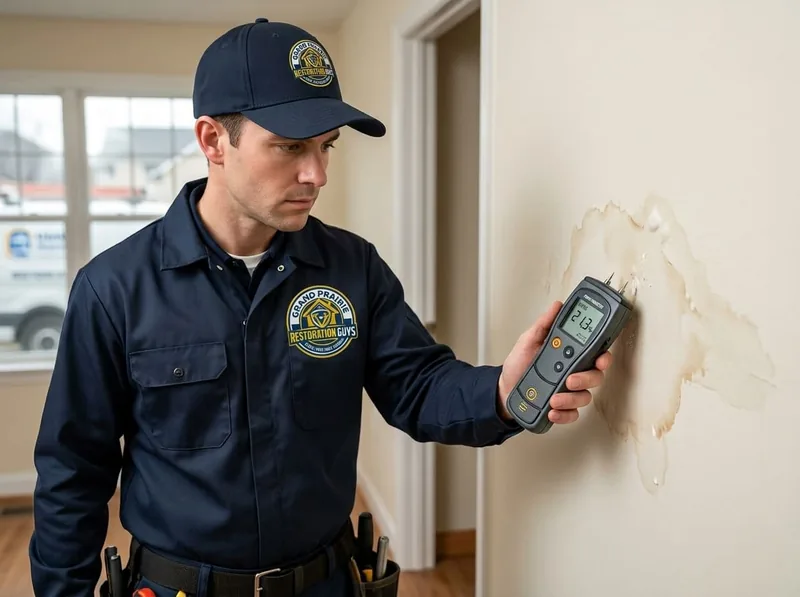
Finding standing water in a hallway, a stain spreading across the ceiling, or a soaked carpet is a moment where panic is tempting and unhelpful. What you do in the first hour affects how much gets saved, how fast drying can start, and whether it's even safe to be there. Below is the order that actually matters.
Step One: Make Sure It's Safe to Be There
Electrical Hazards Come First
If water is pooling near outlets, switches, or an electrical panel, or you see sparking or hear buzzing, don't enter the area. Shut off power at the breaker only if the panel is dry and reachable without stepping into water — if there's any doubt, leave it to a professional.
Contaminated Water Needs Extra Caution
If the water is coming from a toilet backup, a sewer line, or anywhere it may carry waste, treat it as contaminated (Category 3 water). No bare hands, no wading through it, and keep kids and pets out of the area.
Step Two: Stop the Source If You Safely Can
If the water is coming from a supply line, hose, water heater, or fixture, and the shutoff is accessible without wading through standing water, turn it off. Most homes have a main shutoff valve near the front hose bib, in a utility closet, or where the line enters the house — worth knowing before you need it. If you can't safely reach the source, let a restoration crew or plumber handle it once they arrive.
Step Three: Start Removing Standing Water — Carefully
Removing Water Safely
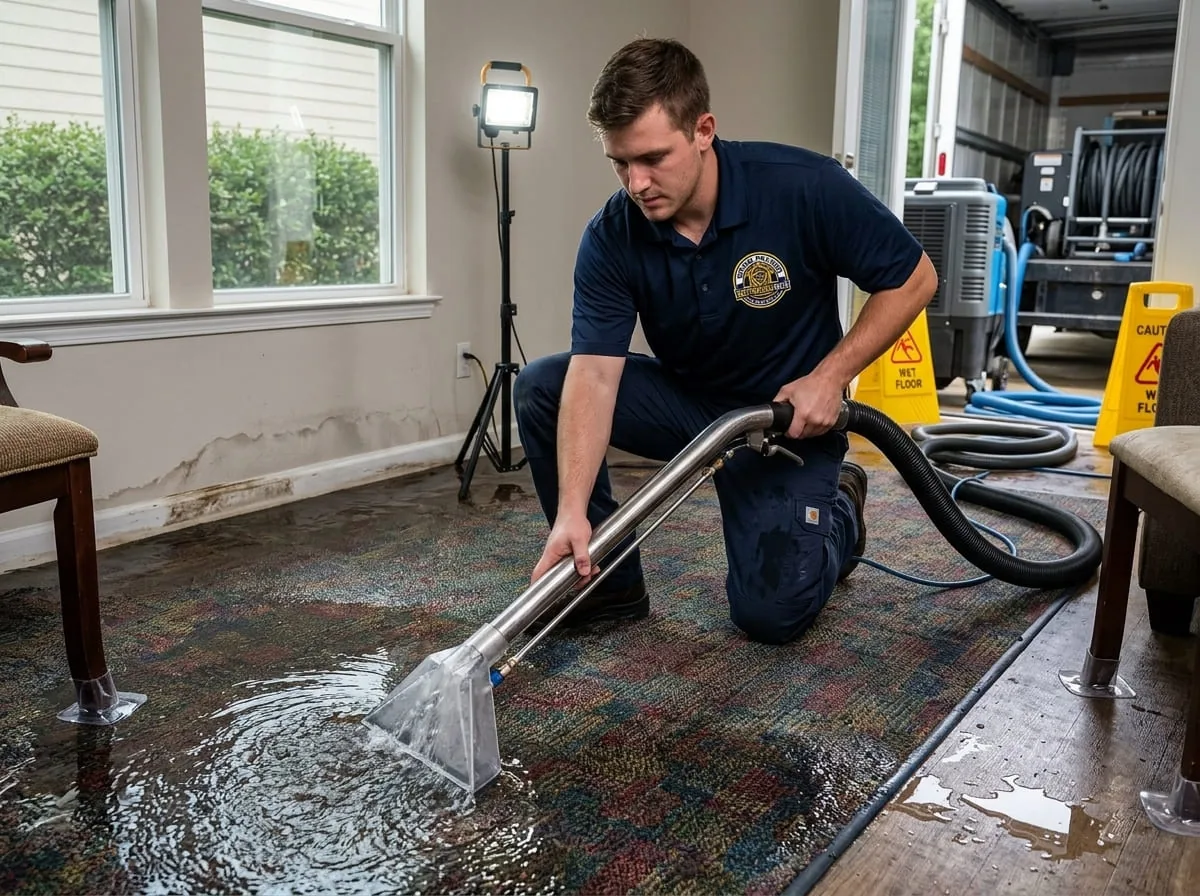
If the area is electrically safe and the water is clean, start removing it with towels, a wet/dry shop vacuum rated for liquids, or by mopping into buckets. Never use a regular household vacuum — it's a shock hazard. Prioritize rooms with hardwood floors, wallboard, or anything sitting directly in water, since those degrade fastest.
When It's Too Much for Towels
If the water covers more than a few buckets or has spread across multiple rooms, this is the point to call in professional water extraction equipment.
Step Four: Move What You Can, Elevate What You Can't
Get furniture legs up on blocks or foil to stop wicking, pull rugs off wet flooring, and move boxes, electronics, and valuables out of the affected area. Don't aim for a perfect job — the goal is limiting what sits in or near water while you wait for help.
Step Five: Document Before You Clean Up Too Much
Take photos and a short video walkthrough before you move furniture or start deep cleanup — wide shots of each room, close-ups of the source, and anything already damaged. It takes five minutes and matters for an insurance claim. The insurance documentation guide covers what adjusters actually look for.
Why the Clock Matters More Than It Feels Like It Does
Materials Absorb Moisture Within Minutes
Drywall, insulation, and subflooring start absorbing water almost immediately, and in North Texas's hot, humid stretches, mold can begin developing in as little as one to two days on porous materials that stay wet. That's why professional drying equipment exists.
See how long water damage actually takes to dry and how quickly mold becomes a concern for specifics.
When to Stop DIY and Call a Professional
Call a professional immediately rather than continuing DIY if:
- The water is from a sewage backup or an unknown source
- Standing water covers more than one room
- The water has been sitting for more than a few hours
- The ceiling is sagging or bulging — stay out from under it
- The affected area includes a crawl space or the walls behind drywall
Professional water extraction and emergency water damage restoration exist for exactly these situations.
Mistakes That Make Water Damage Worse
A few habits tend to cost more than they save:
- Leaving wet carpet "to see if it dries on its own." The padding holds moisture against the subfloor long after the carpet feels dry, extending the mold-risk window.
- Running a box fan and calling it handled. Without addressing humidity, a fan dries the surface while the material underneath stays saturated.
- Waiting for insurance to "approve" mitigation. Most policies expect homeowners to limit damage regardless of claim timing.
- Closing off the room to contain a smell. Without airflow, this raises humidity and accelerates the problem.
What to Tell a Restoration Company When You Call
Having a few details ready speeds up the response:
- Roughly when the water was first noticed
- The suspected source, if known
- Which rooms and floors are affected
- Whether the water appears clean or contaminated
- Any safety concern, like exposed electrical or a sagging ceiling
None of this needs to be exact — a professional will confirm on site — but it helps dispatch the right equipment on the first trip.
Residential and Commercial Situations Differ in the First Hour
In a home, the first-hour priorities above generally apply directly.
What Changes in a Commercial Property
There's more square footage and more people to account for, business equipment and inventory that may need different prioritizing, and building management or a facilities contact who may need to be looped in alongside — or instead of — the property owner. Notifying facilities or property management is generally the first call, right alongside the safety and source-control steps above.
Frequently Asked Questions
Should I call my insurance company or a restoration company first?
Either order works, but don't let one delay the other for long. If the damage is active and spreading, get a restoration professional started on mitigation right away — most insurers expect prompt action to limit damage anyway — and call your insurer the same day to open the claim.
Is it safe to use a hair dryer or space heater to dry a wet area myself?
A fan for airflow is fine in a safe, dry-footed area. Avoid space heaters near wet materials or standing water, and never run electrical equipment in a room with standing water on the floor.
What if I don't know where the water is coming from?
If you can't identify or safely reach the source, don't guess — shut off the main water supply if it's accessible without entering standing water, and let a professional trace the source once they arrive.
How long can I wait before calling someone?
As short as possible. Materials that sit wet for over 24-48 hours are significantly more likely to need replacement instead of drying and restoration, and the mold risk climbs steadily the longer materials stay saturated.
Can I just throw out ruined items right away?
Photograph everything first, then it's fine to discard anything soaked in contaminated water or posing a safety risk. For borderline items, hold onto them until the adjuster or restoration team has seen them if there's room to store them safely.
What if the water damage happened while I was away and I'm coming home to it now?
Follow the same order of operations — safety first, then source control if it's safe to reach, then water removal — even if hours or days have already passed. The steps don't change based on how long it's been, though a longer delay does make a professional assessment more urgent rather than less.