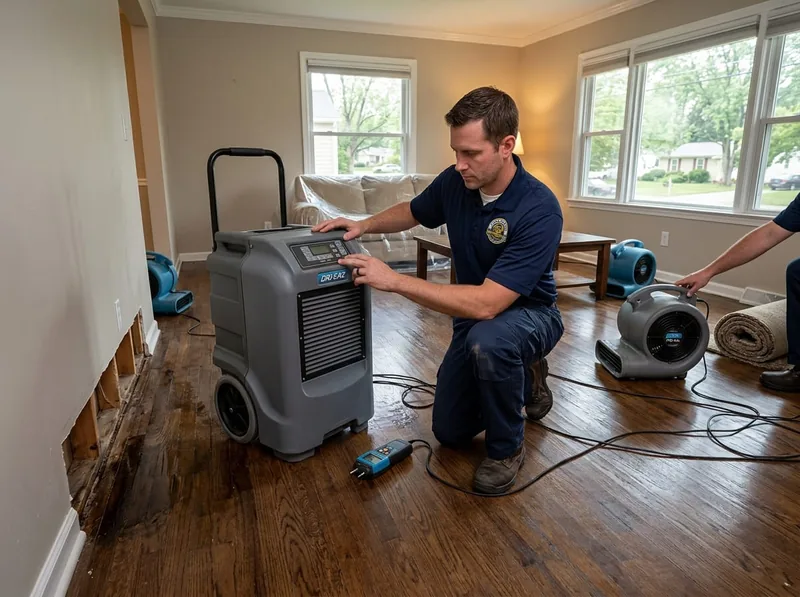
"A few days" is the answer most people get, and it's not wrong — but it's not the whole story. Under normal conditions with professional extraction and drying equipment, most residential water damage dries in three to five days. That number moves, sometimes significantly, depending on a handful of factors worth understanding.
What Actually Determines Drying Time
Five things drive the timeline more than anything else:
- The type of material affected
- How contaminated the water is
- How much of the structure got wet
- Ambient temperature and humidity
- How quickly extraction and drying equipment arrives
Drywall and carpet padding dry faster than solid hardwood, which traps water between layers. A single wet closet dries faster than a flooded first floor, and water addressed within 30 minutes behaves very differently than water left sitting for six hours.
Why North Texas Humidity Adds Time to the Clock
Why Open Windows Don't Help Here
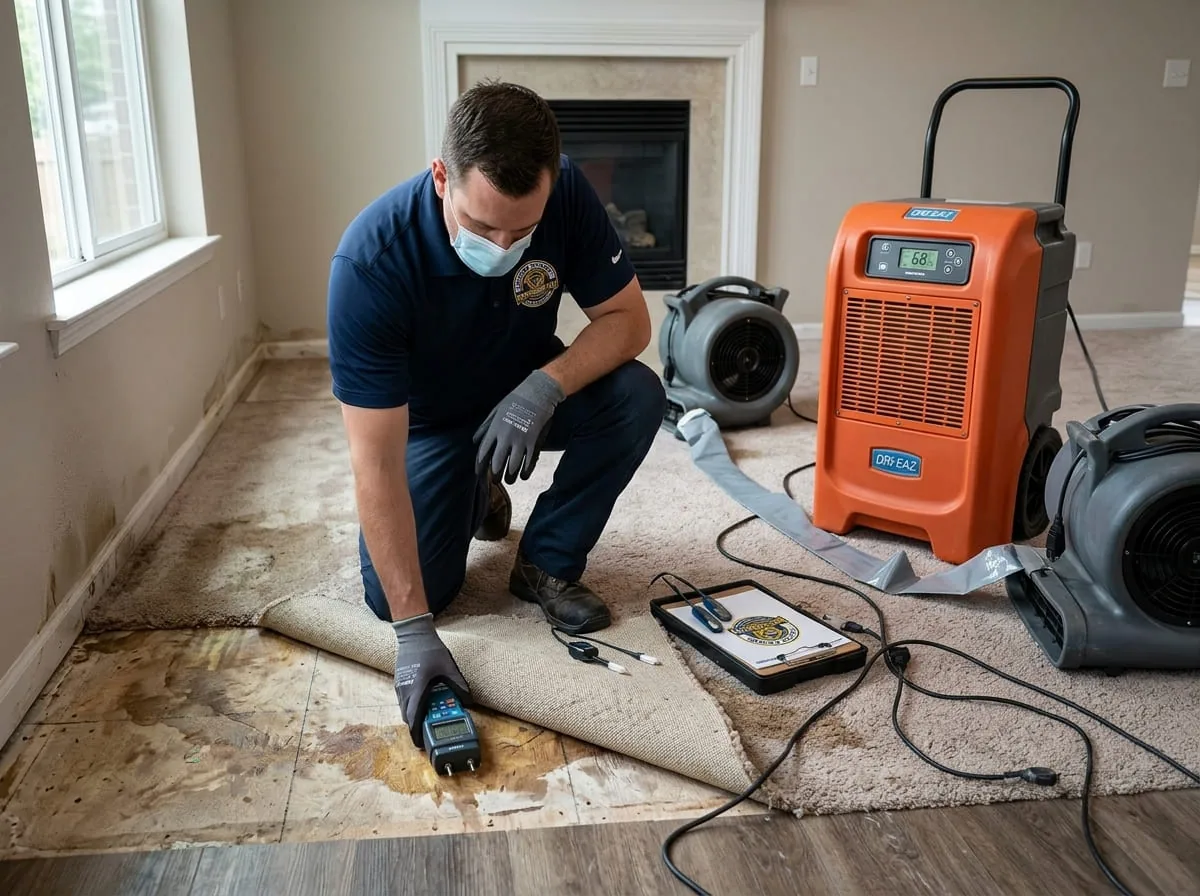
Drying means getting moisture out of materials, into the air, and then out of the building. In a dry climate, opening windows helps. In North Texas's hot, humid summers, outside air often carries as much moisture as the air already inside the room, which is why professional drying relies on commercial dehumidifiers and controlled airflow instead.
It's a regional factor, not a generic one: water damage that dries in three days elsewhere can take noticeably longer here without the right equipment.
How Water Categories and Classes Affect the Process
Categories: How Contaminated the Water Is
Water damage is generally categorized by contamination level: clean water from a supply line, "gray" water from appliances or rainwater, and "black" water from sewage or flooding. Higher-contamination water often means removing materials rather than drying them in place, since some can't be safely sanitized.
Classes: How Far the Water Spread
Separately, the extent and depth of saturation affects how many drying zones are needed — a lightly damp room behaves very differently than one where water has wicked several feet up the walls.
Why Fans and Open Windows Usually Aren't Enough On Their Own
Box fans move air, but moving air isn't the same as removing moisture — once a room's air reaches its moisture-holding capacity, a fan just recirculates humid air across wet materials. Professional structural drying pairs air movers with commercial dehumidifiers to pull moisture out of the air as fast as it's pulled from the walls, floors, and framing. See structural drying and dehumidification for how that works in practice.
Signs an Area Isn't Drying on Schedule
A few signs mean something isn't drying as expected:
- A moisture meter reading that isn't declining day over day
- A musty smell that persists or gets stronger
- Visible warping or buckling in flooring
- A wall that still feels cool and damp a week in
Often the cause is water trapped in a cavity that isn't being actively dried. This is also the point where mold risk starts climbing meaningfully.
What Happens If Materials Don't Dry in Time
Drywall that stays wet too long loses structural integrity and often needs to be cut out rather than dried and repainted — see can wet drywall be saved. Wood flooring can cup, crown, or delaminate permanently, and any material above a certain moisture threshold for more than 48 hours becomes a meaningfully higher mold risk. That's why professional monitoring, not a guess, determines when a job is done.
A Realistic Example
Fast Response: Found the Same Day
A washing machine supply line fails while a family is out, wetting part of a kitchen and hallway before it's found a few hours later. With the source shut off, standing water extracted that evening, and drying equipment running from day one, the flooring and lower drywall typically test dry within three to four days.
Delayed Response: Found Two Days Later
Change one variable: the same leak goes unnoticed over a weekend, sits for 48 hours, and happens during a humid August. The same square footage can now take a week or more to dry, with a real chance some lower cabinetry and baseboard has to be removed. Same leak, same size — a very different outcome, based almost entirely on how quickly it was addressed.
Commercial Spaces Often Take Longer, Not Because of Size Alone
Square footage matters, but building materials and layout matter more — commercial buildings often have more layered flooring assemblies, more electrical and data infrastructure to work around, and less natural airflow than a typical house. Drying a commercial space usually means a more detailed plan with more monitored zones, not just more equipment.
Why Some Rooms in the Same House Dry at Different Speeds
One room in a multi-room water event can dry noticeably faster than the room next to it, which is confusing if you expect a uniform timeline. The explanation is usually one of a few things:
- Different flooring materials absorb and release moisture at different rates
- One room got more water than it looks like from the surface
- Airflow from the drying equipment isn't reaching every corner evenly
- One room's walls have a wet cavity behind them while the other's don't
Why Rooms Are Tracked Separately
This is why professional drying plans track each room or zone with its own moisture readings, rather than treating the whole area as one unit that's either "done" or "not done." A room finished a day ahead of its neighbor just reflects how much water reached each space.
Frequently Asked Questions
Is 3-5 days a hard rule?
No — it's a typical range for a contained residential incident under normal conditions with professional equipment running continuously. Larger areas, contaminated water, or dense materials like hardwood can extend that well beyond a week.
Can I speed up drying by running my home's air conditioning?
Yes, in many cases — central air conditioning dehumidifies as a byproduct of cooling, which can help. It's not a substitute for dedicated drying equipment in the directly affected area, but it can support the overall effort in the rest of the home.
How do professionals know when something is actually dry, not just dry to the touch?
With calibrated moisture meters compared against a dry reference reading taken from an unaffected area of the same material — a wall can feel dry to the touch while still holding moisture well above a safe level inside the material.
Does painted drywall dry slower than unpainted?
Paint and certain wallpapers can slow moisture from escaping through the surface, which can extend drying time and sometimes trap moisture behind the finish even when the surface looks dry.
What if drying equipment has been running for a week and nothing seems to be improving?
That's usually a sign water reached a cavity, subfloor, or material that isn't being directly dried, or that a material needs to be removed rather than dried in place — worth flagging to whoever is managing the drying so the plan can be adjusted.
Does turning drying equipment off early to save on rental cost ever make sense?
It's rarely worth the risk — stopping before a monitored moisture reading confirms the material is actually dry tends to leave a hidden problem that costs far more to fix later than the extra day or two of equipment runtime would have.