Duncanville is one of the more settled, fully built-out suburbs in this part of North Texas — a first-ring community south of Dallas that did most of its growing decades ago and has stayed a stable, mature residential city ever since. That's a good thing in most respects. It also means a lot of Duncanville's housing stock, and the plumbing and fixtures inside it, is old enough that age-related failures are a routine, not rare, cause of water damage calls.
A water heater that finally gives out, a supply line that's been quietly corroding for years, a slab leak that's been running long enough to spike a water bill — these are the calls that come out of an established neighborhood like Duncanville, and they don't wait for a convenient hour. (817) 618-7675 is answered 24/7.
One safety note before a crew arrives: don't handle a sewage backup without protective gear, and steer clear of any standing water near an electrical outlet, extension cord, or plugged-in appliance. If a water heater failure involves gas, shut off the gas supply to the unit if it's safe to reach, and leave the rest to the technicians.
Water Damage Restoration in Duncanville, TX
Finding the Real Source
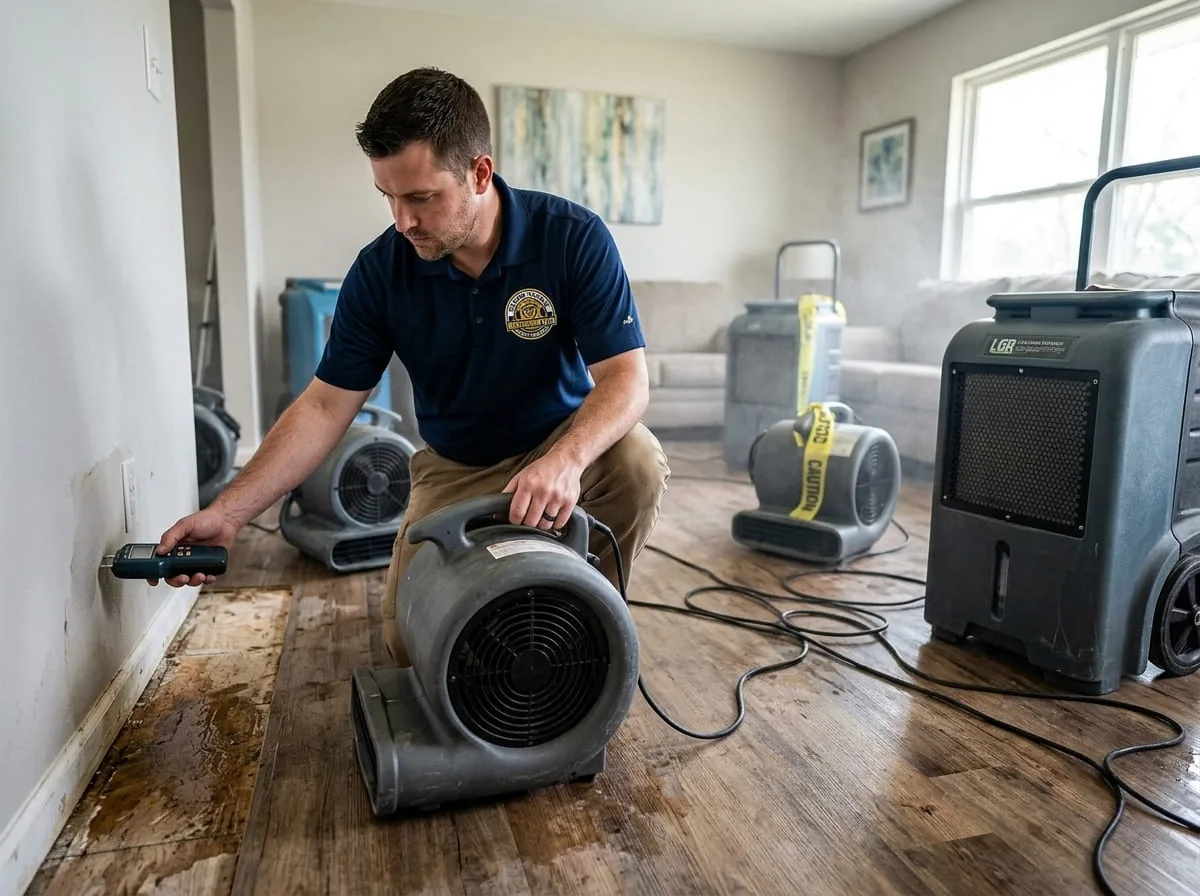
Water damage restoration in a mature suburb like Duncanville is often, though not always, a story about age — an aging water heater, an aging supply line, aging appliance hoses — and the response is built around finding the actual source quickly, not just addressing the visible puddle. Water extraction removes standing water fast, but the more important part of the job in an older home is often the structural drying and dehumidification phase that follows, since water in a home with decades-old subfloor and framing can travel and hide in ways a newer home's materials don't.
From Sudden Breaks to Slow Leaks
For sudden failures specifically, the burst pipe water damage page covers what that response looks like step by step, and for the slow, easy-to-miss leaks that are common in older appliances and fixtures, the appliance leak and overflow cleanup page covers that scenario in more detail.
Accounting for a Home's History
There's also a category of calls in Duncanville that doesn't come up as often in newer cities: water damage discovered well after the fact, when a homeowner finally notices a warped baseboard, a musty smell, or flooring that feels spongy underfoot. Because so much of Duncanville's housing stock has been standing for decades, older repairs, past patch jobs, and materials that have already been through one water event aren't unusual, and an honest assessment accounts for that history rather than assuming every home is starting from a clean slate.
Duncanville's Housing Stock and Why Age Matters
A Fully Built-Out Suburb
Duncanville did the bulk of its growing in the decades after World War II, expanding as part of the wave of suburban development that spread out from Dallas through the 1950s, '60s, and '70s. Unlike some of its faster-growing neighbors further south, Duncanville has stayed largely built out since then — there simply isn't much vacant land left for new subdivisions, so most of the city's housing stock is now decades old.
Three Eras, Three Risks
That matters for water damage in a specific, predictable way. Homes from Duncanville's earliest growth era, before slab-on-grade construction became the regional default, occasionally include pier-and-beam construction with a crawl space rather than a slab — a genuine, if less common, feature of some of North Texas's oldest housing pockets. Homes built roughly 1978 through 1995, a large share of Duncanville's stock, commonly used polybutylene (poly-B) supply piping, a material with a well-documented history of premature failure across Texas. And nearly all of Duncanville's homes, whatever their exact age, sit on the same expansive clay soils that drive slab leaks across the rest of North Texas as the ground swells and shrinks with the seasons.
Built to an Earlier Standard
Being part of Dallas County's inner-ring suburban belt also means Duncanville's original building codes, permitting norms, and even common contractor practices reflect an earlier era of North Texas construction — not necessarily worse, just different, and worth a professional eye rather than an assumption based on a newer home's standards. A supply line routed a certain way, or a water heater tucked into a closet with limited overflow protection, made sense by the norms of the time it was installed and is worth understanding on its own terms.
Common Water Damage Scenarios We See in Duncanville
A mature, fully built-out suburb like Duncanville produces a fairly consistent set of water damage calls:
Typical Causes We See
- Aging water heater failures — tank corrosion and fitting failures are common once a unit is well past its expected service life.
- Poly-B pipe failures in homes built roughly 1978–1995, often discovered as a leak behind a wall or under a sink.
- Slab leaks from decades of expansive clay soil movement stressing under-slab supply lines.
- Crawl space moisture issues in Duncanville's oldest pier-and-beam homes, where ground moisture and humidity can affect subfloor framing over time.
- Appliance and supply-hose failures — washing machines, dishwashers, and ice makers with original or aging hose connections.
- Roof-driven leaks after hail, a documented regional risk that shows up more in cities with a higher share of older roofing.
- Sewer line backups from aging clay or cast-iron lateral lines, more common in older residential infrastructure than in newer PVC installations.
Residential and Commercial Water Damage Response
Residential Response
Residential water damage restoration makes up most of the work in Duncanville, reflecting the city's largely single-family residential character. Crews are equipped to handle the full range of Duncanville's housing stock, from its oldest pier-and-beam homes to its more common mid-century and later slab-foundation construction.
Commercial Response
Commercial water damage restoration covers Duncanville's established retail and office corridors, where the same extraction and drying standards apply to protect flooring, fixtures, and inventory from a burst line or roof leak.
Sewer and Drain Backups
Where a sewer lateral or shared drain line backs up, whether in a home or a small commercial space, the response follows the practices covered on the sewage cleanup page — contaminated water requires different handling than clean supply-line water, and that distinction matters for both safety and for what materials can realistically be saved.
Fire Damage Restoration in Duncanville, TX
Fire and Water Damage Together
Fire damage restoration in Duncanville covers standard residential smoke, soot, and odor cleanup after a house fire, along with the water damage that firefighting efforts routinely leave behind — a job covered on the firefighting water damage cleanup page. Older homes with original wiring and older appliances are, in general, a well-documented higher-risk category for electrical fires, which is part of why fire and water response are handled by the same dispatch line here.
Matching Materials in Older Homes
Rebuilding after a fire in an older Duncanville home often means matching new materials to existing construction that may no longer be a standard size or style, a detail the fire damage repairs and reconstruction team accounts for during planning rather than after the fact.
Mold Remediation in Duncanville, TX
Hidden Leaks, Real Risk
A slow leak in an older Duncanville home — behind a wall, under a slab, or in a crawl space — can run for a long time before it's noticed, and North Texas's hot, humid summers shrink the window before that kind of hidden moisture becomes a real mold concern. Mold after water damage is one of the most common mold calls in an established city like Duncanville, and where crawl space moisture is the source, black mold remediation and general mold remediation services address it directly.
Crawl Space Considerations
For homes with a genuine crawl space, the basement and crawl space mold remediation service addresses the specific conditions that make ground-level moisture control different from a mold problem inside living space — ventilation, vapor barriers, and ground moisture all play into it in ways that don't apply above a slab.
The Restoration Process, Step by Step
For an older home, finding the actual source is often the most important step — here's the full sequence:
- Call and dispatch — (817) 618-7675, staffed 24/7 for Duncanville and the surrounding Best Southwest area.
- Assessment — identifying the true source of the leak, which in an older home may not be the same spot as the visible damage.
- Extraction — removing standing water before it soaks further into decades-old subfloor and framing materials.
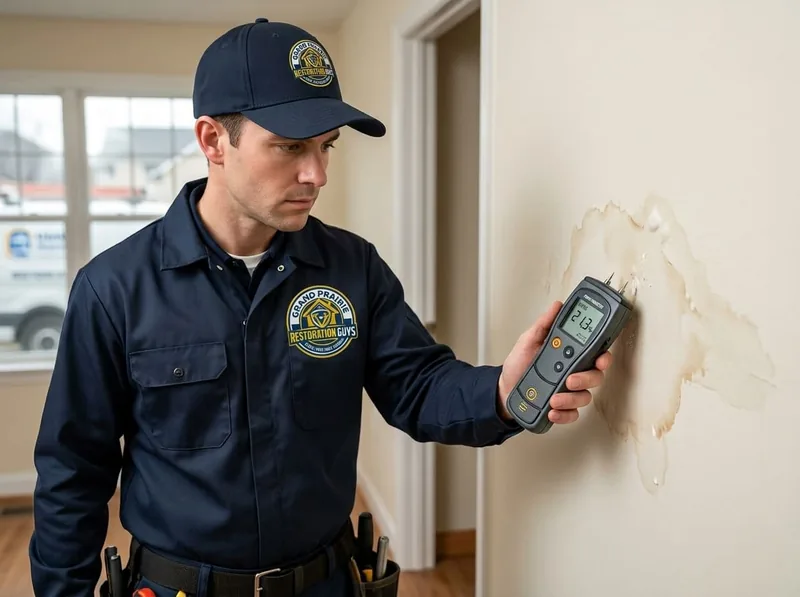
- Drying and dehumidification — monitored with moisture meters until the structure reads genuinely dry.
- Cleaning and sanitizing — especially important where crawl space moisture or contaminated water is involved.
- Repairs or reconstruction — carried out, where needed, by a contractor holding a general contractor licence, from initial extraction through full reconstruction and repairs.
Flagging What Else Needs Attention
In an older home, the repair step sometimes uncovers a second issue behind the first — a supply line replaced decades ago with a fitting that's now also failing, or subfloor that was already weakened before the current leak started. Flagging that kind of finding honestly, rather than only patching what caused today's call, is part of doing the job right in a mature housing market like Duncanville.
Serving Duncanville and Nearby Communities
Response extends throughout the Best Southwest area, including Cedar Hill and DeSoto to the south, and Lancaster to the southeast.
A Familiar Corridor
These four cities share a similar growth history and a similar housing-age profile, which means a crew working this corridor sees the same aging-infrastructure patterns repeat from one city to the next.
That familiarity works in a homeowner's favor: restoration professionals working this corridor regularly see the same era of construction, the same generation of plumbing, and the same soil behavior repeat from one of these cities to the next, rather than encountering it for the first time.
Frequently Asked Questions
Do older Duncanville homes really still have poly-B plumbing?
Many do. Homes built roughly 1978 through 1995 across Texas commonly used polybutylene supply piping, and Duncanville has a meaningful share of housing stock from that window. It's a recognized risk factor to be aware of, not a guaranteed failure.
Does Duncanville have homes with crawl spaces, or is it all slab foundations like the rest of DFW?
Most of Duncanville, like the rest of North Texas, is built on concrete slab foundations. However, some of the city's oldest housing stock, predating the regional shift to slab-on-grade, does include genuine pier-and-beam construction with a crawl space.
How do I know if a leak is from a slab issue versus an appliance?
That's exactly what the initial assessment is for — moisture meters and, where needed, thermal imaging identify the actual source rather than guessing based on where water is visible.
What should I do before a crew arrives if my water heater fails?
If it's safe to do so, shut off the water supply to the tank and the power or gas to the unit. Avoid standing water near any electrical outlets or cords, and don't attempt to move a heavy, saturated water heater on your own.
Can an old crawl space leak cause mold without any visible water damage upstairs?
Yes. Moisture trapped in a crawl space can affect subfloor framing and insulation for a long time before it's noticeable inside the living space, which is why a musty smell or unexplained humidity is worth having checked even without visible staining.
What should I do if I suspect a sewer line backup instead of a clean-water leak?
Keep people and pets away from the affected area and don't attempt to clean it up yourself — sewage carries contaminants that require protective equipment and proper handling. Call us and describe what you're seeing so the response can be equipped correctly from the start.