Mold rarely shows up on its own. In most Grand Prairie homes and businesses, it follows a water problem that went unnoticed or wasn't dried out fast enough — a slow slab leak, a burst supply line, a storm-driven roof leak, or a humid crawl space under an older pier-and-beam house. This hub covers the mold-related services available through this site, from inspection and testing through remediation and final clearance.
Every call is routed to experienced restoration professionals serving Grand Prairie and the surrounding North Texas communities, available around the clock for emergencies and scheduled inspections.
Why Mold Shows Up in Grand Prairie Properties
Clay Soil, Slab Leaks, and Storm Flooding
Expansive clay soil movement stresses slab foundations and the supply lines running through them. A slab leak can run for weeks unnoticed — plenty of time for hidden moisture to become a mold problem. Flat terrain and heavy seasonal rainfall can also flood flooring and wall cavities faster than most homeowners realize.
Heat and Humidity Shrink the Timeline
Grand Prairie's hot, humid summers shorten the window between a water event and a real mold concern. A material that stays safe for a week in a drier climate can start growing mold noticeably sooner here.
Local mold triggers typically include:
- Slab leaks and hidden plumbing failures
- Burst pipes, appliance leaks, and roof or window intrusion
- Humid, poorly ventilated crawl spaces under older homes
- Flash flooding and storm-driven rain intrusion
- HVAC condensation and poor humidity control
Mold Remediation Services Available in Grand Prairie
This hub covers eight related services:
- Mold After Water Damage — what happens when a water loss isn't fully dried.
- Crawl Space Mold Remediation — addressing the humid, hard-to-access crawl spaces under Grand Prairie's older pier-and-beam homes.
- Black Mold Remediation — a clear-eyed look at dark-colored mold growth and how it's handled.
- Commercial Mold Remediation — mold response for offices, retail space, and multifamily buildings with minimal disruption.
- Residential Mold Remediation — a whole-home approach for occupied houses.
- Mold Inspection — assessing a property before any remediation plan is proposed.
- Mold Testing & Sampling — air and surface sampling to identify what's present.
- Post-Remediation Verification & Clearance Testing — confirming a completed project meets its endpoint.
Residential and Commercial Mold Remediation
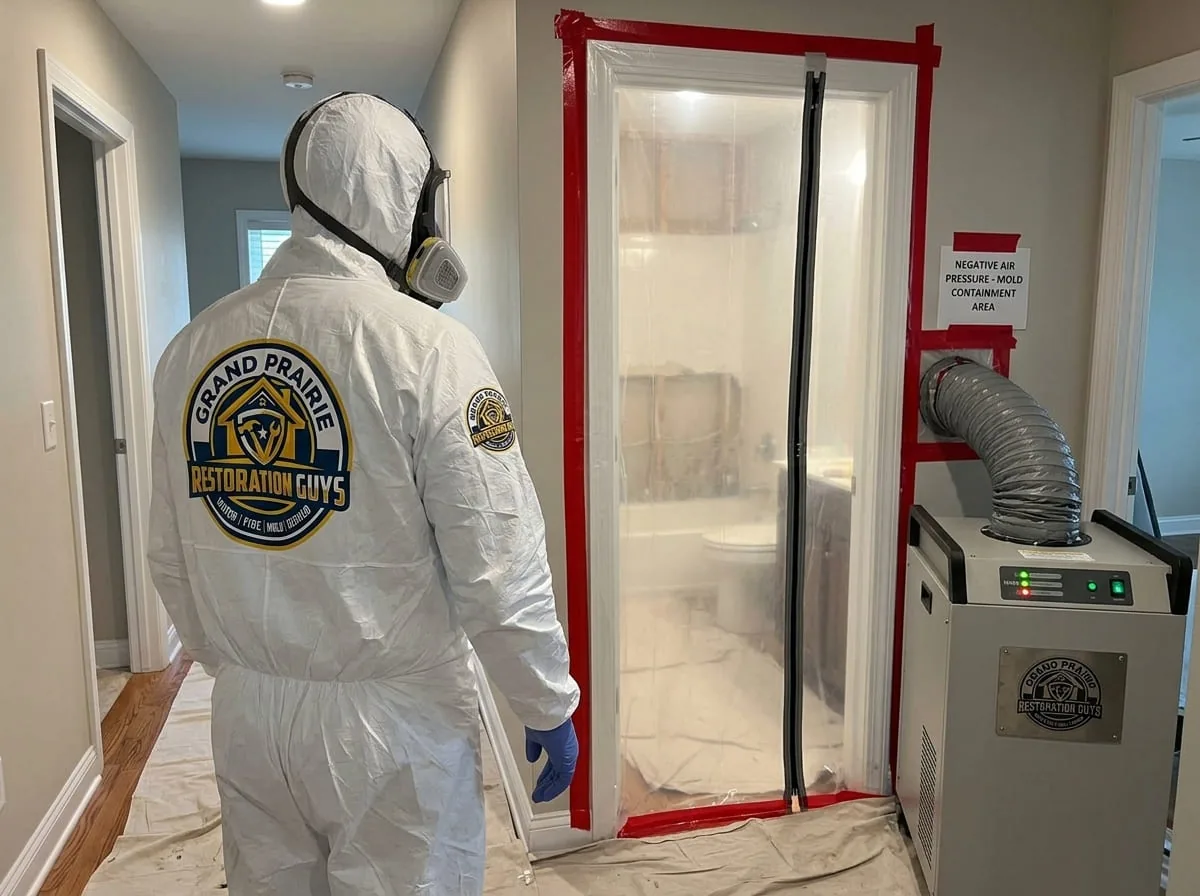
Occupied homes and active businesses need different approaches to the same problem. Residential work focuses on bathrooms, kitchens, attics, and crawl spaces while minimizing a family's disruption. Commercial remediation works around business hours, tenant leases, and larger mechanical systems, with containment built to keep unaffected areas open. Both start the same way: finding and correcting the moisture source, not just the mold.
Mold Remediation Starts With Solving the Water Problem
Because mold here often traces back to a water event, remediation only succeeds long-term when the underlying water damage is also addressed — the leak repaired, the structure dried, and moisture confirmed back to normal. If a burst pipe, slab leak, sewage backup, or storm caused the moisture problem, water damage restoration is usually the starting point, with mold remediation following once the source is controlled.
Frequently Asked Questions
Do I need a mold inspection before remediation, or can remediation start right away?
It depends on the situation. A visible, contained mold problem tied to an obvious, already-fixed water source can sometimes move straight to remediation. A less clear situation — unexplained odors, a suspected but unconfirmed leak, or concerns after a past water event — usually starts with an inspection so the scope of work is based on an actual assessment rather than a guess.
Is mold remediation always an emergency?
Not always. A slow-developing mold problem in a dry season may be scheduled within a few days. A mold situation tied to an active or recent water event is treated with more urgency, since ongoing moisture keeps feeding the problem while it waits.
Can mold remediation happen while my home or business stays occupied?
In many cases, yes, particularly when the affected area can be contained and separated from the rest of the space. The remediation plan should address containment options for occupied residential or commercial properties directly during the inspection stage.
What's the difference between mold testing and a mold inspection?
A mold inspection is a visual and moisture-based assessment of a property. Mold testing adds air or surface sampling, typically used to identify what type of mold is present or to confirm a space is clear once remediation work is finished.
Does homeowners insurance cover mold remediation?
Coverage varies by policy and by whether the mold is tied to a sudden, covered water event versus long-term neglect or a maintenance issue. Documentation from an inspection helps support whichever claim applies to your situation.