
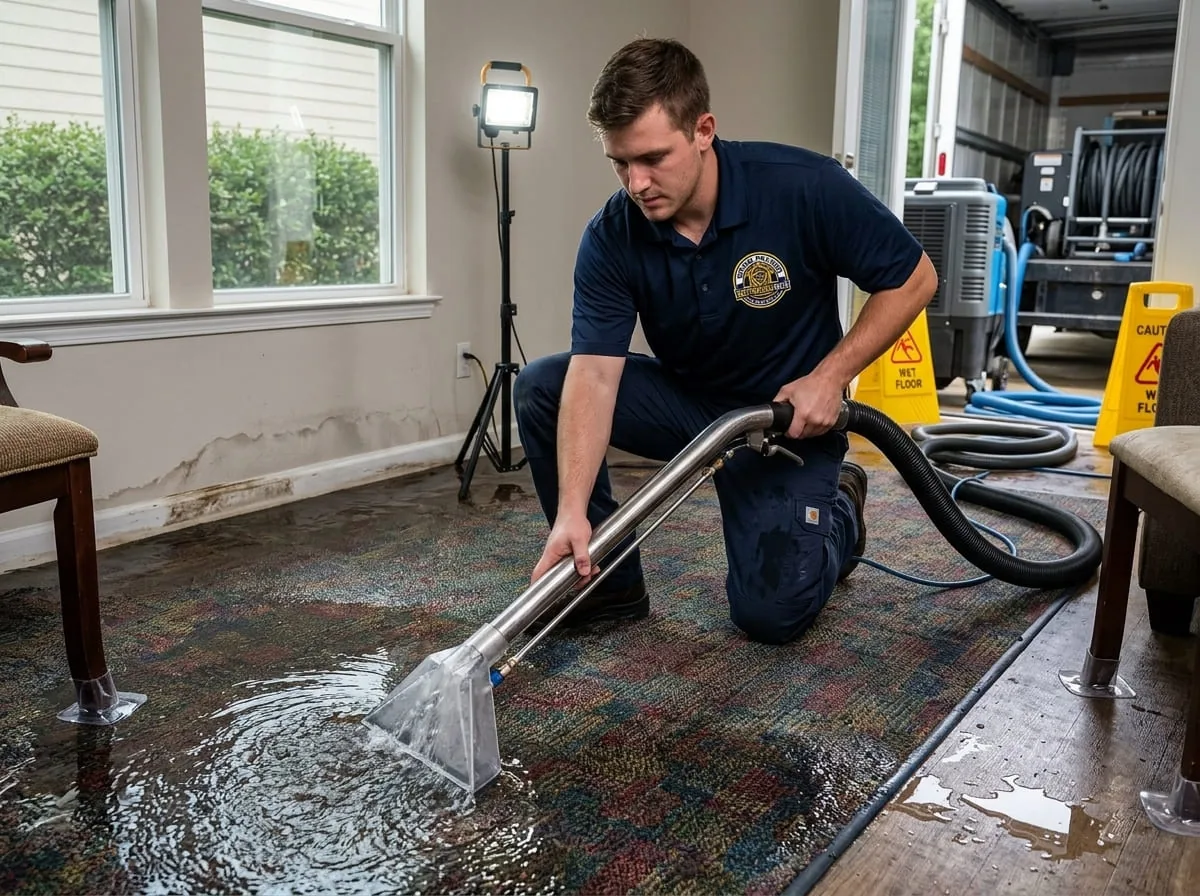
It's one of the more counterintuitive parts of fire damage: the water used to put it out often causes more square footage of damage than the flames themselves. A single hose line can flow over 100 gallons per minute, and a sustained response can leave standing water on multiple floors, saturated drywall and insulation, and soaked flooring in rooms the fire never reached. That water needs the same urgent professional response as any other major intrusion — arguably more urgent, since it lands on a property already stressed by fire and smoke.
Signs of Firefighting Water Damage
Signs that firefighting water needs professional extraction and drying, not just surface mopping:
- Standing water on floors
- Water stains spreading across ceilings or down walls below hose-line areas
- Saturated carpet or padding
- Sagging or bulging drywall and ceilings
- A musty smell developing within a day or two
Why This Is Genuinely a Water Damage Problem
Same Water, Same Risk
Firefighting water behaves exactly like any other major water intrusion once the fire is out — it soaks into subfloors, wicks up drywall, pools in crawl spaces, and creates the same mold risk as a burst pipe if it isn't extracted and dried properly.
Where to Learn More
This is closely related to the damage covered on the water damage restoration hub, particularly water extraction & water removal and structural drying & dehumidification. The only real difference is the cause — a hose instead of a pipe or storm; the response afterward is nearly identical.
The Cleanup Process
The Cleanup Steps
- Water extraction — removing standing water with truck-mounted or portable extraction equipment as quickly as possible
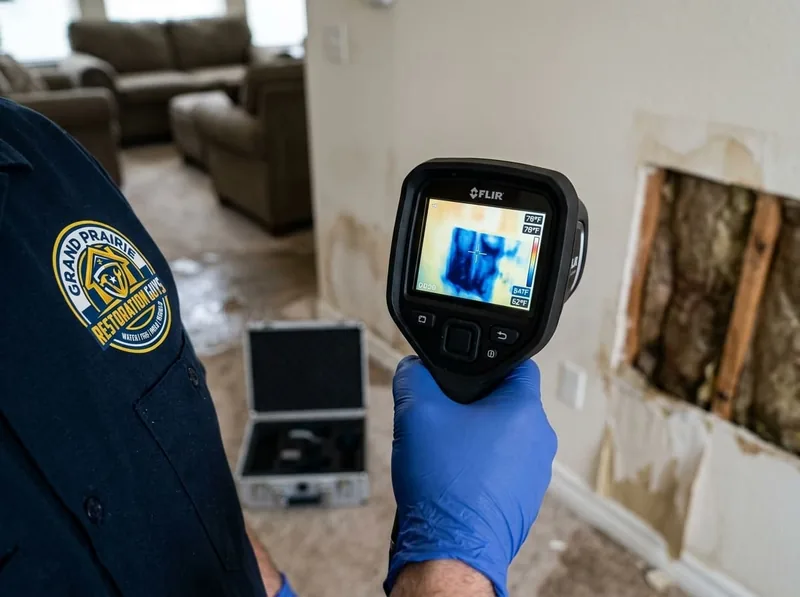
- Moisture mapping — using moisture meters and often thermal imaging to find water that has migrated into walls, subfloors, and other hidden areas
- Structural drying — placing air movers and industrial dehumidifiers to dry framing, subfloor, and drywall from the inside out, not just the visible surface
- Monitoring — checking moisture levels over several days to confirm materials are actually dry before closing up walls or flooring
- Contamination check — since firefighting water can pick up soot, ash, and debris on its way through a structure, it's often treated with more caution than clean water
What's Salvageable vs. What's Not
What Often Dries Successfully
Hard flooring, sealed subfloor, and structural framing often dry out fine if extraction and drying start quickly.
What Usually Needs Replacing
Drywall saturated more than 24–48 hours frequently needs cutting out and replacing rather than drying in place, especially in North Texas's humid summers, where the mold-risk window is shorter. Carpet and padding exposed to firefighting water — which can carry soot and ash — are often not worth saving, since thorough cleaning is difficult and replacement is more practical. A professional moisture assessment gives a realistic picture rather than a guess.
Residential and Commercial Considerations
In homes, firefighting water often affects flooring and drywall across multiple rooms or floors, depending on where hose lines were used. In commercial buildings, it can affect larger open floor plans, below-grade areas, and floor-level equipment or inventory — documentation of both the fire and the water damage matters for the claim. See the commercial fire damage restoration page for that side of the process.
Before Help Arrives
- Don't enter standing water near electrical outlets, wiring, or appliances — treat any water-and-electricity combination as a hazard until officials confirm otherwise
- Don't wait for water to "dry on its own" — left more than a day or two, it significantly raises mold risk on top of the fire
- If safe, photograph standing water and visible water lines from outside affected rooms to support the insurance claim
Learn more about that mold risk on the mold after water damage page.
Frequently Asked Questions
Is firefighting water damage treated differently from other water damage?
The extraction and drying process is essentially the same as for any major water intrusion, though firefighting water is sometimes treated with more caution since it can carry soot, ash, and debris picked up on its way through the structure.
How much water does firefighting actually use?
It varies a lot with the size and duration of the fire, but a single hose line can flow well over 100 gallons per minute during active firefighting, which is why even a fire contained to one room can leave substantial water damage throughout a structure.
Will my homeowners insurance cover firefighting water damage?
Most policies that cover fire damage also cover the water damage caused by extinguishing the fire, though specifics vary by policy — confirm coverage details directly with your insurer.
How quickly does firefighting water need to be extracted?
As soon as it's safe to do so. Standing water left for more than about 24 to 48 hours significantly raises the risk of mold, and that window is often shorter in North Texas's hot, humid climate.
Can drywall that got wet from firefighting water be dried instead of replaced?
Sometimes, if drying starts quickly and moisture levels are brought down within roughly a day or two. Drywall saturated for longer, or in humid conditions, more often needs to be cut out and replaced — a moisture assessment determines which applies to a specific area.