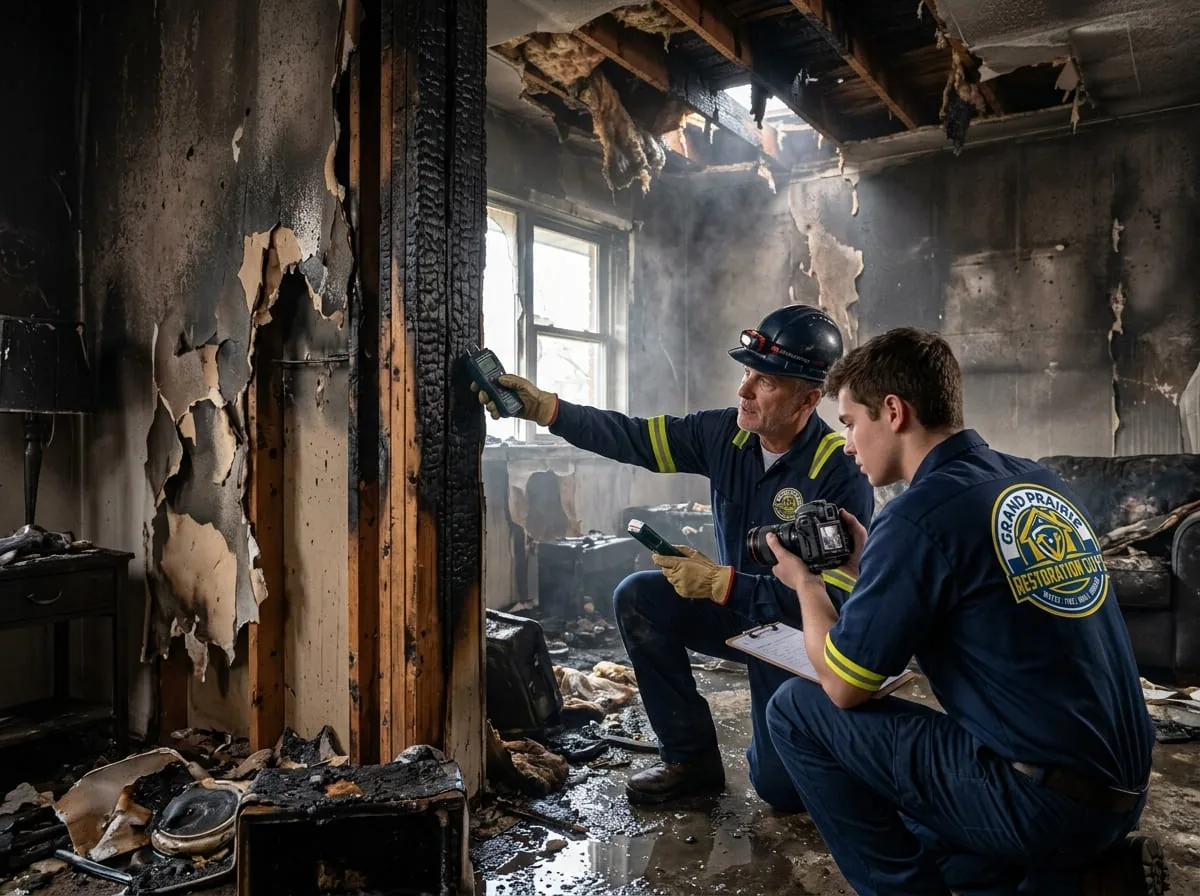
Putting out a fire takes a large volume of water, and that water doesn't disappear once the flames are gone. Hose streams, sprinkler discharge, and standing water routinely soak floors, walls, and ceilings well beyond where the fire reached — meaning a fire-damaged home is almost always a water-damaged home too, and the water side of recovery needs its own attention.
Wait for the All-Clear Before Re-Entering
Don't re-enter a fire-damaged structure until the fire department has confirmed it's safe. Structural elements weakened by fire and water can fail without warning, electrical systems may be compromised, and air quality can remain hazardous. Once cleared, move carefully — water-soaked flooring and ceilings already stressed by heat are more prone to collapse.
Where the Water Actually Ends Up
Water from firefighting doesn't stay confined to the room where the fire started. It runs downhill through floor joists and wall cavities, soaks into the framing and subfloor of the fire floor and often the floor below it, pools in basements or crawl spaces, and gets absorbed into carpet, drywall, and furniture in adjacent rooms the fire itself never touched. A fire contained to one bedroom can still mean water damage across most of a home's lower level.
Why This Water Is Often Treated as Contaminated
Firefighting water typically picks up soot, ash, charred debris, and sometimes chemical residue from burned synthetics as it moves through the structure, so it's generally handled with more caution — closer to how a crew would treat contaminated (Category 2 or 3) water. That affects what can be dried and salvaged versus what needs removal.
The Drying Clock Starts the Moment the Fire Is Out
The same urgency that applies to any water event applies here, arguably more so — soot and ash residue on wet materials can make conditions more favorable for mold and odor if drying doesn't start promptly. Because priority after a fire centers on smoke and structural safety, the water problem often gets less attention early on, exactly when it needs it most. See hidden moisture after a house fire for where this water tends to go unnoticed.
How This Differs From a Typical Water Damage Job
A standard water restoration job deals with one problem: water. A post-fire job deals with water, soot, smoke odor, and often structural assessment all at once, and sequencing matters — soot needs to be addressed without grinding it further into wet materials, and drying needs to happen without spreading soot residue into unaffected areas. This is why firefighting water damage cleanup is treated as its own distinct part of the fire restoration process.
What Comes Next
Once the structure is confirmed safe, the process typically moves through water extraction, moisture assessment of framing and subflooring, structural drying, and — once dry — smoke and soot cleanup, then repairs. See water extraction and structural drying and dehumidification for how those steps work.
Why Sequencing Matters More Here Than in a Typical Job
On a standard water job, extraction and drying can start immediately. After a fire, the order of operations matters more.
Soot Complicates the Drying Process
Soot is acidic and can etch or stain surfaces the longer it sits, especially once wet — creating tension between drying quickly and not grinding soot further into wet materials. Air movers positioned incorrectly can also spread loose soot into unaffected parts of the home. This is why post-fire cleanup is typically handled by technicians experienced in both fire and water restoration.
Residential and Commercial Fires Present Different Water Challenges
In a home, firefighting water damage is usually concentrated and relatively contained to the affected floors.
Commercial Buildings Spread Water Further
Sprinkler systems can discharge large volumes of water across an entire floor or multiple floors even from a small, contained fire, and the water often has to be managed around sensitive equipment, inventory, or ceiling tile systems that behave very differently from residential drywall and flooring. Commercial fire responses also tend to push faster toward water mitigation, given the cost of extended business closure.
A Note on Sprinkler Discharge Specifically
Not every fire-related water event comes from firefighting hoses — a fire sprinkler system activating is its own distinct water event, sometimes releasing water even in rooms adjacent to where the fire actually was, well before fire crews arrive. If sprinklers activated, treat the affected area the same as any other water event: assume water has traveled beyond what's immediately visible, and have it assessed rather than assuming a small fire meant a small amount of water.
Water Follows Gravity Through the Building
Because water follows gravity through floor assemblies and penetrations, a fire on an upper floor can also produce meaningful water damage on the floor below, even when the fire itself never reached that level. If any fire suppression foam or additive was used rather than plain water, mention it to the restoration company, since some additives leave a residue that needs to be accounted for alongside soot and moisture during cleanup.
What Belongings and Contents Go Through
Furniture, electronics, and personal items in the path of firefighting water face the same salvage-or-replace decision structural materials do, complicated by soot exposure. Upholstered furniture that's absorbed contaminated water is often not practical to restore. Electronics exposed to water should be treated as a safety hazard — don't plug in or power on anything wet until it's assessed. See contents cleaning and pack-out.
Why This Deserves Its Own Line Item on an Insurance Claim
Because firefighting water damage is a direct, foreseeable consequence of extinguishing a fire, it's typically covered under the same fire damage claim rather than a separate water damage event requiring its own policy trigger. Still, documenting it specifically — which rooms had standing water, how far it spread beyond the fire itself, what flooring and drywall were affected — helps ensure the full scope of the loss is captured. Our insurance documentation guide covers what to capture, and the same principles apply here.
Frequently Asked Questions
Is water damage after a fire covered by the same insurance claim?
Typically yes — water damage resulting directly from firefighting efforts is generally part of the same fire damage claim, though it's worth confirming the specifics with your adjuster.
How long after a fire is re-entry usually allowed?
It varies by the severity of the fire and the fire department's assessment — sometimes hours, sometimes longer if structural concerns need to be evaluated first. Always wait for official clearance rather than judging it yourself.
Can smoke odor get trapped in water-damaged materials?
Yes — wet materials can actually absorb smoke odor more readily than dry ones, which is part of why prompt water extraction and drying matters even while smoke and soot cleanup is also underway.
Does firefighting water damage always require removing materials rather than drying them?
Not always, but the contamination from soot and ash means the threshold for what can be safely dried in place is generally more conservative than with a clean-water event.
What if the fire was small but a lot of water was used?
This is actually common — a contained fire that's extinguished quickly and thoroughly can still mean a substantial amount of firefighting water spread through the home, so it's worth having the water damage assessed even when the fire damage itself looks minor.
Should the same company handle both the fire cleanup and the water cleanup?
Generally yes — coordinating both under one restoration plan avoids the sequencing conflicts described above, where drying decisions and soot cleanup decisions need to work together rather than being handled as two disconnected jobs.