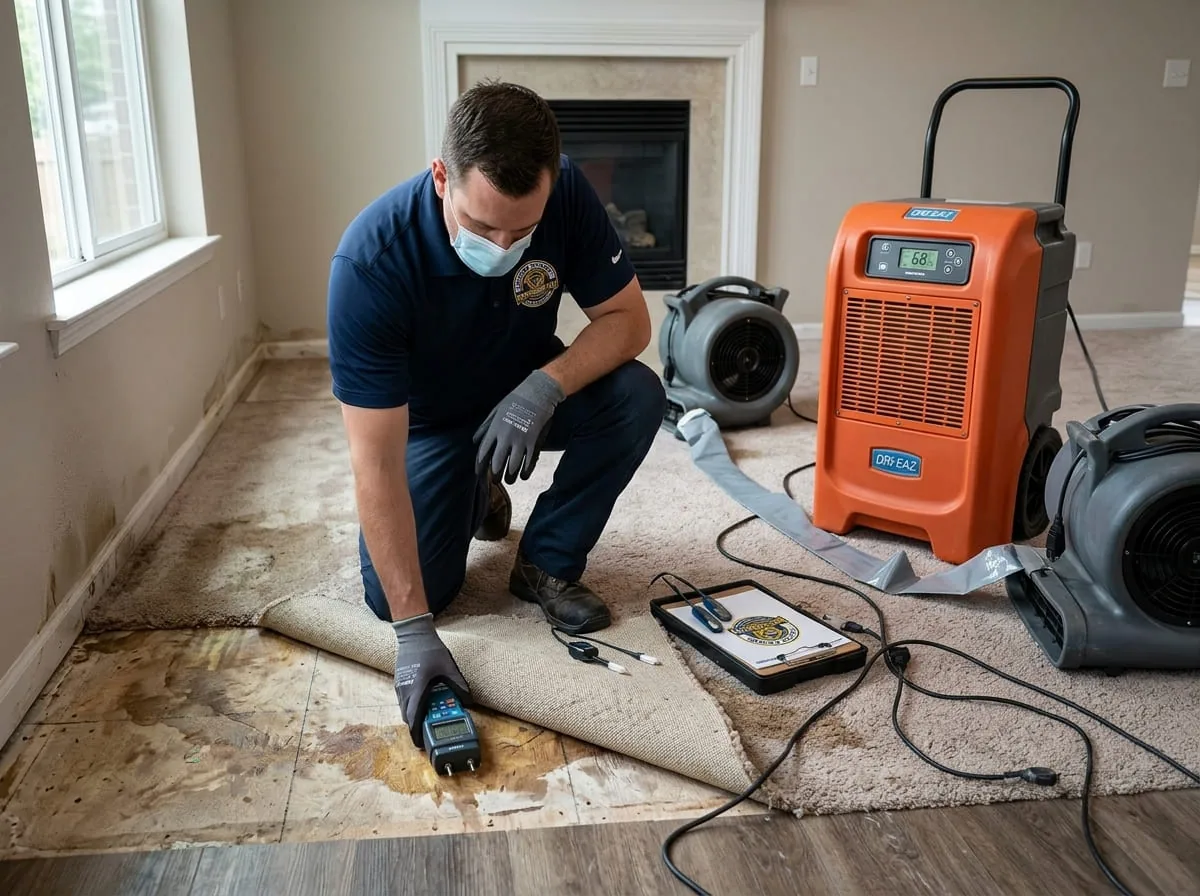
Extraction removes the water you can see and reach. Structural drying handles what's left: moisture inside wall cavities, under flooring, and above ceilings that extraction never touched. It relies on controlling temperature, humidity, and airflow, the same science behind laundry drying faster on a warm, breezy day.
Signs a Structure Isn't Actually Dry Yet
- A musty smell that persists days after visible cleanup
- Paint that bubbles or peels after the surface appeared dry
- Baseboards that warp or separate from the wall
- Indoor humidity that won't drop despite running the air conditioning
Why This Step Gets Skipped, and Why That's a Problem
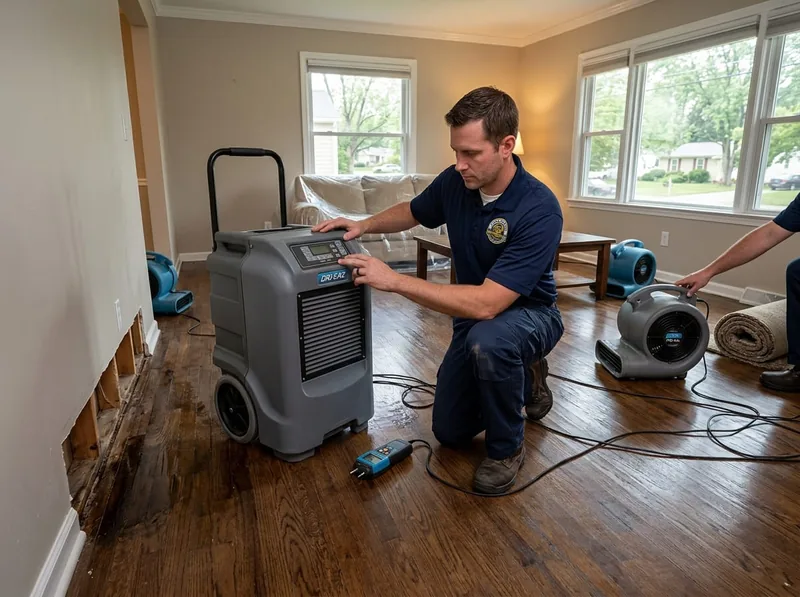
A floor or wall can look and feel dry within a day while still holding real moisture inside the material. Skipping monitored drying because a room 'looks fine now' is one of the most common reasons a water loss turns into a mold problem weeks later.
Why North Texas Humidity Makes This Harder
Grand Prairie's hot, humid summers work against structural drying: dehumidifiers and air movers have more ambient moisture to pull from the air, and materials release moisture more slowly into already-humid air than in a drier climate, shortening the window before mold becomes a real concern.
The Structural Drying Process
Drying starts with moisture mapping using meters to identify exactly which materials are affected, not just what looks wet. Air movers create consistent airflow across wet surfaces, and dehumidifiers, low-grain-refrigerant or desiccant depending on the space, are sized to the air volume being treated. Daily monitoring tracks progress until every affected material reads at or below a dry standard.
What Materials Take Longest to Dry
Dense hardwood holds moisture longer than most flooring types. Multi-layer subfloor systems can trap moisture between layers airflow doesn't reach directly. Insulated wall cavities dry more slowly than open framing, since the insulation has to release its own moisture first.
Residential and Commercial Drying
Residential drying setups are usually a handful of air movers and one or two dehumidifiers per area. Commercial drying, especially across an open warehouse or retail floor, scales up significantly in equipment count and monitoring frequency.
What to Avoid During Drying
- Don't turn off drying equipment early because a room 'feels dry'
- Don't block airflow around air movers by moving furniture back into place too soon
- Don't skip the final moisture verification step before calling a job complete
Frequently Asked Questions
How long does structural drying take?
It varies by material, how much water was involved, and ambient humidity, but most residential jobs take a few days of monitored drying before materials read at a dry standard.
How do you know when something is actually dry?
Moisture meters measure the moisture content inside a material against an unaffected reference reading. Drying is considered complete when the affected material's reading matches that baseline, not on a fixed schedule.
Can I just use box fans instead of professional drying equipment?
Box fans move air but don't remove moisture from that air, so they can actually slow drying in a humid room by recirculating damp air rather than replacing it. Dehumidification is what does the real work.
Does drying equipment run up my electric bill a lot?
There's a modest increase for the duration of the drying period, but it's minor compared to the cost of a water loss turning into a mold remediation job.
Why does drying take longer here than people expect?
Grand Prairie's hot, humid summer climate adds more ambient moisture for dehumidifiers to work against than a drier region would, which can extend drying time compared to what people expect from online estimates written for other climates.