
Water follows gravity and framing, not the shortest path to the nearest visible surface. That's why a stain on a ceiling or wall often shows up several feet from where the water actually entered, and why chasing the visible symptom alone rarely finds the real problem.
Signs of Ceiling and Wall Water Damage
- Brown or yellow staining on drywall or ceiling tile
- Bubbling or peeling paint
- Soft, spongy, or sagging drywall to the touch
- Visible dark spotting that could be early mold growth
- A musty smell with no visible sign of water yet
Common Causes
Several sources show up first as ceiling or wall staining:
- Roof leaks, an upstairs plumbing leak, and window or flashing leaks during wind-driven storms
- An attic AC unit's condensate line clogging or overflowing — often overlooked, and can soak an attic floor and ceiling with no storm involved
- Water wicking into drywall from the base of a wall after a flood-category event
Risks of Waiting
Drywall that stays wet loses structural integrity and can sag or fail outright, a real safety concern overhead. Mold can grow hidden behind a wall or ceiling long before it's visible from the room. Wet insulation loses effectiveness, and moisture near electrical wiring is its own hazard.
How Hidden Moisture Is Found
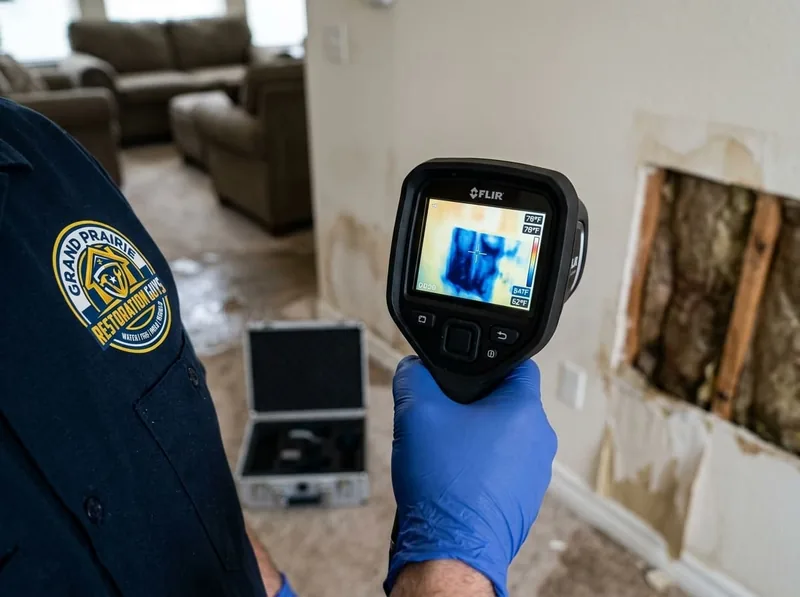
Moisture meters read actual moisture content inside drywall rather than relying on looks. Thermal imaging cameras spot temperature differences that indicate wet material behind a finished surface without opening anything up. Small inspection openings are sometimes still needed to confirm the extent of hidden damage.
The Repair Process
The water source is contained and stopped first. Drywall with brief clean-water exposure sometimes dries in place. Insulation and drywall soaked for an extended period, or exposed to contaminated water, are typically removed. Framing is dried and monitored, and only unsalvageable materials are replaced before repainting closes out the job.
What's Salvageable vs What Comes Out
- Drywall — brief clean-water exposure sometimes dries in place; soaking for days or exposure to sewage or floodwater usually doesn't
- Insulation — almost always replaced once saturated
- Wood framing — typically dries out and stays in place unless rot has already set in
Before Crews Arrive
- Don't press on or poke a sagging ceiling to "check" it, it can fail suddenly
- Place a container under an active drip only if it's clearly safe to reach
- Don't ignore a ceiling or wall stain assuming it's old; if unsure, have it checked
Frequently Asked Questions
Is a ceiling stain always active water damage?
Not always, some stains are from a past leak that's since been fixed. A moisture meter reading is the reliable way to tell whether it's still active.
Will the ceiling collapse?
A sagging, saturated ceiling can fail, which is why it's treated as a safety concern and not just a cosmetic one. Stay out from underneath a visibly sagging ceiling until it's assessed.
Can wet drywall be dried instead of replaced?
Sometimes, if the exposure was brief and the water was clean. Prolonged saturation or contaminated water usually means replacement is the safer and more practical option.
How do you find water damage I can't see?
Moisture meters and thermal imaging cameras locate wet material behind finished surfaces without needing to open up the wall or ceiling first.
What if the stain seems to be coming from an upstairs unit or neighbor?
That still needs an inspection to find the actual source and stop it, since the leak itself needs to be addressed before the ceiling repair will hold.