
DeSoto is one of the more established suburbs south of Dallas, part of the same wave of growth that shaped its Best Southwest neighbors from the 1970s through the 1990s. Decades of mature tree canopy and settled neighborhoods give DeSoto a lived-in character that a lot of newer suburbs don't have yet — but mature trees and older roofing also mean a specific water-damage pattern shows up here more than in newer-growth cities: water getting in from above, not just from a pipe underneath the house.
Whether it's a ceiling stain after a storm, a sudden pipe failure, or a slower leak that's been building for a while, (817) 618-7675 connects you with a crew ready to respond in DeSoto any hour of the day.
A quick safety note while a crew is on the way: stay out from directly under a sagging or heavily water-stained ceiling section, since saturated drywall can give way without much warning, and keep clear of any standing water near an electrical outlet, ceiling fixture, or plugged-in appliance. If a leak has been running long enough to smell musty, that's worth mentioning on the call so the assessment can start looking for mold from the outset.
Water Damage Restoration in DeSoto, TX
Water Damage Often Starts at the Roof
Water damage restoration in DeSoto often starts at the roofline rather than the floor. A damaged shingle, a compromised flashing detail, or hail impact can let water into an attic space long before it shows up as a stain on a ceiling below — and by the time it's visible, insulation and framing above that ceiling have usually already absorbed real moisture. That's why ceiling and wall water damage is such a relevant service in DeSoto specifically, alongside the standard water extraction and structural drying and dehumidification work that applies to any water event.
Familiar Causes Still Apply
DeSoto's established housing stock also means the more familiar North Texas causes apply here too — the burst pipe water damage page covers sudden plumbing failures, and the storm and rain water damage page covers the broader storm-driven picture.
Stopping the Source Before Drying
The order of operations matters more with a roof-driven loss than with a straightforward pipe failure. Before drying can really start, the active source of water has to be stopped — which, for a roof leak, usually means a temporary weatherproof cover rather than a plumbing shutoff. That coordination between stopping the intrusion and starting the drying process is a core part of what makes a ceiling-and-attic loss a genuinely different job than a burst pipe under a sink.
DeSoto's Growth and Housing Stock
Decades of Growth, Mature Neighborhoods
DeSoto grew substantially from the 1970s through the 1990s as part of the broader wave of suburban development south of Dallas, alongside neighboring Duncanville, Cedar Hill, and Lancaster — a cluster of cities sometimes grouped together as the Best Southwest area. That growth era means DeSoto's housing stock is now decades old across large parts of the city, with mature landscaping and tree canopy that have had thirty, forty, or more years to grow in.
What Mature Landscaping Brings
That maturity cuts both ways for water damage. Established trees mean shade and curb appeal, but they also mean roof debris, gutter blockages, and, over time, root systems that can affect drainage lines near a foundation. A meaningful share of DeSoto's housing stock also falls within the 1978–1995 window when polybutylene (poly-B) supply piping was commonly used across Texas, and like the rest of North Texas, DeSoto sits on expansive clay soils that drive slab leaks through ordinary seasonal ground movement.
Aging Roofs, Added Risk
Roofing is where DeSoto's age really shows up. A roof installed during the city's main growth wave, or even one replaced after an earlier hailstorm decades ago, is well past the point where minor granule loss, cracked flashing, or lifted shingles become realistic concerns — and those are exactly the kind of small failures that let water into an attic long before anyone would think to call a roofer. Combined with mature trees dropping debris onto that same aging roofline, DeSoto's housing stock has more of this particular risk factor stacked up than a newer-growth city nearby.
Common Water Damage Scenarios We See in DeSoto
An established, mature suburb like DeSoto tends to produce a specific mix of water-damage calls:
Typical Causes We See
- Roof and ceiling leaks after hail or storm damage, especially in homes with older roofing that hasn't been replaced in the years since a prior storm.
- Gutter and drainage blockages from mature tree canopy, which can redirect water toward a foundation or into a soffit rather than away from the house.
- Slab leaks from expansive clay soil movement, a regionwide North Texas risk.
- Poly-B pipe failures in homes built roughly 1978–1995.
- Appliance and water heater failures in aging fixtures original or near-original to the home.
- Flash flooding during intense regional storms, consistent with the broader DFW pattern of fast-developing street and yard flooding.
- Root intrusion into sewer laterals, a genuine risk in neighborhoods with decades-old trees planted near underground drain lines.
Residential and Commercial Water Damage Response
Residential Response
Residential water damage restoration covers DeSoto's predominantly single-family neighborhoods, with particular attention to roof- and ceiling-driven leaks alongside the more familiar plumbing and slab causes found across North Texas.
Commercial Response
Commercial water damage restoration covers DeSoto's retail and office corridors, where a roof leak or plumbing failure gets the same fast extraction and drying response to limit downtime and inventory loss.
Flat Roofs Fail Differently
Flat or low-slope commercial roofing, common on retail and office buildings along DeSoto's main corridors, fails differently than a residential pitched roof — ponding water and membrane seams are the usual culprits rather than shingles — and a commercial assessment accounts for that difference rather than applying a residential roof-leak checklist to a building that doesn't have a residential roof.
Fire Damage Restoration in DeSoto, TX
Fire damage restoration in DeSoto covers standard residential smoke, soot, and odor cleanup, and emergency board-up and tarping is a particularly relevant service here given how often roof damage from hail or storms leaves a home exposed to further weather intrusion before repairs can begin.
A roof compromised by fire faces the same weather-exposure risk as one compromised by hail, which is why board-up and tarping response covers both causes under the same service. Where full rebuilding is needed, the fire damage repairs and reconstruction page covers that stage of the work.
Mold Remediation in DeSoto, TX
Hidden Moisture, Real Risk
A roof leak that's been quietly wetting attic insulation for weeks, or a slab leak running unnoticed under flooring, is exactly the kind of hidden, sustained moisture problem that leads to mold — and North Texas's hot, humid summers shrink the window before that becomes a real concern. Mold after water damage is the primary mold service relevant to DeSoto's established housing stock, and black mold remediation addresses more advanced cases where a leak went unaddressed for an extended period.
Why the Attic Gets Checked
Attic spaces deserve particular attention in a mature-suburb mold assessment, since they're rarely checked in day-to-day life and can hold moisture-damaged insulation for a long stretch before anyone notices anything beyond a vague musty smell in the house below. A thorough inspection after any known or suspected roof leak includes the attic, not just the visible ceiling.
The Restoration Process, Step by Step
Whether the source is the roof or a pipe, the response follows the same core sequence:
- Call and dispatch — (817) 618-7675, staffed 24/7 for DeSoto and the surrounding Best Southwest area.
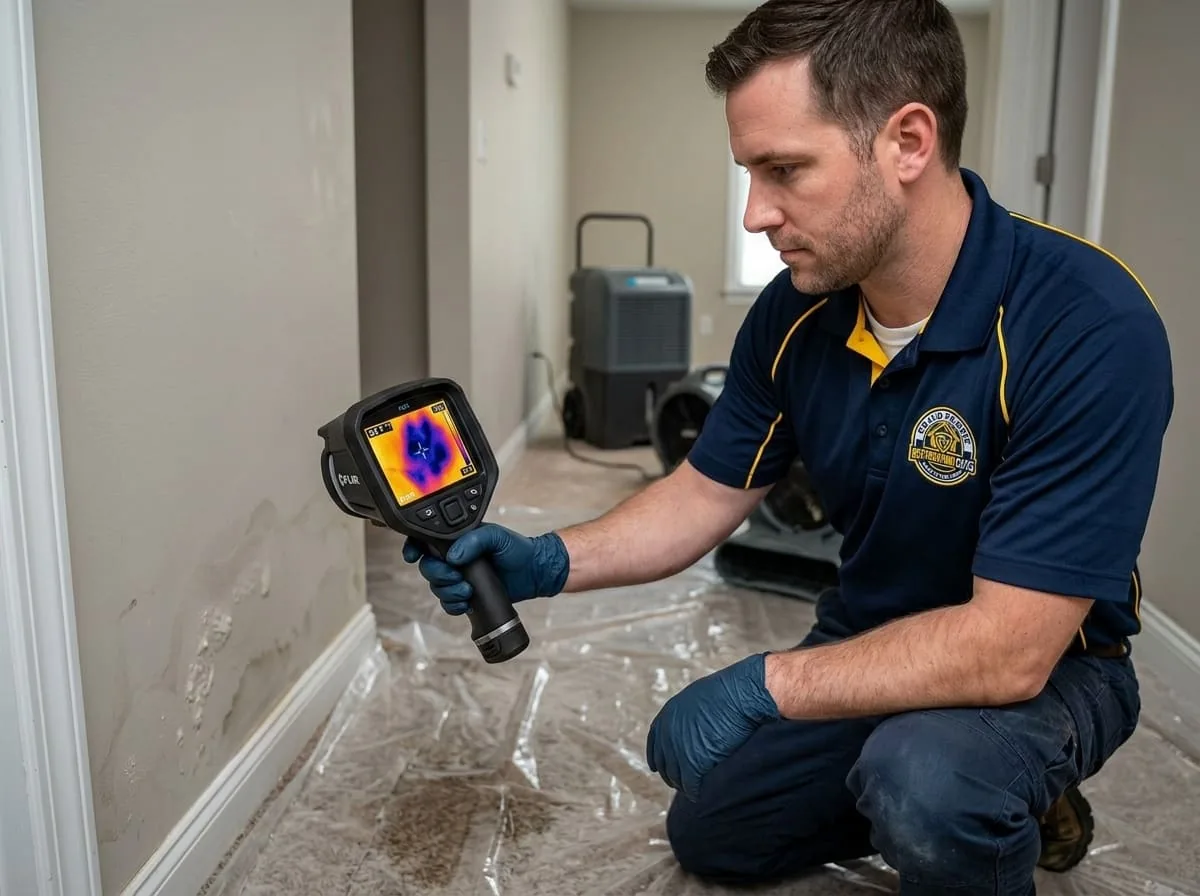
- Assessment — including attic and ceiling inspection where a roof-driven source is suspected, alongside standard moisture mapping.
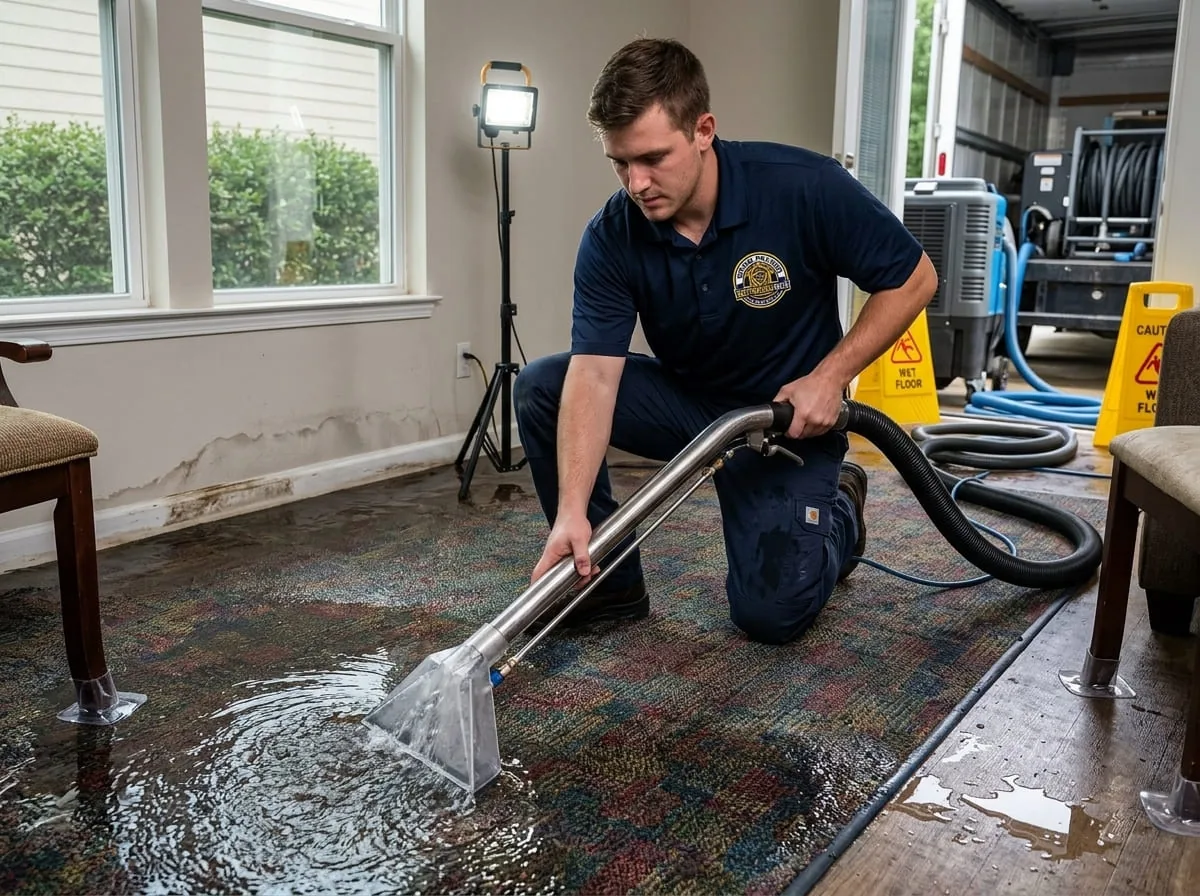
- Extraction — removing standing water and saturated insulation or material before it spreads further.
- Drying and dehumidification — run until moisture readings confirm a genuine dry standard, in the attic space as well as the living area below.
- Cleaning and sanitizing — particularly relevant where ceiling insulation or drywall has been affected.
- Repairs or reconstruction — handled, where needed, by a contractor holding a general contractor licence, from initial extraction through full reconstruction and repairs.
When the Roof Itself Needs Repair
Where a roof itself is the underlying source, the repair phase usually needs to loop in an actual roofing repair alongside the interior drywall, insulation, and flooring work — addressing only the interior damage and leaving the original roof failure in place is the kind of shortcut that guarantees the same call again next storm season.
Serving DeSoto and Nearby Communities
Coverage Across the Best Southwest
Coverage extends across the Best Southwest area, including Duncanville and Cedar Hill to the west, and Lancaster to the east.
These neighboring cities share a broadly similar age profile and growth history with DeSoto, so a technician working this part of the Metroplex sees the same roof-age and mature-tree-canopy patterns repeat across city lines.
One Standard, Every Address
For a homeowner or property manager with holdings across more than one of these Best Southwest cities, that consistency is genuinely useful — the same dispatch number, the same assessment standard, and the same repair process apply whether the address is in DeSoto, Duncanville, or Cedar Hill.
Why Speed Matters on a Roof Leak
It's also worth remembering that a fast response on a roof-driven loss protects more than the ceiling directly below it — insulation, wiring, and framing throughout the attic can all be affected by water that traveled further than the visible stain suggests, which is exactly why the assessment in DeSoto starts at the roofline rather than the floor. Waiting on a small ceiling stain in the hope that it dries out on its own is one of the more common, and more costly, mistakes homeowners make in an established suburb like this one.
Frequently Asked Questions
How do I know if a ceiling stain in my DeSoto home is from the roof or a pipe?
That's exactly what a professional assessment is for. Roof-driven leaks and plumbing leaks can produce similar-looking ceiling stains, and moisture mapping identifies the actual source rather than guessing.
Does mature tree canopy really affect water damage risk in DeSoto?
It can. Gutter and drainage blockages from leaves and debris are more common in neighborhoods with decades of tree growth, and blocked drainage can redirect water toward a roofline or foundation instead of away from it.
Are DeSoto homes at risk for poly-B plumbing failures?
A meaningful share of DeSoto's housing stock was built during the 1978–1995 window when polybutylene supply piping was common across Texas, so it's a recognized risk factor in homes from that era.
What should I do if I find a wet ceiling after a storm?
Avoid standing directly under a sagging or heavily stained ceiling section, since saturated drywall can fail without warning. Place a container to catch drips if it's safe to do so, and call us so a technician can assess the source and extent of the damage.
Can a slow roof leak cause mold before any ceiling stain is even visible?
Yes. Moisture can affect attic insulation and framing for a period of time before it becomes visible as a stain on the ceiling below, which is one reason a musty attic smell is worth having checked.
Do you check the attic even if the visible damage is just a small ceiling spot?
Yes, an assessment for a ceiling stain generally includes a look at the attic space above it, since the visible spot on the ceiling is often smaller than the actual wet area above it.