
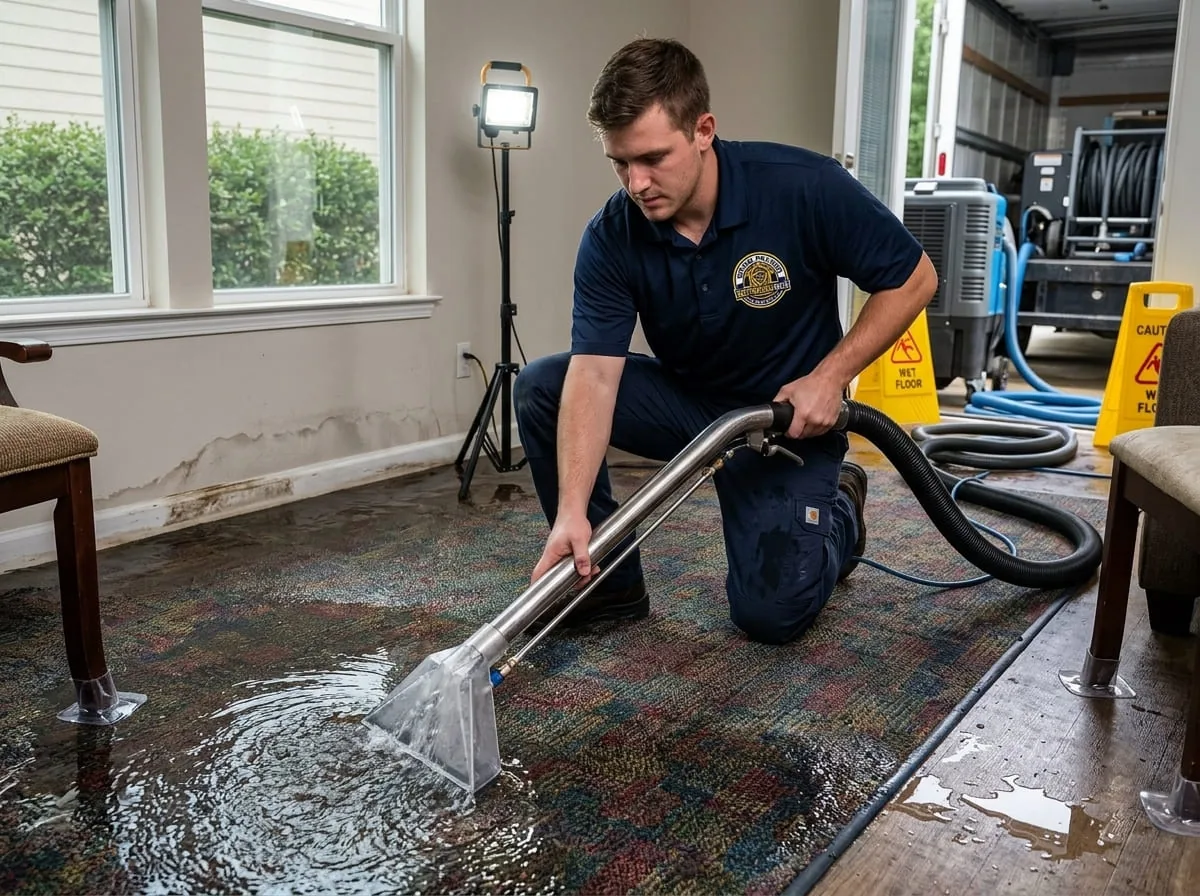
A burst supply line can dump an alarming amount of water fast — a quarter-inch line at typical household pressure can release several gallons a minute. The good news: a few specific, safe actions in the first few minutes make a real difference in how much gets damaged before a crew arrives.
1. Shut Off the Water at the Source
Every second the line stays open, more water enters the home. If you know which fixture shutoff feeds the broken line, use it.
Finding the Main Shutoff
If not, go to the home's main water shutoff valve — commonly near where the supply line enters the house, by the water heater, in the garage, or at an exterior hose bib box. Turning this a quarter to half turn stops water at the source, which matters if the break is inside a wall or under the slab.
2. Cut Power Only If It's Safe
If water is pooling near outlets, switches, or the electrical panel, don't walk through it to reach a breaker — electricity and standing water are a serious shock hazard. If the panel is dry and reachable without crossing standing water, shutting off power to the affected circuits is a reasonable precaution. If there's any doubt, leave power on and stay out of the wet area.
3. Move Valuables and Furniture Out of the Path
Once the source is shut off, water stops spreading, but what's already on the floor keeps doing damage. Move boxes, electronics, rugs, and furniture legs out of standing water or onto blocks — prioritize anything irreplaceable or expensive first.
4. Remove Standing Water If the Area Is Safe
With the water source off and no electrical hazard present, towels, a wet-rated shop vacuum, or a mop and bucket can meaningfully reduce how much water soaks into flooring and baseboards before a crew arrives. Never use a standard household vacuum — it's a shock hazard. If the water covers more than a room or two, this becomes a job for professional extraction equipment.
What Not to Do While You Wait
A few things to avoid while you wait:
- Don't cut into walls or ceilings yourself to "see how bad it is" — that's a job for a professional
- Don't run a space heater in a wet room unattended
- If a ceiling is sagging, bulging, or dripping from a light fixture, stay out from under it — it's a sign of a compromised structure
Why This Happens More Than People Expect in North Texas Homes
Poly-B Piping in Older Homes
Homes built roughly between 1978 and 1995 across Texas commonly used polybutylene ("poly-B") supply piping — a plastic material subject to a well-documented class-action settlement after widespread premature failures. If your home falls in that build era, it's worth having a plumber assess the rest of the supply lines even after one break is fixed.
Shifting Clay Soil and Slab Stress
North Texas's expansive clay soil shifts seasonally, which can crack slabs and stress the copper or CPVC lines running through them. That's a different failure mode — a slow slab leak rather than a sudden burst — worth knowing about if you notice a warm spot on the floor or an unexplained water bill spike.
What Happens When a Restoration Crew Arrives
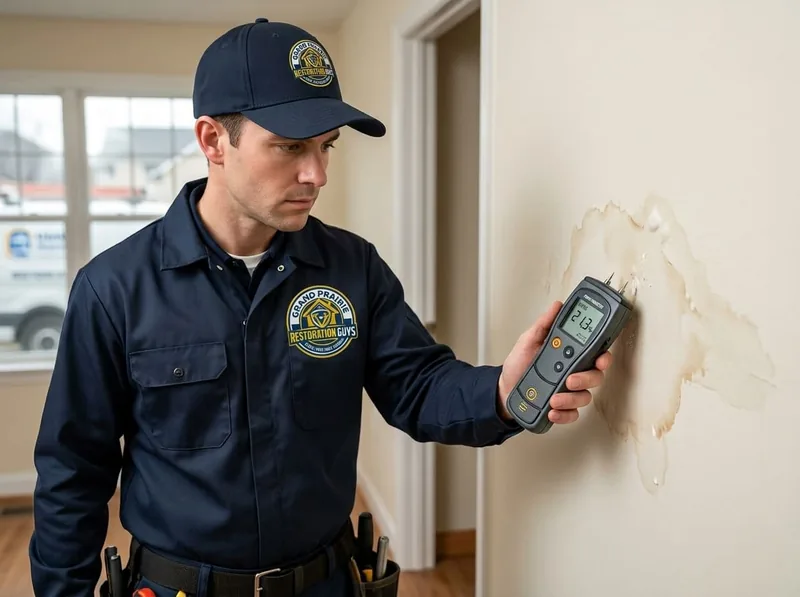
A restoration crew brings extraction equipment that removes standing water far faster than manual effort, followed by moisture mapping to find water that's traveled into wall cavities, under flooring, or into a crawl space — see how professionals find hidden moisture. From there, air movers and dehumidifiers dry the structure on a monitored schedule.
Freeze-Related Bursts: A North Texas Wrinkle
North Texas doesn't see the sustained deep freezes of a northern climate, which is part of what makes freeze-related pipe bursts catch people off guard — homes and exposed plumbing runs aren't always built for hard freezes, since they're relatively infrequent.
When an Unusual Cold Snap Hits
Pipes that have never been an issue can freeze and split, and the failure often isn't discovered until the ice thaws — sometimes while nobody's home. If a hard freeze is forecast, letting a faucet drip slightly and opening cabinet doors under sinks on exterior walls are simple precautions worth taking.
What Happens After the Immediate Cleanup
Who Handles What
Once standing water is out and drying equipment is running, a plumber typically handles repair or replacement of the failed section, while the restoration side focuses on drying, moisture verification, and coordinating any drywall or flooring repairs.
Worth a Broader Inspection?
If the home is in the 1978-1995 poly-B era, this is a reasonable moment to ask a plumber whether a broader inspection of the supply lines makes sense.
Slab Leaks Are a Related but Different Problem
Everything above assumes a visible, sudden burst — water actively spraying or pooling, with an obvious source.
A Slower, Sneakier Version
North Texas's expansive clay soil, which swells and shrinks with seasonal moisture, is also a well-documented cause of a slab leak — a supply line under the foundation develops a small crack from soil movement and leaks continuously into the slab and subfloor.
Signs Worth Checking
There's usually no dramatic burst. Instead, the signs are a warm spot on the floor, a higher water bill with no explanation, or flooring that stays damp with no clear source — worth having checked even without a burst-pipe moment to point to.
Frequently Asked Questions
How do I find my home's main water shutoff valve before an emergency happens?
Look near where the water line enters the house — commonly in a utility closet, garage, basement, or near an exterior hose bib. It's worth locating and testing it now, before you need it under pressure.
Is it ever okay to just let a burst pipe run until help arrives?
No — shutting off the water source is the single most effective thing you can do, and it's almost always safe to do if you can reach the valve without crossing standing water near electrical hazards.
Should I try to patch the pipe myself?
A temporary patch (rubber and a hose clamp, for example) can reduce flow if you're comfortable doing it and the area is safe, but it's not a substitute for a plumber's permanent repair, and it shouldn't delay shutting off the main supply.
What if the burst pipe is inside a wall or under the slab and I can't see it?
Shut off the main water supply regardless — you don't need to see the break to stop the water feeding it. A professional can pinpoint the exact location once the immediate flooding is under control.
Will my homeowners insurance cover a burst pipe?
Sudden and accidental pipe bursts are typically covered, while damage from a leak that went on for a long time before being noticed is sometimes treated differently. See our <a href="/resource-center/insurance-documentation-after-water-damage/">insurance documentation guide</a> for what to capture either way.
How much water can a burst pipe actually release before it's shut off?
It varies with pipe size and household water pressure, but a supply line running for even 30-60 minutes before being noticed and shut off can release well over a hundred gallons — which is exactly why speed in reaching the shutoff matters more than almost anything else in the first minutes.