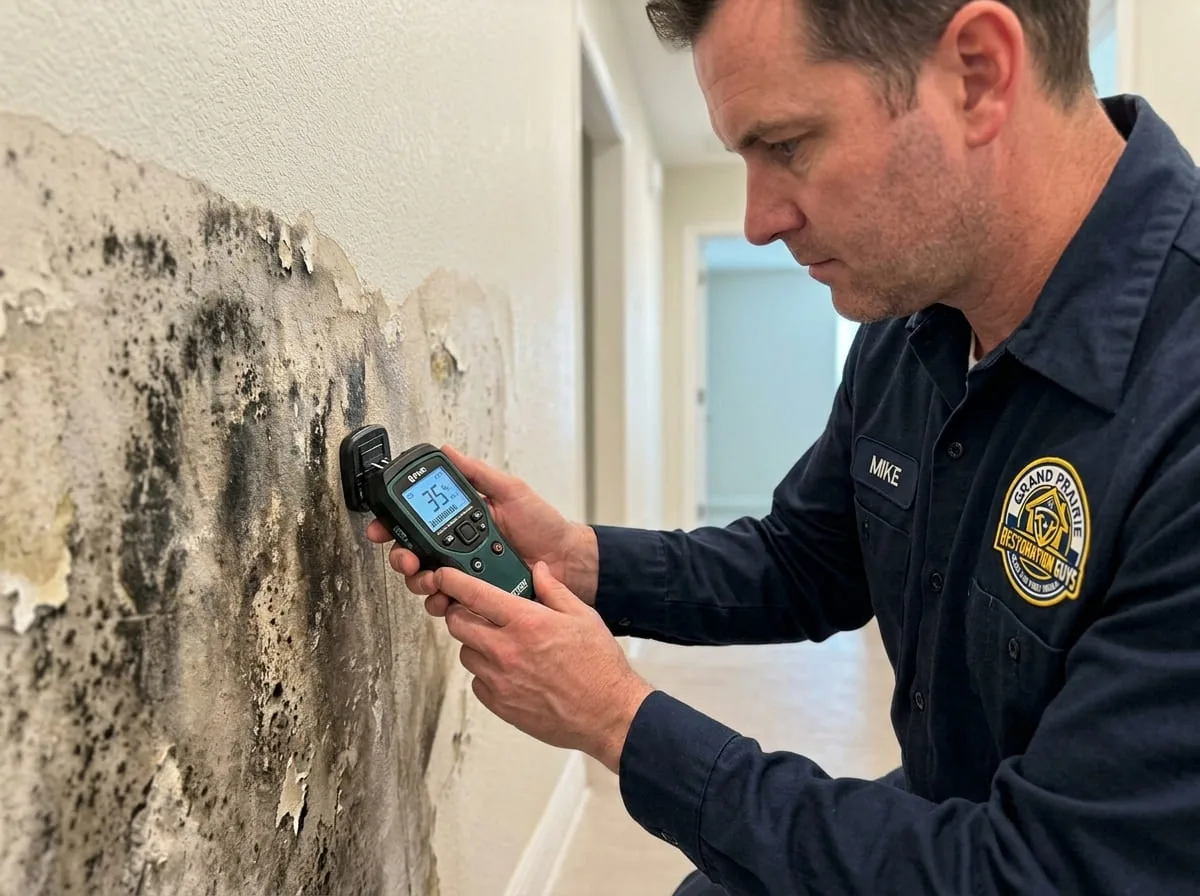
Most mold problems in Grand Prairie don't start as mold problems — they start as water problems. A slab leak that ran for weeks unnoticed, a burst supply line behind a wall, a storm-driven roof leak, or flooring that stayed damp after a flood can all leave enough moisture for mold to take hold, even after the standing water is gone.
This page covers how a water event turns into a mold problem and what the process looks like once mold is confirmed.
Why Mold Follows Water Damage So Often
Moisture, Food, and Time
Mold needs all three. Building materials like drywall, wood framing, subfloor, and insulation already supply the food source, so once wet, time is the only real variable.
Why North Texas Heat Speeds It Up
In North Texas's hot, humid summers, that window is shorter than in a drier climate — materials that might stay safe for a week elsewhere can start growing mold noticeably sooner here. That's why fast, complete drying matters as much as the initial water removal.
Signs a Past Water Event Has Turned Into a Mold Problem
- A musty or earthy odor in a room, closet, or crawl space that wasn't there before
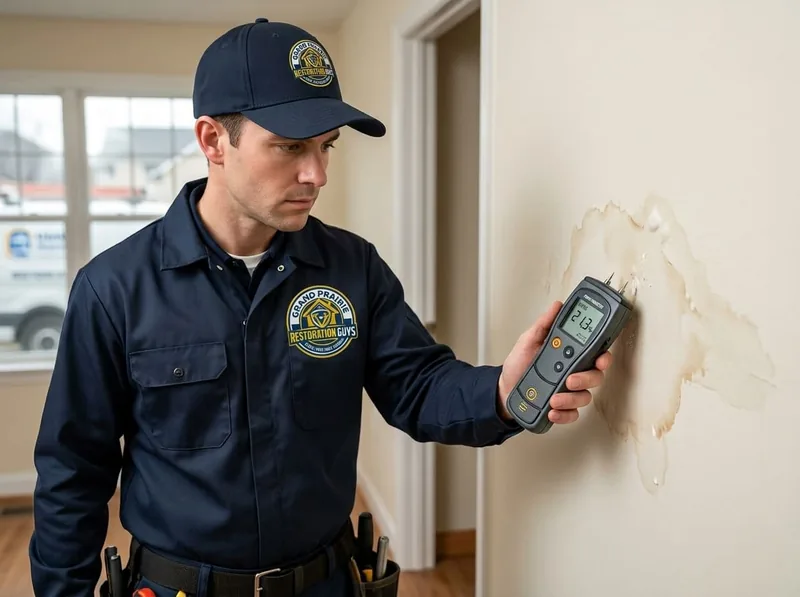
- Discoloration or staining on drywall, baseboards, or ceilings, especially near a known past leak
- Visible fuzzy or speckled growth on walls, wood, or fabric
- Warped, bubbling, or soft drywall and flooring
- Allergy-type symptoms — sneezing, congestion, irritated eyes — that seem tied to one part of the building
None of these confirm mold on their own, but any of them after a past water event is reason enough to have the area inspected.
How Long Does It Take for Water Damage to Become Mold?
There's no single number — how quickly mold becomes a concern depends on temperature, humidity, airflow, and how wet materials got. The pattern holds regardless: the sooner a water event is fully extracted and dried, with moisture confirmed back to normal rather than just visually dry, the less likely mold becomes. Hidden dampness that sits for days or weeks carries meaningfully higher risk than materials dried until moisture readings hit baseline.
What the Process Looks Like
When mold is suspected after a water event, the typical path is:
- Assessment of the affected area, including moisture readings in surrounding materials
- Identifying and correcting the ongoing moisture source, if it hasn't been already
- Containment of the affected area to limit spread during work
- Removal of mold-affected materials that can't reasonably be cleaned
- Cleaning and treatment of salvageable surfaces and contents
- Structural drying to confirm the area is back to a normal moisture level
- A final check to confirm the work is complete before the area is closed back up
What's Usually Salvageable — and What Isn't
Non-porous materials — tile, glass, metal, solid wood — can often be cleaned and kept. Porous materials that stayed wet long enough to grow mold, like drywall, insulation, carpet padding, and untreated wood, are frequently not worth saving, since mold can grow into the material itself, not just the surface. A professional assessment is the only reliable way to know which category an item falls into.
Before Help Arrives
If you suspect mold following a water event:
- Avoid disturbing the area — don't scrub, spray bleach, or run fans on it, since that can spread spores into unaffected parts of the building
- Keep pets and family members away from the immediate area
- Don't cut into or remove drywall yourself
- If the moisture source (an active leak, a running appliance) hasn't already been shut off, doing that safely is the one thing worth handling before professionals arrive
Frequently Asked Questions
How soon after a leak or flood should I worry about mold?
If a leak or flood has been fully extracted and dried within a day or two, the risk is much lower. If water sat for several days, or if drying only addressed visible wetness rather than confirming moisture levels behind walls or under flooring, it's worth having the area checked even without visible signs yet.
I already dried the area myself — could mold still develop?
It's possible. Surface-dry doesn't always mean the material underneath is dry, especially with drywall, subfloor, or insulation. Moisture meters are used specifically because visual dryness and actual moisture content aren't the same thing.
Does my homeowners insurance cover mold that developed after a covered water loss?
That depends on your specific policy and how quickly the water event was addressed. Documentation of when the water damage occurred and how it was handled is generally important for any related mold claim.
Is it the same company that handles the water damage and the mold?
Often, yes — since the two are connected, having one point of contact for both the water extraction/drying side and the mold side keeps the timeline and documentation consistent.
Can I just paint over a small mold spot instead of remediating it?
Painting over mold doesn't remove it or address the moisture that allowed it to grow — it typically continues underneath, and the underlying moisture problem still needs to be found and fixed.