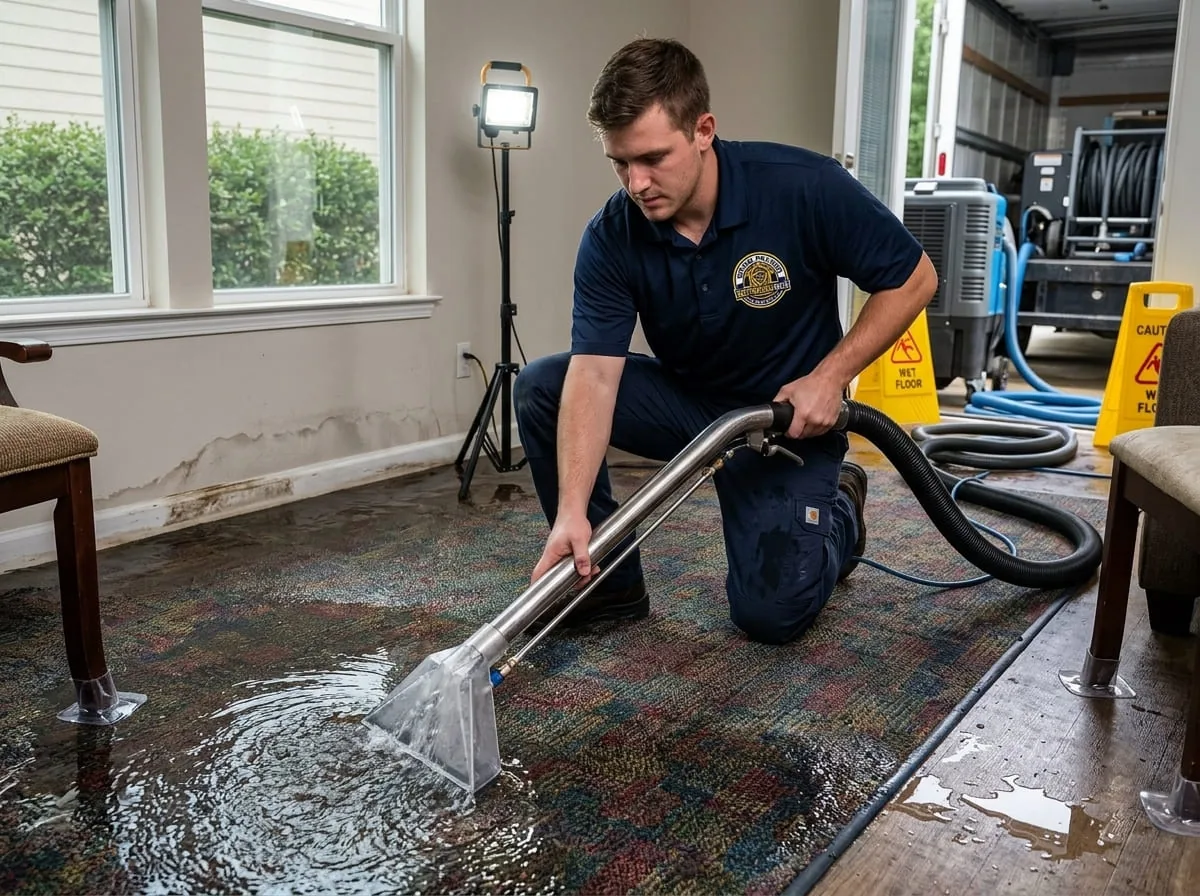
Extraction and drying are different jobs. Extraction removes the bulk water sitting on and inside materials; drying handles what's left behind. Skipping straight to fans and dehumidifiers without extraction first just means drying equipment is fighting a losing battle.
Signs You Need Professional Water Extraction
- Visible standing water on flooring, in a garage, or pooling in a low spot
- Carpet that squishes or releases water when stepped on
- Water that's migrated from one room into another along the floor
- Water that's soaked through to a level below, like a wet ceiling downstairs from an upstairs leak
How Much Water Is Too Much for DIY
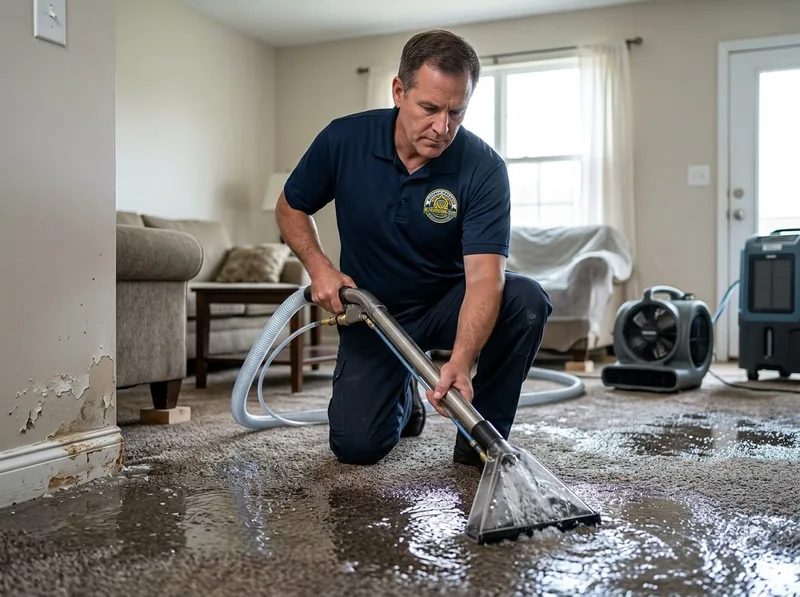
A shop-vac can handle a small, contained clean-water spill caught immediately. Once water covers real floor area, has soaked into carpet padding, or isn't from a clean supply line, it's past what household equipment can handle. Padding holds water long after the surface looks dry, becoming its own mold risk if left in place.
Equipment Used for Extraction
Extraction relies on different tools for different situations:
- Truck-mounted extraction units handle large volumes of water quickly and vent moist air outside the structure
- Portable extractors cover upper floors or areas a truck-mounted hose can't reach
- Weighted extraction tools press water out of carpet and padding a surface pass would miss
- Submersible pumps handle deep standing water in garages, utility rooms, or crawl spaces
The Extraction Process
A technician assesses the area, identifies the water category and depth, and extracts using the right equipment for the material. Saturated padding typically comes out at this stage rather than being dried in place. Moisture mapping happens before drying equipment is placed, so the plan targets what actually needs it.
What's Salvageable vs What Isn't
- Carpet — often salvageable if the water was clean and extraction happened quickly
- Padding — almost never salvageable once saturated; replacing it is usually faster and cheaper than drying it
- Hardwood — depends heavily on exposure time and water category
- Subfloor — salvageability depends on both
Residential and Commercial Extraction
Homes typically need extraction across a bedroom, bathroom, or living area footprint. Commercial extraction can mean an entire retail floor, a warehouse bay, or multiple tenant spaces at once, calling for more units running simultaneously.
Frequently Asked Questions
Can wet carpet be saved?
Often, yes, if the water was clean and extraction started quickly. Padding underneath is a different story; it almost always needs to be replaced once saturated.
How is extraction different from drying?
Extraction physically removes standing and absorbed water. Drying uses air movement and dehumidification afterward to bring remaining moisture in materials and the air down to a safe level.
Do you remove the water or just the visible puddles?
Both. Extraction targets visible standing water and water absorbed into carpet, padding, and other porous materials, not just what's pooling on the surface.
What if water has gone through the floor to a level below?
That's addressed as part of the same job. Water that's soaked through a floor typically means the ceiling and structure below need inspection and extraction too.