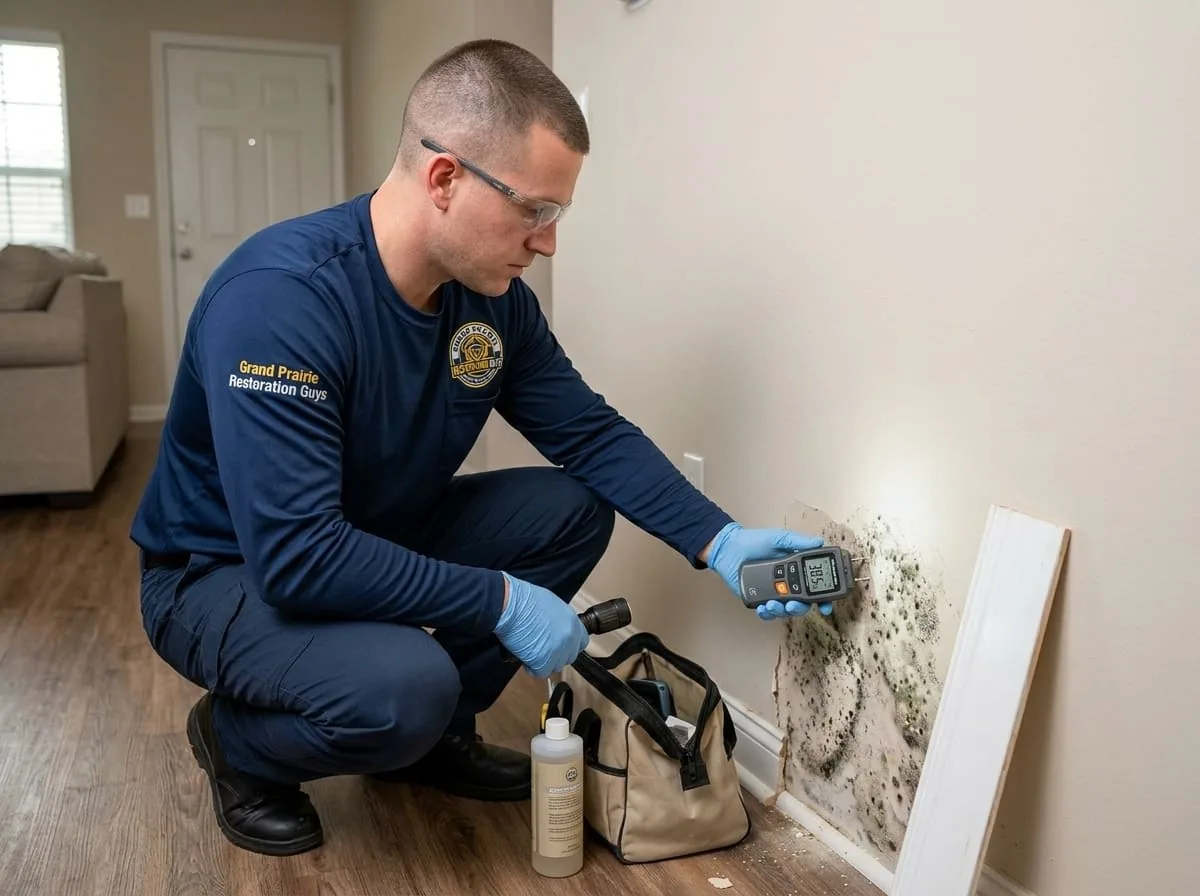
Finding mold in your home is stressful, but addressing it is straightforward once the moisture source is identified. Residential mold remediation covers situations from a bathroom that never quite dries out to a whole room affected by a burst pipe or roof leak, with an approach built around keeping the rest of the home livable.
Where Mold Shows Up Most Often in Homes
- Bathrooms with poor ventilation or a slow leak around a tub, shower, or toilet
- Kitchens near dishwashers, sinks, and refrigerator water lines
- Attics with roof leaks or inadequate ventilation
- Crawl spaces under older pier-and-beam homes
- Any room affected by a past water event that wasn't fully dried
Signs Worth Having Checked
Reasonable triggers for having a room assessed include:
- A musty smell that lingers in one part of the house
- Visible discoloration on walls or ceilings, or peeling paint and wallpaper
- A past water event you're not confident was fully dried
- Family members noticing more irritation in one part of the house than another — not proof of mold on its own, but worth mentioning during an inspection
Keeping Your Home Livable During the Work
Containment is set up around the specific affected area — a bathroom, a bedroom, an attic access point — so the rest of the home can stay in use. Scope determines impact: a contained, single-room issue differs greatly from one spanning multiple rooms after a larger water event.
What the Process Involves
Residential mold remediation typically includes:
- An initial assessment
- Correcting the moisture source — a plumbing repair, a roof fix, better bathroom ventilation
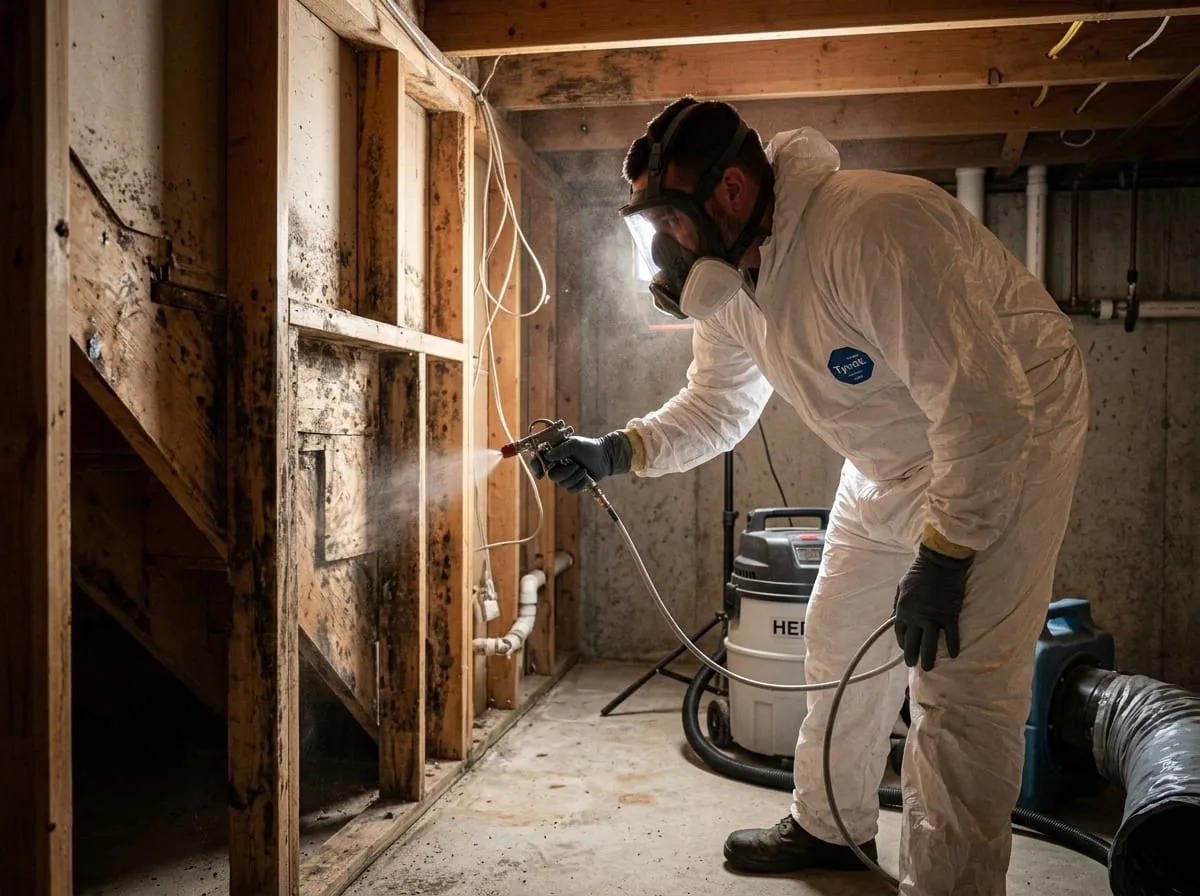
- Containment of the work area
- Removal of materials that can't be cleaned and treatment of salvageable surfaces and contents
- Drying to confirm a normal moisture level, and a final check before the area is reopened
What's Salvageable vs. What Typically Needs Replacing
Hard surfaces — tile, glass, solid wood, most metal fixtures — are usually cleanable. Drywall, insulation, carpet padding, and other porous materials that supported mold growth are frequently not worth saving, since mold can take hold within the material, not just the surface.
Before Help Arrives
- Don't scrub or spray bleach on visible mold, and avoid running fans on the area — both can spread spores rather than contain the problem
- Keep kids and pets out of the affected room
- If there's an active leak you can safely shut off, doing so is the one thing worth handling yourself before professionals arrive
Reducing the Chances It Comes Back
Once the moisture source is corrected, ongoing humidity control makes a real difference in North Texas's climate — running bathroom exhaust fans during and after showers, keeping HVAC systems maintained, and addressing new leaks quickly. None of this replaces a proper repair of the original problem, but it helps keep the same room from becoming a repeat issue.
Frequently Asked Questions
Can I stay in my home during mold remediation?
In most residential situations, yes, particularly when the affected area is a single room or space that can be contained and closed off from the rest of the house. This is discussed during the assessment based on the specific scope of the project.
How much does residential mold remediation typically involve?
It depends entirely on the size of the affected area and which materials are involved — a contained bathroom issue is a much smaller project than one spanning multiple rooms after a significant water event.
Will my homeowners insurance cover this?
That depends on your policy and whether the mold is tied to a sudden, covered water event versus longer-term neglect or a maintenance issue. Documentation from an inspection supports whichever claim applies.
Do you also handle the water damage that caused the mold?
Water damage restoration and mold remediation are related but distinct services — both are available, and having one point of contact for the full situation keeps the documentation and timeline consistent.
How do I prevent mold from coming back after remediation?
Keeping bathroom and kitchen ventilation running, maintaining your HVAC system, and addressing any new leak quickly are the main ongoing factors within a homeowner's control. The larger factor is making sure whatever caused the original moisture problem was actually repaired, not just the visible mold removed.