
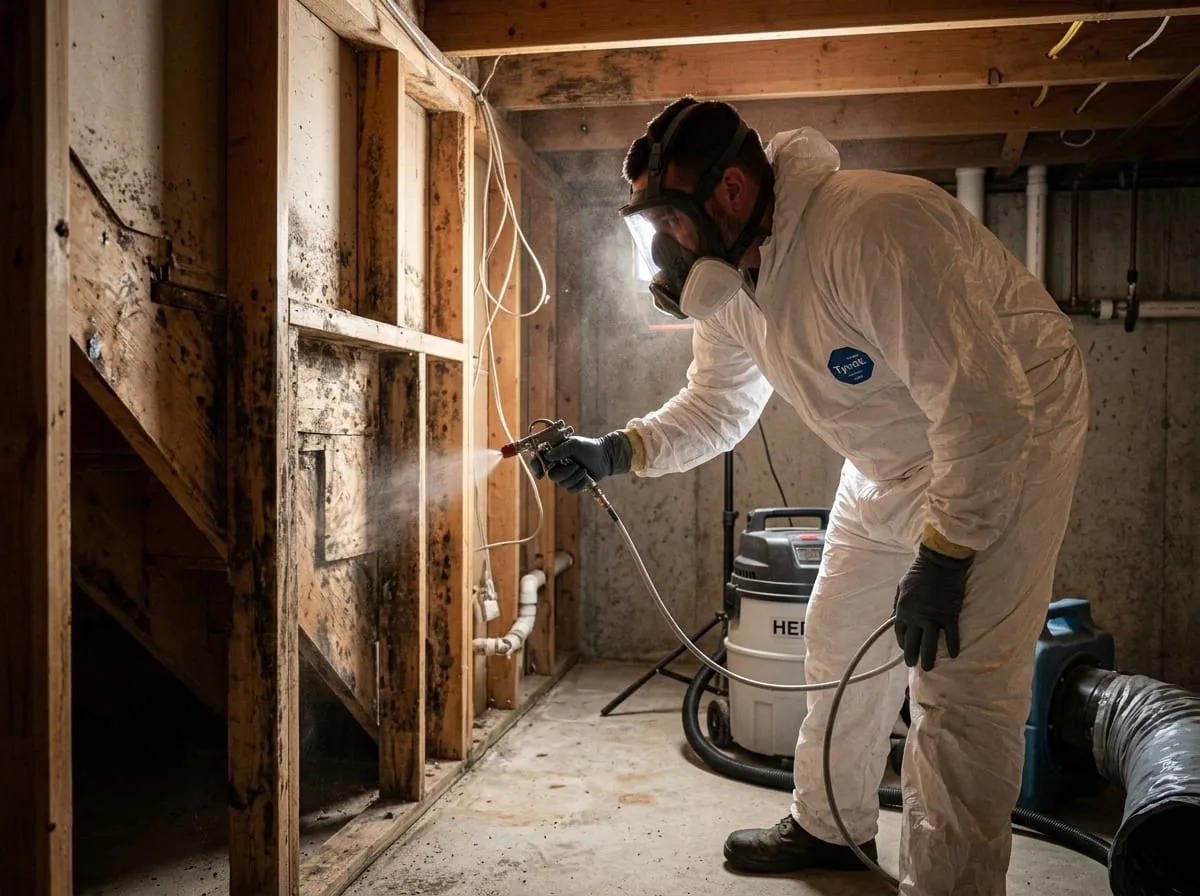
Most Grand Prairie homes sit on concrete slab foundations, so a flooded basement isn't a real concern here — true basements are rare region-wide. But the city's older housing stock, built during the tract-housing boom tied to its WWII-era aviation industry and continuing through the 1960s and 70s, does include genuine pier-and-beam construction with a crawl space underneath. Those enclosed, humid, poorly ventilated spaces are exactly where mold gets a foothold.
Why Crawl Spaces Are Vulnerable
Limited Airflow, Aging Barriers
A crawl space under a pier-and-beam home sits close to the ground, with limited airflow and, in many older homes, minimal or aging vapor barriers.
Soil Moisture and Hidden Leaks
North Texas's hot, humid summers add moisture from the surrounding soil, and clay soil movement can shift the piers and plumbing running through the space, creating slow leaks that go unnoticed for a long time. Combined with wood joists and subfloor as a ready food source, a crawl space can develop significant mold well before it's visible inside the home.
Signs of a Crawl Space Mold Problem
- A musty smell noticeable in the rooms directly above the crawl space
- Visible sagging, softness, or discoloration in flooring above the crawl space
- Condensation or standing water visible during a crawl space check
- Damaged or missing vapor barrier material
- A history of plumbing running through the crawl space with no recent inspection
What the Remediation Process Involves
Finding and Fixing the Moisture Source
Crawl space work starts the same way as any mold project — finding and correcting the moisture source, whether a plumbing leak, poor drainage, or a missing vapor barrier.
Treatment and Access Challenges
Affected wood and insulation are assessed for cleaning versus removal, the space is treated and dried, and — where it makes sense — a vapor barrier helps prevent recurrence. Because a crawl space is confined and low-clearance, containment and access require different equipment than an open room.
Residential Crawl Spaces vs. Commercial Foundations
Pier-and-beam crawl spaces are almost exclusively a residential concern in Grand Prairie — most commercial buildings are slab-on-grade. Older, pre-1960s homes are the most likely to have a genuine crawl space; newer homes and virtually all commercial space won't have this exposure.
Before Help Arrives
If you suspect mold or standing water in a crawl space:
- Avoid entering it yourself — the space is confined, may be poorly ventilated, and any electrical wiring should be treated as a hazard until checked
- If you can safely reach a shutoff for a suspected leak feeding the space, doing that is reasonable
- Beyond that, leave the assessment to a professional equipped for confined spaces
Frequently Asked Questions
Do all Grand Prairie homes have a crawl space?
No. Most homes built from the mid-20th century onward sit on a concrete slab with no crawl space at all. Genuine crawl spaces are mostly found in older, pre-1960s pier-and-beam homes.
How do I know if my house is slab or pier-and-beam?
Pier-and-beam homes typically have a small access hatch or door somewhere along the foundation's exterior, and the floor may have a slight amount of give or bounce that a slab foundation wouldn't. If you're not sure, an inspection can confirm it quickly.
Is a musty smell from my crawl space something to worry about?
A persistent musty odor coming from below the house is a reasonable reason to have the space checked, since it can indicate excess moisture or active mold growth even before any other signs show up inside the home.
Can a vapor barrier prevent crawl space mold?
A properly installed vapor barrier reduces moisture migrating up from the soil, which is one contributing factor. It doesn't address an active plumbing leak or drainage problem, so it works best as part of a broader fix rather than a standalone solution.
How often should an older home's crawl space be checked?
There's no fixed schedule that applies to every property, but a periodic check — especially after a heavy rain season or if plumbing runs through the space — is a reasonable way to catch a slow leak before it becomes a larger mold problem.