This page is about stopping mold before it starts, the moisture-control work done during and right after water damage mitigation. If mold is already visible, or a structure went several days without drying, see mold remediation instead.
Why Mold Risk Follows Water Damage
Mold spores exist in nearly every indoor and outdoor environment. They don't need a rare event to grow, just moisture, an organic food source like drywall paper or wood, and time. A water event provides the first two automatically; the only variable is how fast that moisture is removed.
The Realistic Timeline
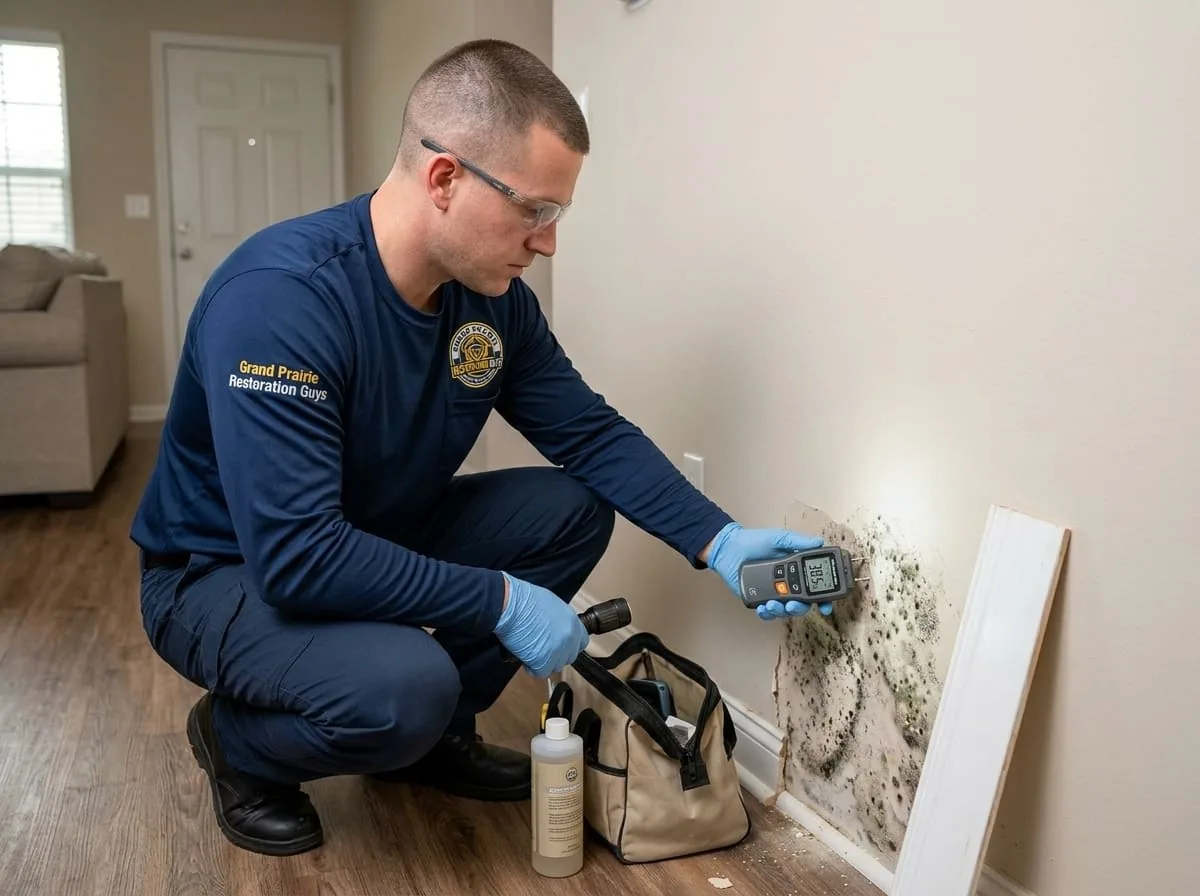
Under favorable conditions, mold can begin developing in roughly 24 to 72 hours after a material gets wet. Grand Prairie's hot, humid summers compress that window, since high humidity slows moisture release and gives mold less reason to stay dormant.
Signs Moisture Is Still a Problem
- A musty smell that lingers after cleanup
- Indoor humidity that won't drop into a normal range
- Visible condensation on windows or cool surfaces
- Discoloration returning to a surface after it was cleaned
What Prevention Actually Involves
Prevention is a sequence, not a single step:
- Thorough extraction, since leftover moisture undermines everything after
- Structural drying monitored to a verified dry standard, not a fixed number of days
- Antimicrobial or biocide treatment on materials at real risk
- Resolving the moisture source itself — a leak, roof breach, or ventilation issue — so it doesn't recur
- Post-drying humidity monitoring to confirm the space has stabilized
High-Risk Areas After a Water Event
Wall cavities, under flooring, crawl spaces, and cabinetry trap moisture and airflow poorly, making them higher-risk than open rooms. Affected HVAC ductwork deserves a look too, since it can spread mold spores if contaminated.
When Prevention Isn't Enough
If mold is already visible, or a structure sat wet more than a few days before drying started, the situation has moved past prevention into remediation, covered on the mold after water damage page.
Residential and Commercial Notes
The same principles apply to both, though commercial HVAC systems often serve a much larger area, raising the stakes if ductwork contamination isn't caught early.
What to Avoid
- Don't paint over a surface that's still damp underneath
- Don't seal up a room and assume it'll dry on its own without airflow or dehumidification
- Don't skip antimicrobial treatment on porous materials that got wet, even if they look fine
Frequently Asked Questions
How fast can mold actually start growing after water damage?
Under favorable conditions, in as little as 24 to 72 hours, which is why extraction and drying speed matter so much.
Does Grand Prairie's climate make mold more likely?
Yes, in a meaningful way. Hot, humid summer conditions slow structural drying and give mold spores a shorter wait before conditions favor growth compared to a drier climate.
Is antimicrobial treatment the same as mold remediation?
No. Antimicrobial treatment during water damage mitigation is a preventive step. Mold remediation is a separate, more involved process for addressing mold that's already established.
How do I know if prevention worked or if I need mold remediation?
A persistent musty smell, returning discoloration, or visible mold growth after drying are signs prevention wasn't fully successful and remediation may be needed.
Can mold grow behind a wall that looks dry on the surface?
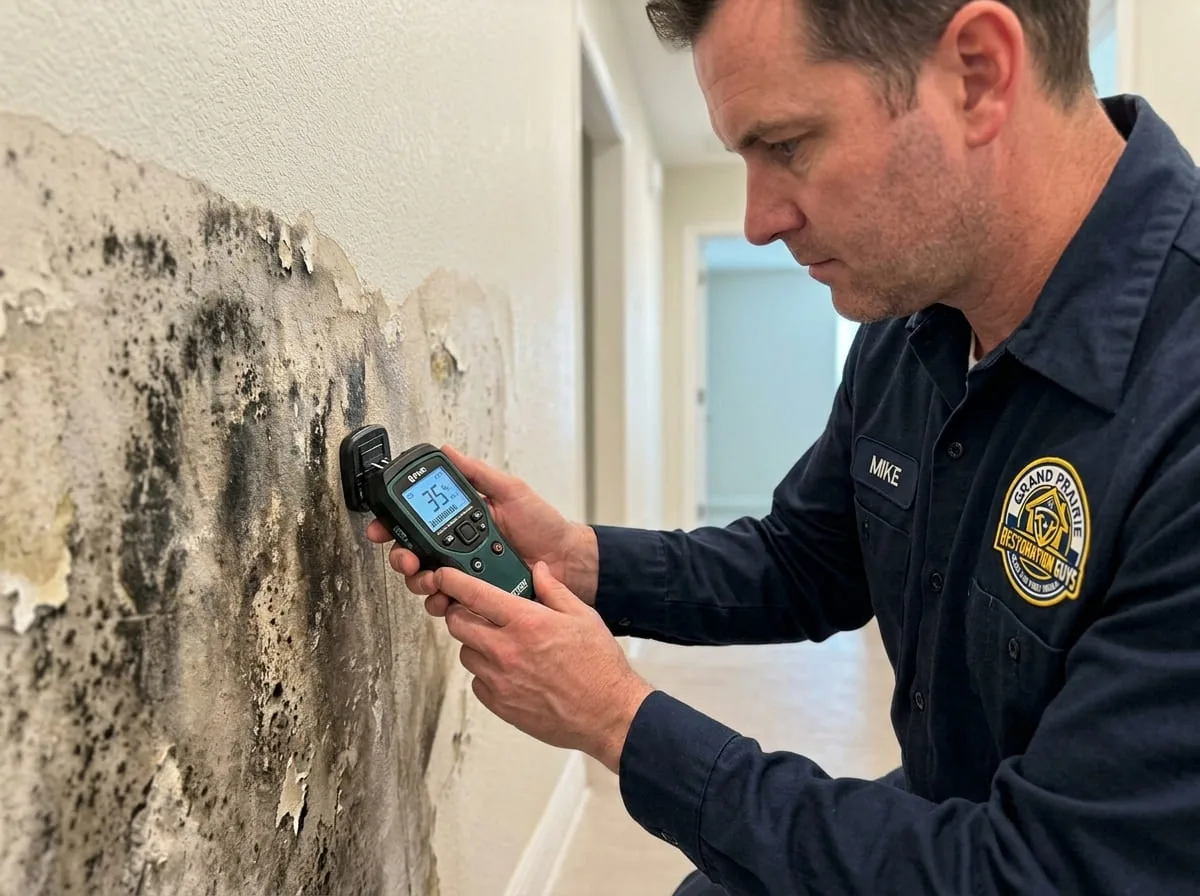
Yes. A surface can look and feel dry while the material behind it still holds enough moisture to support mold growth, which is why moisture meter verification matters.