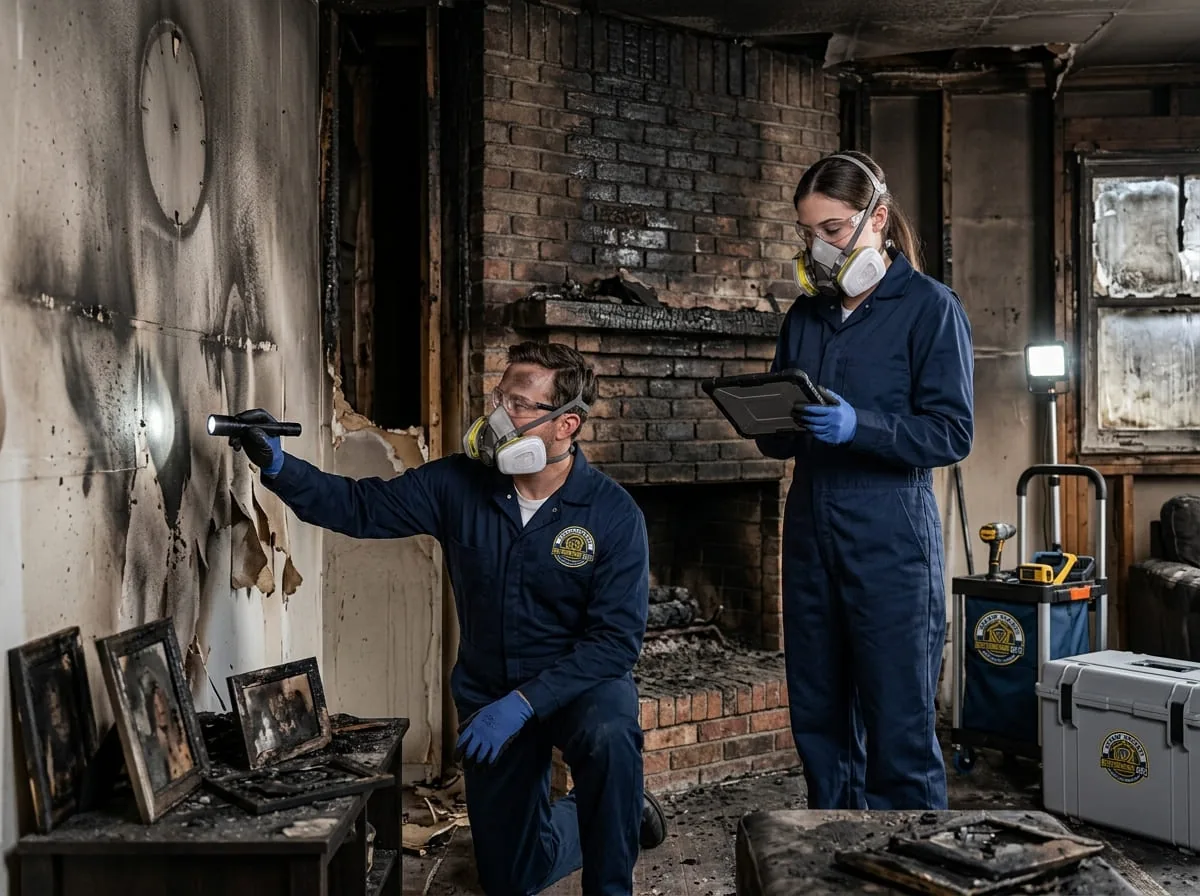
Cleanup and mitigation get a fire-damaged property stable, dry, and free of smoke and soot — but for most fires, that's only half the job. Burned framing has to be rebuilt, drywall cut out during extraction or remediation has to be replaced, flooring that couldn't be saved has to be reinstalled, and trim, paint, cabinetry, and fixtures all have to go back in before a family or business can truly move back in. That rebuilding process is what fire damage repairs and reconstruction covers, carried out by a licensed general contractor working from the same damage assessment that guided the earlier cleanup.
Why Reconstruction Is Its Own Distinct Phase
Restoration vs. Reconstruction
Restoration — extraction, drying, smoke and soot cleanup, deodorization — is about stopping ongoing damage and cleaning what can be cleaned. Reconstruction is about rebuilding what genuinely can't be salvaged: burned framing, drywall removed to dry a wall cavity or too heat-damaged to keep, soaked flooring, and any structural element compromised by fire, heat, or water.
Why Both Matter
A fire damage claim of any real size typically needs both, in sequence. This is the "Rebuild" piece of a full Water, Fire, Mold, Rebuild response, carried through by the same licensed contractors from one phase into the next.
What a Fire Damage Rebuild Typically Includes
Depending on the extent of the fire and water damage, reconstruction can include any or all of the following:
The Full Rebuild Scope
- Structural repairs — replacing or reinforcing burned, charred, or heat-weakened framing and load-bearing elements, brought back to current code
- Drywall and insulation replacement — new drywall and insulation in any cavity cut out for drying or fire damage, then taped, mudded, and textured to match
- Flooring replacement — removing and replacing flooring that couldn't be dried or cleaned, whether carpet, hardwood, tile, or laminate, and addressing the subfloor if affected
- Painting and finishing — priming to seal in remaining odor, then finishing walls, ceilings, and trim to match the rest of the property
- Trim, doors, and cabinetry — replacing baseboards, door casings, interior doors, and cabinetry removed or damaged during the fire or restoration
- Electrical and HVAC reconnection — coordinating with licensed electricians and HVAC technicians to safely reconnect or replace systems affected by the fire
- Final walkthrough and move-back — a final inspection confirming the property is genuinely ready for move-back
How Reconstruction Connects to Everything Else in the Fire Silo
Built on Earlier Assessments
Reconstruction doesn't start from a blank slate — it picks up from assessments made earlier in the process. The scope of drywall and framing replacement is largely set by what had to be removed during firefighting water damage cleanup and smoke odor removal. Flooring decisions follow the salvageability assessment made during soot removal and water extraction, and reconstruction can't begin until a property is secured with emergency board-up and tarping and contents are cleared through a pack-out, if one was needed. It's the last link in a chain that starts with the emergency call.
What's Typically Rebuilt vs. What Can Still Be Repaired
What Can Often Be Saved
Framing exposed to heat but not directly burned or charred can sometimes be inspected and cleared for reuse. Drywall that was only lightly affected and dried quickly may need patching rather than a full tear-out.
What Has to Be Replaced
Any framing member that's charred, structurally compromised, or fails inspection has to be replaced — this isn't an area for a visual guess. A qualified inspection drives these decisions, not assumption in either direction; the honest starting point for any rebuild is a proper structural and moisture assessment, not a predetermined scope.
Residential Reconstruction
For a home, reconstruction is usually organized room by room, following the pattern of damage through the structure, and sequenced so a family sees real progress rather than a property sitting half-finished for months. Matching existing finishes — flooring, trim profiles, cabinetry style — is often a priority so rebuilt sections blend into the rest of the home.
Commercial Reconstruction
For a business, reconstruction often has to work around a reopening timeline, sometimes rebuilding one section while another stays operational. It also more frequently involves permitting, code-compliance upgrades triggered by the scope of work, and coordination with a property manager or multiple tenants. See the commercial fire damage restoration page for how that fits into the broader response.
Working With Insurance on Reconstruction
Reconstruction is typically the largest single line item in a significant fire claim, and insurers generally expect a detailed scope of work and cost estimate before authorizing rebuilding. Photo documentation from earlier restoration phases — what was removed and why — supports that estimate and helps prevent later disputes. Confirm directly with your insurer how they handle code-upgrade costs, matching-material requirements, and any depreciation holdback tied to your policy.
What to Avoid During the Reconstruction Phase
- Don't hire unlicensed labor to "save money" on drywall, flooring, or structural work — reconstruction often touches load-bearing elements and electrical systems, and unlicensed work can create safety issues and complicate a claim or future sale
- Don't rush belongings back into rooms before reconstruction and any inspections are fully signed off, especially where new materials need time to cure
- Don't assume reconstruction is optional cosmetic work — beyond a very minor fire, it's what makes a property safe and livable again, not just presentable
Frequently Asked Questions
Does Grand Prairie Restoration Guys do the actual rebuilding?
No. Grand Prairie Restoration Guys is a connection and routing service — reconstruction work is carried out by a licensed general contractor, and every stage from initial mitigation through final repairs is handled by that licensed, insured professional.
How do I know if my drywall or framing needs to be replaced instead of repaired?
That's determined by a professional structural and moisture assessment, not a visual guess. Framing that's charred or structurally compromised needs replacement; lightly affected drywall that dried out quickly may only need patching. The assessment drives the scope, not an assumption in either direction.
Will the rebuilt sections of my home match the rest of the property?
Matching existing flooring, trim, paint, and cabinetry finishes is typically a priority during reconstruction so repaired areas blend in rather than looking obviously patched, though exact matches aren't always possible for discontinued materials.
How long does fire damage reconstruction take?
It varies significantly with the extent of damage — a contained, single-room repair can move much faster than a rebuild involving structural framing, multiple rooms, or a full floor. A realistic timeline comes from an on-site scope-of-work assessment.
Does insurance cover the full cost of reconstruction?
Most policies that cover fire damage include reconstruction as part of the claim, though coverage details, code-upgrade allowances, and any depreciation holdback vary by policy — confirm the specifics directly with your insurer.
Can I move back in before reconstruction is completely finished?
It depends on which areas are affected and whether the completed portions have passed final inspection. In many cases a property is only genuinely ready for move-back once reconstruction, inspections, and any necessary curing time for new materials are fully complete.