A mold problem in a commercial building carries different stakes than one in a home — a lease to manage, tenants who need the space functioning, and often more square footage and complex mechanical systems. Commercial mold remediation solves the problem without shutting down more of the property than necessary.
Common Sources of Commercial Mold Problems
- Roof leaks and flat-roof drainage issues common in retail and office buildings
- Plumbing failures in restrooms, break rooms, or shared mechanical spaces
- HVAC condensation and poorly maintained ductwork
- Slow leaks in multifamily buildings that go unreported by a single unit
- Storm and flash-flood water intrusion at ground-level entries and loading areas
Signs Worth Flagging to Building Management
- A musty smell in a stockroom, mechanical closet, or unoccupied suite
- Discoloration on ceiling tiles, particularly near HVAC diffusers or roof penetrations
- Employee or tenant reports of a persistent odor tied to one part of the building
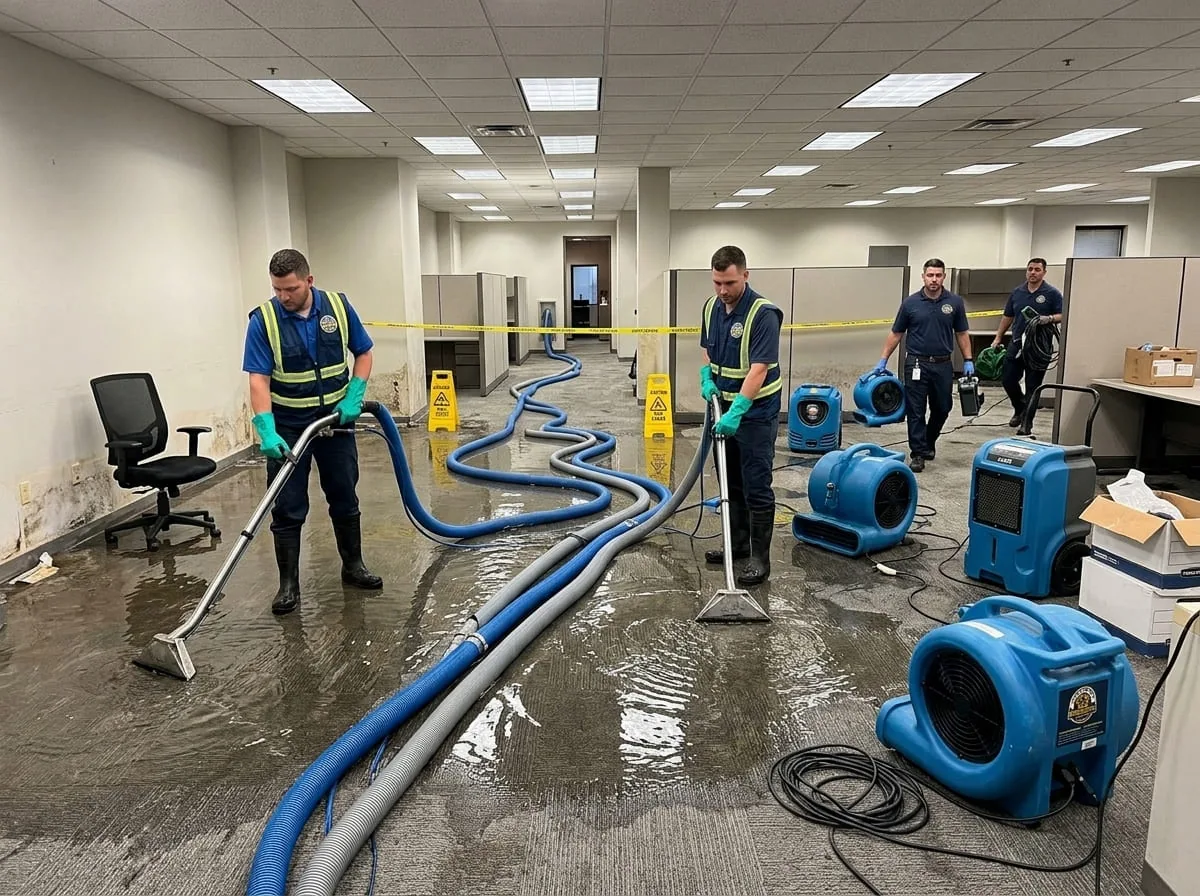
- Any past water event in the building that wasn't confirmed fully dried
Commercial spaces are often larger and less monitored than a home, so staff or tenant reports are frequently the first signal something needs a closer look.
Why Timing Matters More in Commercial Settings
Commercial buildings' larger, more complex systems mean a moisture problem can travel further — behind ceiling tiles, through shared HVAC ductwork, or across tenant spaces — before anyone notices. A slow leak in a stockroom or mechanical closet can go unaddressed longer than in a home, simply because fewer people check that space regularly.
Minimizing Disruption to Your Business
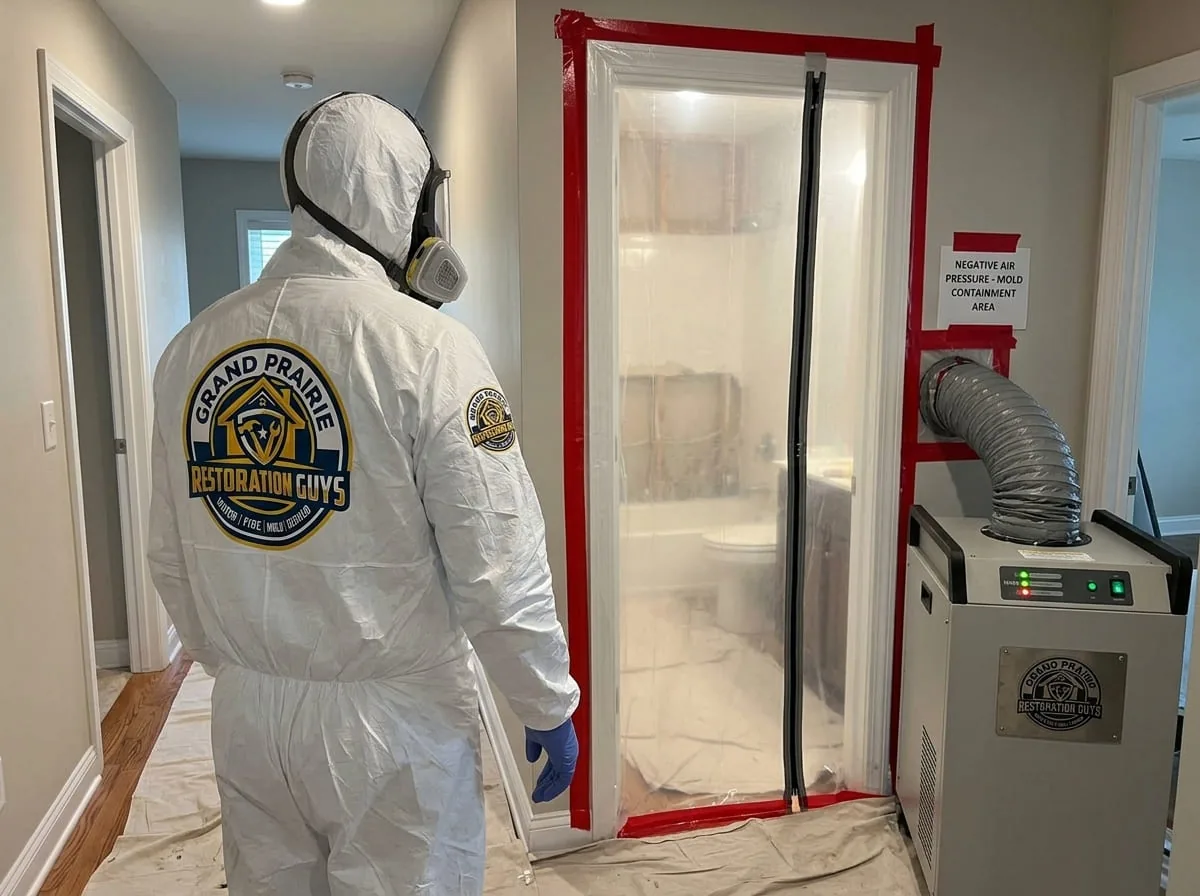
Containment is planned around keeping unaffected areas open wherever it's safe — a single retail unit, an office suite, or one floor of a multifamily building, not the whole property. Scheduling outside business hours, coordinating with property management or a general contractor, and phasing the project are options discussed during the assessment.
Documentation for Commercial Insurance and Lease Requirements
Commercial policies and lease agreements frequently require specific documentation before, during, and after a project — photos, moisture readings, and a clear scope-of-work record. Getting this right from the inspection stage helps avoid disputes with insurers, landlords, or tenants later.
What the Process Looks Like
Commercial mold remediation generally follows these steps:
- Initial assessment and moisture investigation
- Correcting the source, often coordinated with building maintenance or a general contractor
- Containment of the affected area
- Removal of unsalvageable materials and treatment of what can be kept
- Structural drying and a final check before the space returns to use
Frequently Asked Questions
Can mold remediation happen without closing my whole business?
In most cases, yes — containment can typically be limited to the affected suite, floor, or area rather than the entire building, and this is discussed specifically during the assessment.
Who handles the moisture source if it's a building-wide plumbing or roof issue?
That's usually coordinated with your property manager, building engineer, or general contractor, since correcting the source is often outside the scope of the mold remediation work itself.
Does commercial property insurance cover mold remediation?
Coverage depends on your specific policy and whether the mold is tied to a sudden, covered event versus a maintenance issue. Documentation from the inspection stage supports whichever claim applies.
How long does a commercial mold remediation project typically take?
It varies significantly based on the size of the affected area and the materials involved — a contained single-room issue moves faster than one spanning multiple units or floors.
Can a commercial mold inspection happen after hours?
Yes, scheduling around business hours is a normal part of planning a commercial inspection or assessment, particularly for retail or occupied office space.