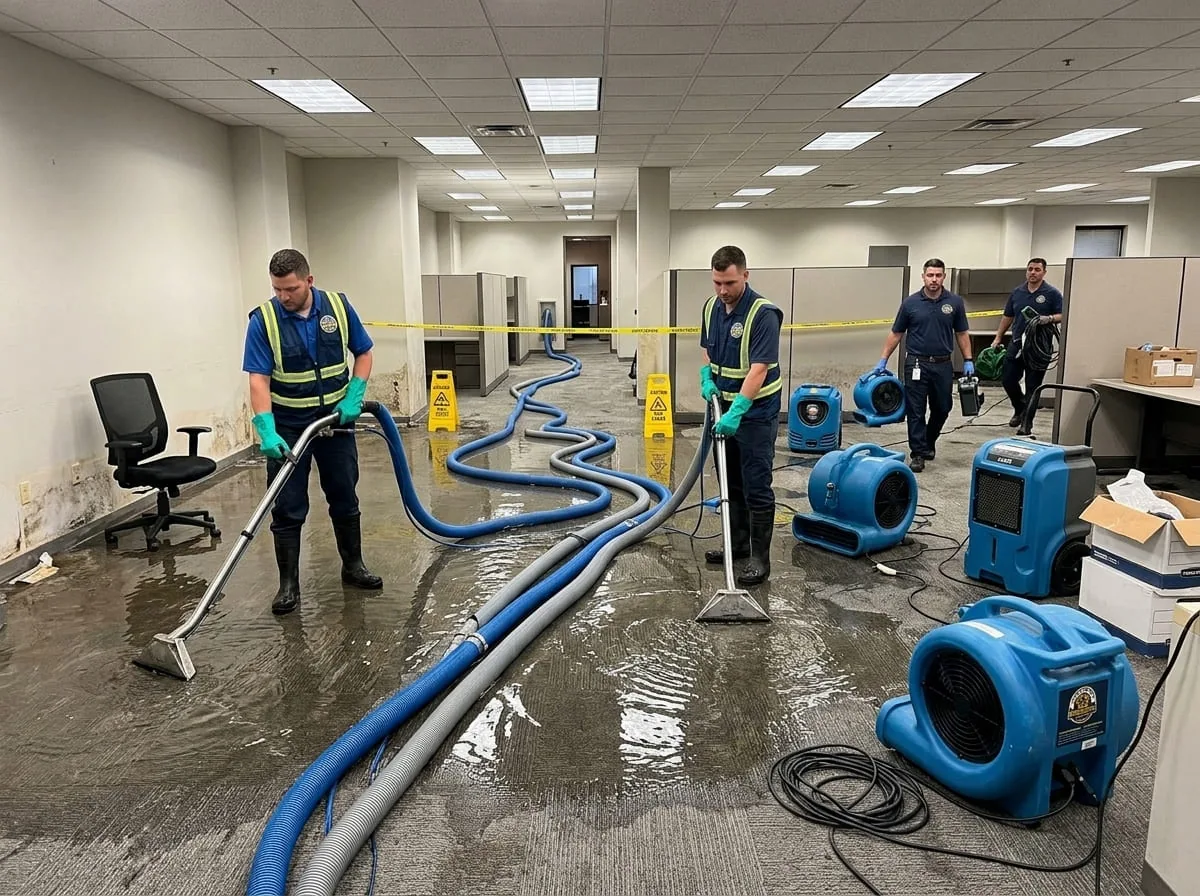
Grand Prairie's commercial base spans office and retail space to warehouse, logistics, and manufacturing buildings tied to the city's aviation-era growth. A water loss there carries pressures a residential job doesn't: revenue, inventory, and sometimes a lease riding on how fast the space is usable again.
Common Commercial Water Damage Sources
- Roof drain or rooftop HVAC condensate line failures
- Fire sprinkler system discharge or leaks
- Restroom or breakroom supply line failures
- Warehouse roof leaks during storms
- Slab leaks affecting retail or office space, driven by the same clay-soil foundation movement that affects homes
Why Commercial Losses Are Handled Differently
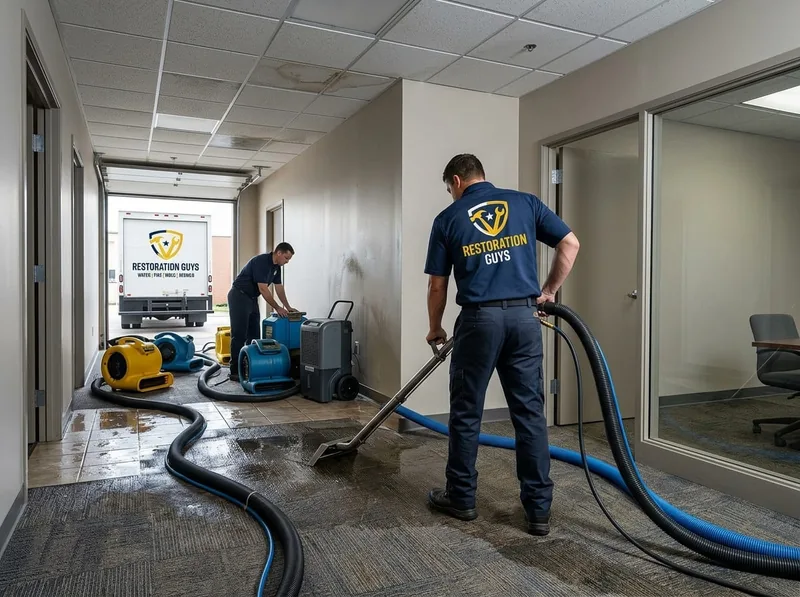
A commercial job accounts for business-interruption pressure a homeowner doesn't face, plus multi-tenant coordination, code-driven documentation, and equipment that scales to cover much larger floor areas.
Risks of Delay for a Business
Inventory sitting in a wet area degrades or becomes unsellable, equipment and electronics can fail well after the event, and every day a location stays closed is lost revenue on top of repair costs. Lease agreements and liability exposure add further reasons not to let a loss sit.
The Commercial Restoration Process
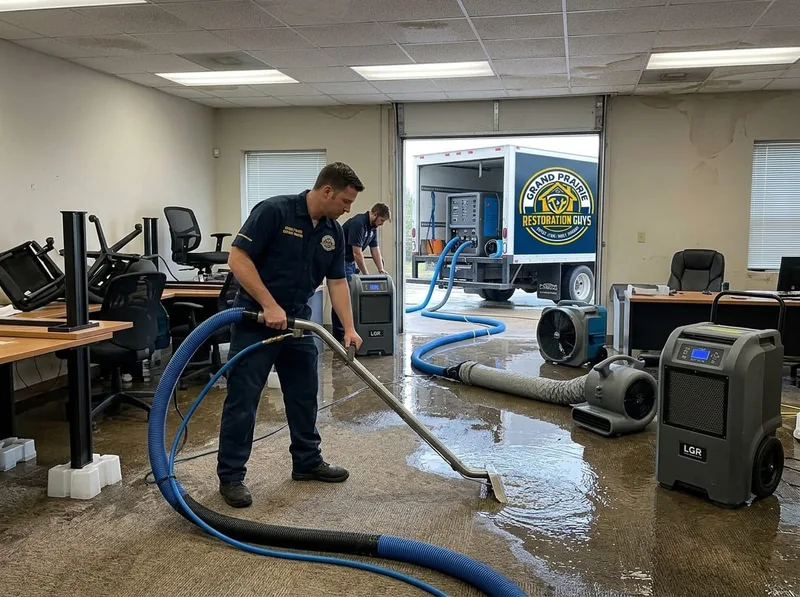
Scoping happens fast, with large-scale extraction and drying equipment matched to the space. Where possible, restoration is phased so part of a building can reopen while work continues elsewhere. Coordination with property management runs throughout, and documentation is prepared in the format commercial insurance typically requires.
What's Salvageable in a Commercial Setting
This depends on the water category and what it contacted. Server rooms and sensitive electronics need specialized handling rather than standard drying. Inventory salvageability depends on packaging, material, and the water category involved.
After-Hours and Multi-Tenant Considerations
Commercial dispatch runs 24/7, since many losses, a burst sprinkler line overnight, an HVAC failure over a weekend, are discovered outside business hours. Multi-tenant buildings add coordination to identify which units are affected and notify the right parties.
Before Crews Arrive
- Isolate the affected area if it can be done safely
- Shut down power to affected circuits following your facility's protocol
- Notify property management or building ownership right away
Frequently Asked Questions
Do you respond to commercial properties after hours?
Yes, dispatch runs 24/7 for commercial and residential calls alike.
Can you restore part of a building while the rest stays open?
Often, yes. Restoration is frequently phased to keep unaffected areas operational while work continues in the damaged section.
How do you handle a multi-tenant building?
The affected units are identified first, and coordination runs through property management to notify the right tenants and address shared systems if needed.
What about electronics or inventory damaged by water?
Electronics and sensitive equipment typically need specialized handling rather than standard structural drying, and inventory salvageability depends on the water category and how it was packaged.
Do you work directly with our property management company?
Yes, coordination with facilities staff or property management is standard on commercial jobs to manage access, documentation, and scheduling.