
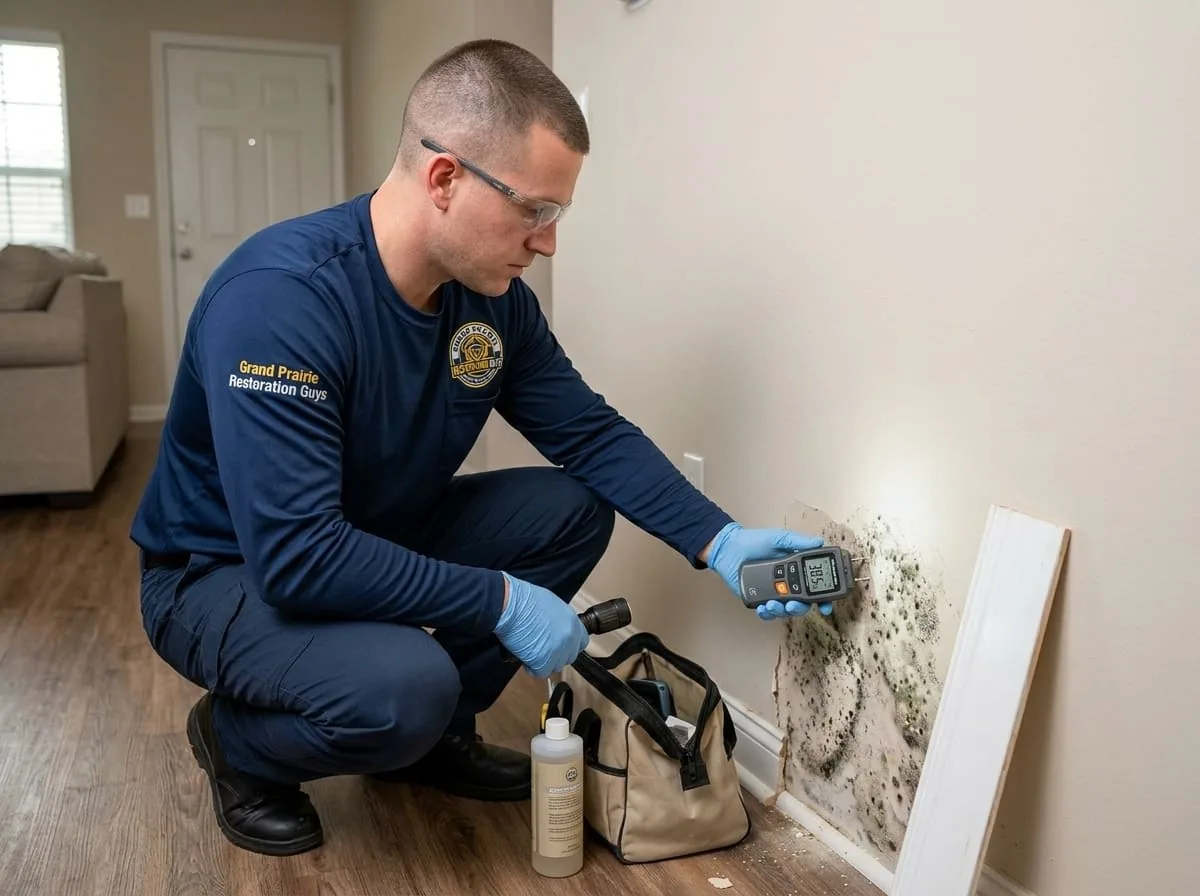
A mold inspection comes before any remediation decision. Rather than guessing at scope from what's visible, it combines a visual assessment with moisture readings to build an accurate picture of what's actually happening — the only reliable basis for a sound remediation plan.
When a Mold Inspection Makes Sense
- A musty odor with no obvious visible source
- Concern following a past water event, even one that seemed fully dried
- Visible discoloration you're not sure is mold or just staining
- Before buying or selling a home, particularly an older property
- Ongoing allergy or irritation symptoms that seem tied to a specific room or area
What Happens During an Inspection
Walking the Property
An inspector examines areas most prone to moisture — bathrooms, kitchens, crawl spaces where applicable, attics, and any area with a known history of water intrusion. Moisture meters check materials that look dry on the surface but may still hold moisture underneath.
Thermal Imaging as a Supplement
Thermal imaging can help identify hidden moisture behind walls or under flooring — a supplement to direct readings, not a replacement for them.
Visual Assessment vs. Testing
What a Visual Inspection Shows
An inspection on its own is primarily visual and moisture-based — it identifies where a problem exists and how extensive it appears to be. Many inspections are sufficient on their own to scope a remediation plan.
When Sampling Gets Added
Species identification or confirming airborne mold levels requires actual sampling, a related but separate service. Testing is added when there's a specific reason to identify what's present — a health concern, a real estate transaction, or a dispute needing documented evidence.
What You Get From an Inspection
A completed inspection gives you a clear picture of where moisture or mold problems exist, how extensive the issue is, and a recommended scope of work if remediation is needed — the basis for an accurate plan and, later, useful insurance documentation.
Residential and Commercial Mold Inspections
The same core process applies to both. A home inspection covers the areas above, while a commercial inspection also accounts for shared HVAC systems, larger square footage, and multiple tenant spaces, often scheduled around business hours.
Getting Ready for an Inspection
There's not much preparation required — access to the areas of concern (a crawl space hatch, an attic panel, a bathroom with a known past leak) is the main thing worth having ready. Any record of a past water event, repair, or inspection report mentioning moisture helps the inspector focus on what matters most.
Frequently Asked Questions
How long does a mold inspection take?
It depends on the size of the property and how many areas need to be checked, but a typical residential inspection generally takes a couple of hours.
Will an inspection tell me what type of mold I have?
Not on its own. Species identification requires sampling and lab analysis, which is a separate step from a visual and moisture-based inspection.
Do I need an inspection if I can already see mold?
Even with visible mold, an inspection helps confirm how far the problem extends beyond what's visible — including behind walls or under flooring — so the remediation plan covers the full scope rather than just what's obvious.
Is a mold inspection required before buying a home in Grand Prairie?
It's not a standard requirement the way a general home inspection is, but many buyers request one for older homes or properties with a known history of water damage.
What areas of a crawl space or attic will an inspector actually access?
Inspectors generally check as much of an accessible crawl space or attic as safety allows. Tight clearance, insulation depth, or structural obstructions can limit how far into a space an inspection reasonably goes.