Arlington is the biggest city in this part of North Texas, and it behaves like several cities stitched together — the entertainment corridor around the ballpark and football stadium, a huge student and rental population around the university, and mile after mile of single-family neighborhoods stretching south toward Mansfield. A water emergency looks different depending on which of those Arlingtons you're standing in, but the response needs to be the same: fast, and available at 2 p.m. or 2 a.m.
Whether it's a slab leak that's been running under a mid-century home for weeks, a commercial kitchen line that let go overnight, or a flooded apartment unit on a Saturday, calling (817) 618-7675 connects you with a restoration crew already set up to work in Arlington, not one being routed in from somewhere else after the fact.
A word on safety while help is on the way: standing water near outlets, cords, or plugged-in appliances is a genuine electrical hazard, and floodwater or sewage backup can carry contaminants that shouldn't be handled without the right protective equipment. If a ceiling is sagging or a floor feels soft underfoot, stay out of that room until a technician has assessed it — those are structural questions, not cleanup questions.
Water Damage Restoration in Arlington, TX
Finding Where the Water Went
Every water damage call starts with the same question: where is the water, and where is it going next. In a slab-foundation city like Arlington, that second question matters as much as the first — water that's found its way under a wall plate or into a subfloor doesn't stay put, and by the time it's visible as a stain on a ceiling or a soft spot in flooring, it's usually already spread further than it looks.
Equipment Built for the Job
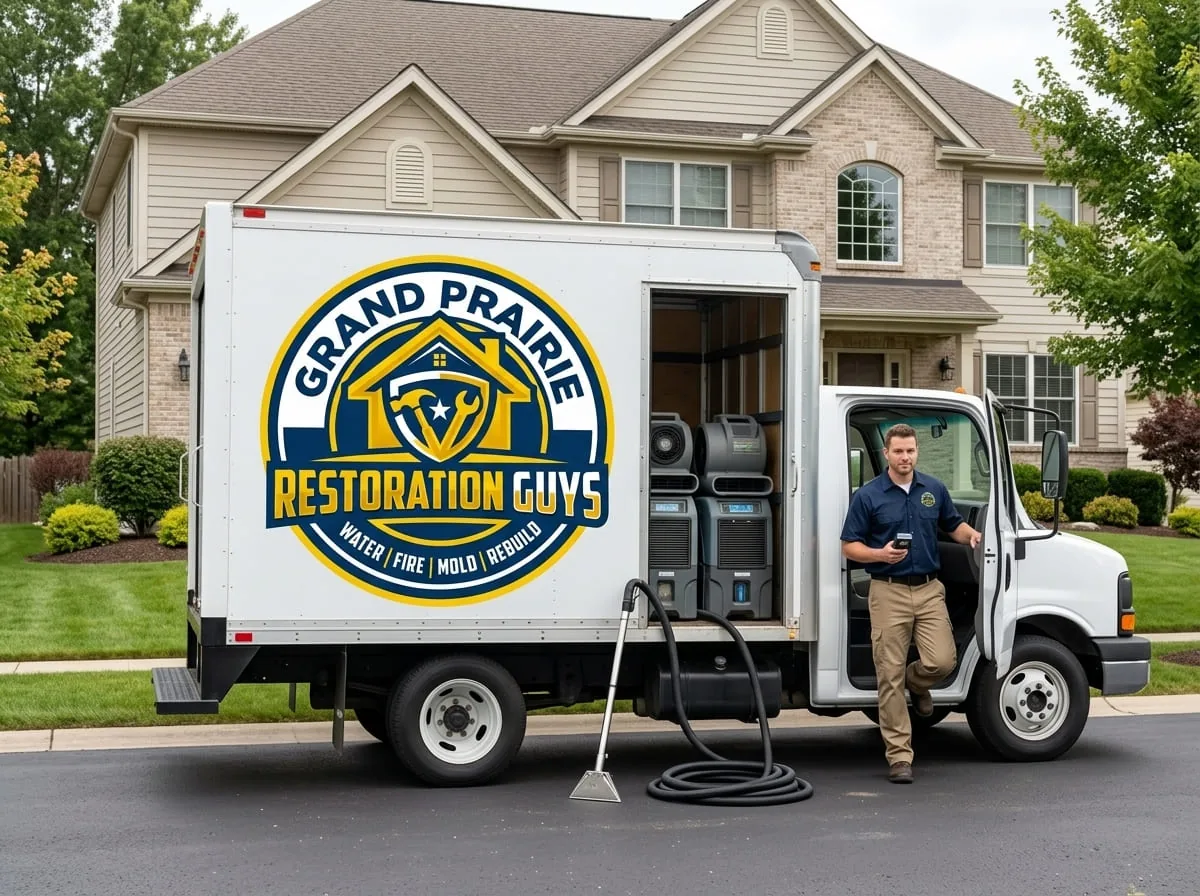
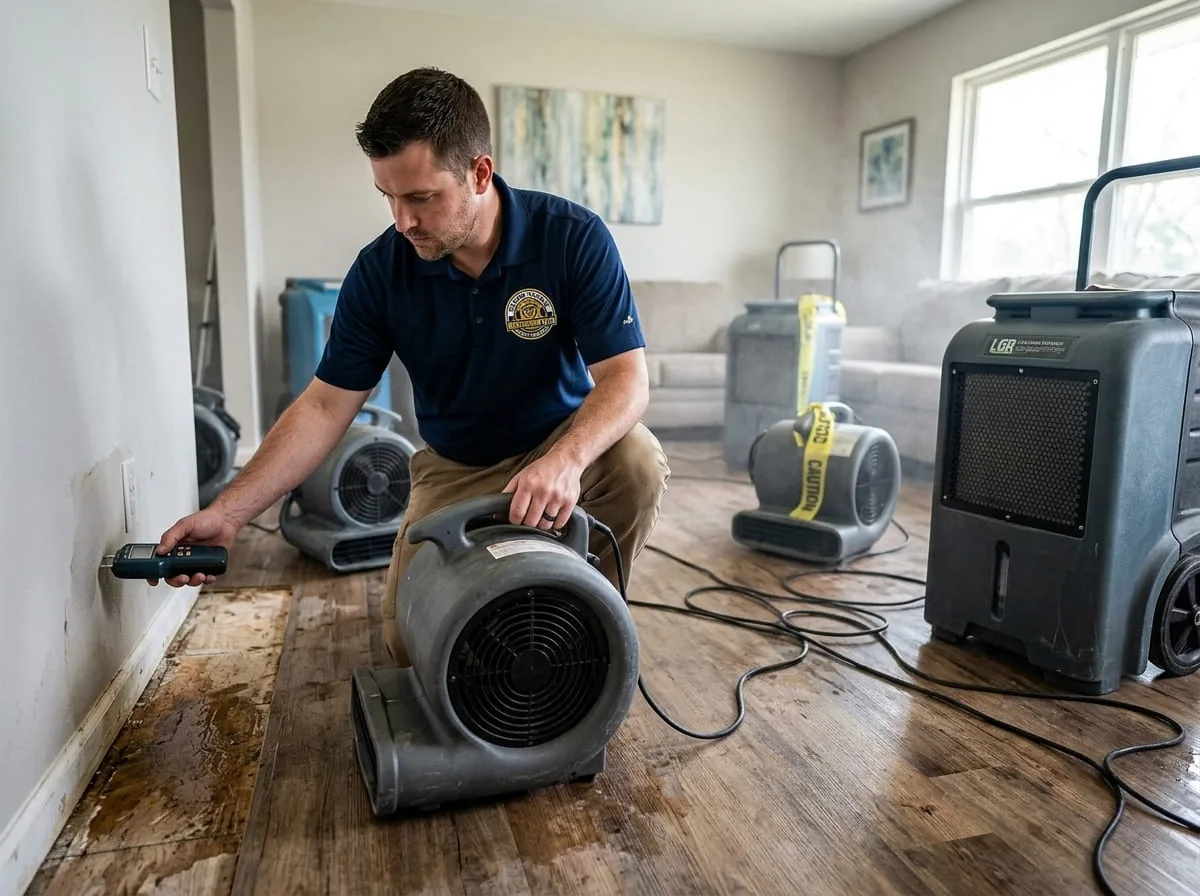
The professionals dispatched into Arlington bring truck-mounted extraction equipment, moisture meters and thermal imaging to map how far water has actually traveled (not just where it's pooling), and commercial-grade air movers and dehumidifiers to bring a structure back to a normal moisture reading rather than just a dry-to-the-touch one. That distinction matters because materials that look dry can still be wet enough, deep enough, to start growing mold within days in this climate.
What This Response Covers
This is the core of what a water damage restoration response covers in Arlington: emergency water extraction, structural drying and dehumidification, and the assessment work that tells an adjuster and a homeowner what actually needs to be replaced versus what can be dried and saved. For sudden pipe failures specifically, the burst pipe water damage page covers what that process looks like in more detail, and storm-driven events are covered separately below and on the storm and rain water damage page.
Sizing the Job Correctly
Because Arlington's building stock ranges from single-story ranch homes to multi-story apartment buildings and large commercial footprints near the stadium corridor, the equipment brought to a job is sized to the space, not applied one-size-fits-all. A one-bedroom apartment with a bathroom overflow needs a different drying plan than a 2,000-square-foot restaurant kitchen with water under a bank of walk-in coolers, and getting that sizing right the first time is a big part of why the initial assessment takes the time it does.
Arlington's Growth and Housing Stock
From Boomtown to Metroplex Anchor
Arlington's growth didn't happen gradually — it happened in waves. A mid-20th-century manufacturing plant and, not long after, Six Flags Over Texas turned what had been a smaller rail town into a fast-growing city through the 1950s and 1960s, and that growth kept compounding as the University of Texas at Arlington expanded and, later, as professional sports moved into the city with the ballpark and the football stadium. The result is a housing stock with real range: solid mid-century brick homes closer to the historic core and the UTA area, dense apartment and townhome development built to house students and stadium-area workers, and wave after wave of single-family subdivisions built outward through the 1970s, '80s, '90s, and on toward Mansfield in more recent decades.
Slab Foundations and Clay Soil
None of that housing sits on a basement — like the rest of North Texas, Arlington is built almost entirely on concrete slab foundations, because the region's high water table and expansive clay soils make basements impractical here. What that soil does instead is move. Clay under a slab swells when it's wet and shrinks when it dries out, and that seasonal movement stresses the copper and CPVC supply lines running under or through the slab. Over years, that's a genuine, well-documented cause of slab leaks across this part of Texas — not a rare event, but a routine one in homes of a certain age.
The Poly-B Pipe Problem
Add to that the fact that a meaningful share of Arlington's mid-to-late-'70s through mid-'90s housing stock was plumbed with polybutylene (poly-B) supply piping, a material with a well-known history of premature failure, and it's easy to see why Arlington homeowners call about water damage that started as a mystery: a warm patch on the floor, a water bill that jumped for no obvious reason, carpet that's damp with no visible source.
Different Eras, Same Soil
Geographically, that mix plays out block by block. Homes closer to downtown Arlington and the UTA campus skew older, apartment density rises noticeably near the entertainment district and along the major commercial corridors, and the neighborhoods extending south toward the Mansfield line and west toward Grand Prairie represent later waves of suburban construction. A restoration crew working across that range in a single week might see a slab leak in a 1960s brick home in the morning and a sprinkler-line break in a 1990s subdivision home in the afternoon — different eras, same underlying soil.
Common Water Damage Scenarios We See in Arlington
A few patterns show up again and again across Arlington's mix of housing and building types:
Typical Causes We See
- Slab leaks in homes built before the mid-1990s, caused by clay soil movement stressing under-slab supply lines — often discovered as a hot spot on flooring, an unexplained water bill spike, or damp carpet with no obvious cause.
- Poly-B pipe failures in homes built roughly 1978–1995, where aging polybutylene fittings let go behind walls or under sinks.
- Flash flooding during fast-moving North Texas thunderstorms — the region's flat terrain and clay soil shed rainfall quickly rather than absorbing it, so intense storms can produce street and property flooding in a short window, even without a named tropical system involved.
- Multifamily and apartment leaks near the university and entertainment district, where a failure in one unit or a shared line can affect several units at once.
- Water heater and appliance failures in older single-family homes, especially units original or near-original to the house.
- Commercial and hospitality water events around the stadium and ballpark corridor, from restaurant kitchen lines to hotel plumbing, where downtime carries a real cost.
- Irrigation and landscaping line leaks near a foundation, which can add sustained moisture to already-stressed clay soil and compound slab movement over time.
Residential and Commercial Water Damage Response
Residential Response
Residential water damage restoration in Arlington covers everything from a single-family home near the historic core to a unit in one of the city's many apartment communities near UTA and the entertainment district — a market where multi-unit water events are common enough that fast containment matters to protect neighboring units, not just the one where the water started.
Commercial Response
On the commercial side, Arlington's mix of hotels, restaurants, retail, and office space around the stadium corridor and along its major commercial arteries means commercial water damage restoration calls often carry business-interruption pressure on top of the physical damage. Crews dispatched to a commercial loss in Arlington work with that in mind — extracting, drying, and documenting quickly enough that a business has a real shot at reopening on a reasonable timeline, with the kind of documentation an insurer and a property manager both need to see.
Scheduling Around Game Days
Event scheduling adds another wrinkle unique to Arlington's commercial corridor: a restaurant, hotel, or retail space near the stadium district often can't simply close for a week while drying equipment runs, because game days and event nights are when that business does the bulk of its revenue. Coordinating a drying and repair timeline around that reality, rather than around a generic schedule, is part of what a commercial response in this specific part of Arlington looks like in practice.
Fire Damage Restoration in Arlington, TX
Where Fire and Water Overlap
The same dispatch line that handles water emergencies also covers fire damage restoration in Arlington, and the two overlap more often than people expect — firefighting efforts routinely leave a structure with as much water damage as fire damage, and that water needs the same urgent extraction and drying response covered above. Arlington's density of hotels, restaurants, and multifamily buildings also means commercial fire damage restoration is a real part of the workload here, alongside standard residential smoke, soot, and odor cleanup after a house fire.
Older Wiring, Higher Risk
Mid-century homes in Arlington's older neighborhoods sometimes carry original or older electrical wiring, a well-documented general risk factor for house fires, which is part of why smoke and soot cleanup after a residential fire is a routine call in the older parts of the city. Where reconstruction is needed after a fire, the fire damage repairs and reconstruction page covers that next phase of the work.
Mold Remediation in Arlington, TX
Mold After a Water Event
North Texas summers are hot and humid enough to shrink the window between a water event and a real mold problem, compared to a drier climate — which is exactly why mold after water damage is one of the most common mold calls in Arlington. A slab leak that ran for weeks before anyone noticed, or an apartment unit that took on water while a tenant was away, is a textbook setup for hidden mold growth behind baseboards or under flooring. Mold remediation crews serving Arlington handle both residential jobs and commercial mold remediation for the office, retail, and hospitality buildings that make up a large share of the city's commercial footprint.
Mold in Shared Walls
In multifamily buildings specifically, a moisture problem in one unit can migrate through a shared wall cavity into a neighboring unit without ever being visible in the source unit's living space, which is one reason a full assessment matters more than a quick visual check in Arlington's denser rental communities.
The Restoration Process, Step by Step
Most water damage jobs in Arlington move through the same sequence, whether it's a small residential leak or a larger commercial loss:
- Call and dispatch — (817) 618-7675 connects to a live line 24/7; a crew is dispatched based on the details you provide.
- Assessment and moisture mapping — moisture meters and thermal imaging identify how far water has traveled, not just where it's visible.
- Water extraction — standing water and saturated material is removed with truck-mounted and portable extraction equipment.
- Structural drying and dehumidification — air movers and commercial dehumidifiers run until materials reach a genuinely dry moisture reading, not just a dry appearance.
- Cleaning and sanitizing — affected surfaces are cleaned and treated, particularly important after any contaminated water.
- Repairs or reconstruction — where reconstruction is needed, from initial extraction through full reconstruction and repairs, the contractor on the job holds a general contractor licence.
Why the Repair Step Matters
That last step matters more than it might seem. A water loss that's been extracted and dried but never actually repaired — a cut-out section of drywall, a missing baseboard, flooring that was pulled and never replaced — is a job that's only half finished. Coordinating the repair phase with the same team that handled extraction and drying avoids the handoff gaps that can happen when a homeowner has to separately source a contractor after the fact.
Serving Arlington and Nearby Communities
Response isn't limited to one side of Arlington. The same crews cover the city end to end and extend into neighboring communities, including Mansfield to the south and Kennedale to the southeast, along with quick reach into Irving for property owners closer to that side of the Metroplex.
One Number, Every Address
That regional reach matters in a metro area where property owners, families, and businesses regularly cross city lines — a property manager with buildings in both Arlington and Mansfield, for instance, can call the same number for either address.
It also means a consistent standard of response no matter which side of Arlington a call is coming from, whether that's a home a few blocks from the historic core or a new-build subdivision pushing up against the Mansfield line.
Frequently Asked Questions
How fast can someone reach a home near UTA or the entertainment district?
Dispatch covers all of Arlington, and calls are prioritized by severity. Call (817) 618-7675 and describe what's happening — active flooding, a burst pipe, or a slower leak — so the response can be sized correctly from the start.
Is a slab leak in an older Arlington home covered by homeowner's insurance?
Coverage depends on your specific policy and the cause of the leak, so this isn't something we can answer in general terms. What we can say is that documenting the damage promptly with a professional assessment gives you and your insurer the clearest picture to work from.
What if the water damage is at a restaurant or hotel near the stadium during an event?
Commercial losses in high-traffic areas are handled with business interruption in mind — extraction and drying are prioritized to get a viable path back to operation as quickly as the damage allows.
Can older Arlington homes still have polybutylene (poly-B) plumbing?
Homes built roughly between 1978 and 1995 across Texas commonly used poly-B supply piping, and Arlington has a meaningful amount of housing stock from that era. It's a recognized, well-documented risk factor worth being aware of, not a guarantee of failure.
Do you handle water damage in apartment or multifamily units?
Yes. Multifamily water events are common in Arlington given the density of rental housing near the university and entertainment district, and crews are equipped to respond to single units or shared-line failures affecting multiple units.
What should I do while I'm waiting for a crew to arrive?
If it's safe to do so, shut off the water source and avoid standing water near electrical outlets, cords, or appliances. Don't attempt to move heavy saturated furniture alone, and don't enter a room with a sagging ceiling — leave structural checks to the professionals arriving on scene.