Water damage covers more than a flooded room: slow slab leaks, sewage backups, storm-driven roof leaks, and the structural drying needed after any of them. The services below match the right response to each type of problem.
Emergency Response and Extraction
When water is actively damaging a property, the priority is stopping the source and getting it out: 24/7 dispatch, truck-mounted and portable extraction, and safety triage around saturated drywall, sagging ceilings, or standing water near electrical circuits.
Flooding, Storms, and Burst Pipes
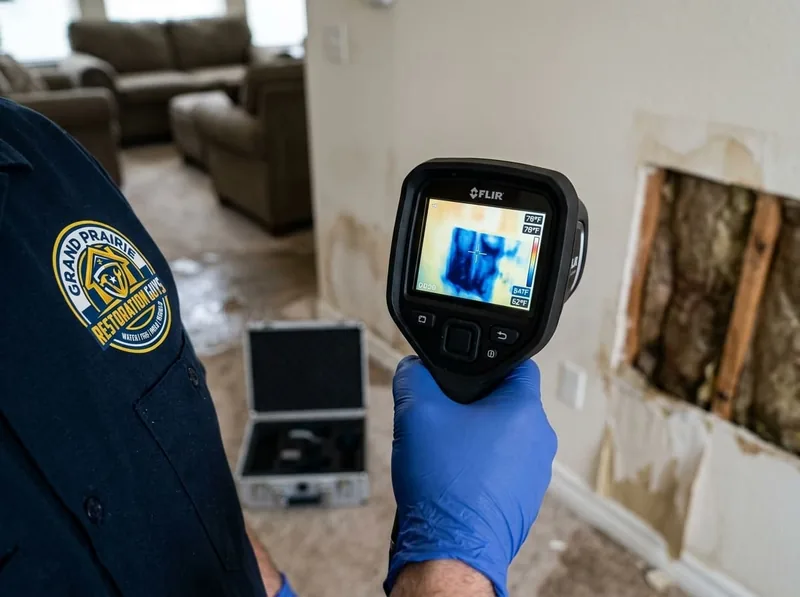
Grand Prairie sees water damage from both directions: water entering from outside during a storm or flash flood, and water escaping from inside through a burst pipe, slab leak, or failed supply line. Each has a different contamination profile, so they're handled as distinct services.
Sewage and Contaminated Water
Category 3 water, sewage backups especially, carries health risks clean water doesn't. It's handled under separate protocols: personal protective equipment, targeted disposal of contaminated porous materials, and antimicrobial treatment rather than simple drying.
Structural Drying and Moisture Control
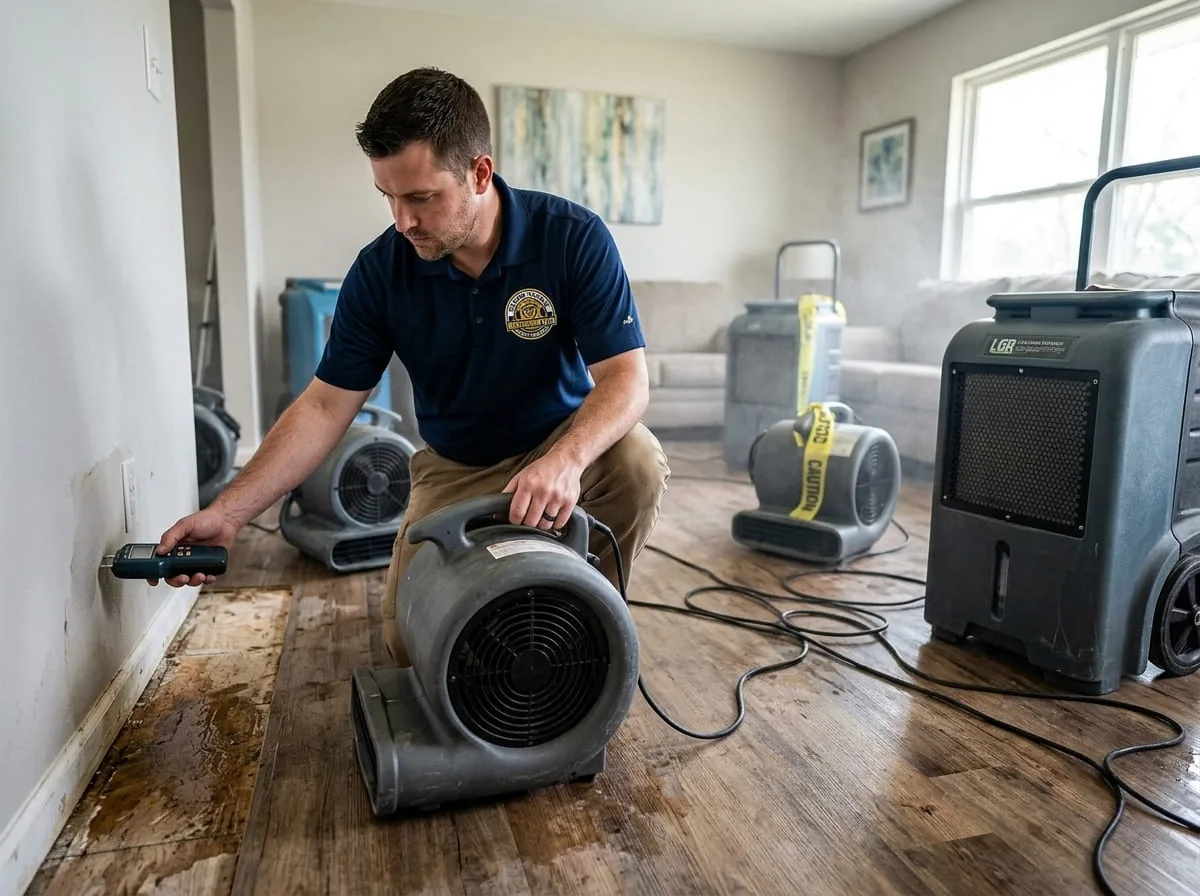
Extraction only removes standing water. Getting a structure truly dry — inside wall cavities, under flooring, above ceilings — takes monitored dehumidification and air movement tracked with moisture meters until materials read dry, not just look dry. This is also where mold prevention starts.
Property-Specific and Material-Specific Damage
Some calls are less about the water's source and more about what it sat on: a ceiling, a wall cavity, hardwood flooring, an older home's crawl space, or cabinetry after an appliance failure. Each has its own salvage rules and hidden-damage risk, covered in dedicated sections below.
Residential and Commercial Water Damage
Homes and businesses face the same physics but different priorities. A business is watching a downtime clock a homeowner isn't, and a commercial property may add multiple tenants, code-driven documentation, or after-hours access. Both get dedicated coverage.
Beyond Water: Related Damage This Network Also Handles
Water damage often overlaps with two other losses. Firefighting leaves standing water behind after the flames are out, and any event left undried for more than a day or two in Grand Prairie's humid climate raises real mold risk. Fire damage restoration and mold remediation are covered in dedicated sections of this site.
Service Areas
This full range of services is available throughout Grand Prairie and neighboring communities, including Arlington, Irving, and Mansfield, plus the rest of the Mid-Cities and southwest Dallas County area.
Frequently Asked Questions
What's the difference between water damage restoration and flood damage cleanup?
Water damage restoration is the umbrella term for any water-related loss. Flood damage cleanup specifically addresses water intruding from outside the structure, which typically carries more contamination and follows a different cleanup protocol.
Do you handle both the emergency extraction and the repairs afterward?
Yes. The process runs from initial extraction and drying through repairs or reconstruction, with the contractor on the job holding a general contractor licence for any construction scope.
Is sewage cleanup handled differently from a regular water damage call?
Yes. Sewage is treated as category 3 contaminated water, which means personal protective equipment, disposal of affected porous materials, and disinfection protocols that a clean-water leak doesn't require.
How do I know which service applies to my situation?
You don't need to know in advance. Describe what's happening when you call (817) 618-7675, and the right response, extraction, flood cleanup, sewage protocols, or otherwise, gets dispatched from there.
Do you work on commercial properties too?
Yes, including offices, retail spaces, warehouses, and industrial buildings, with restoration paced around minimizing business downtime.