
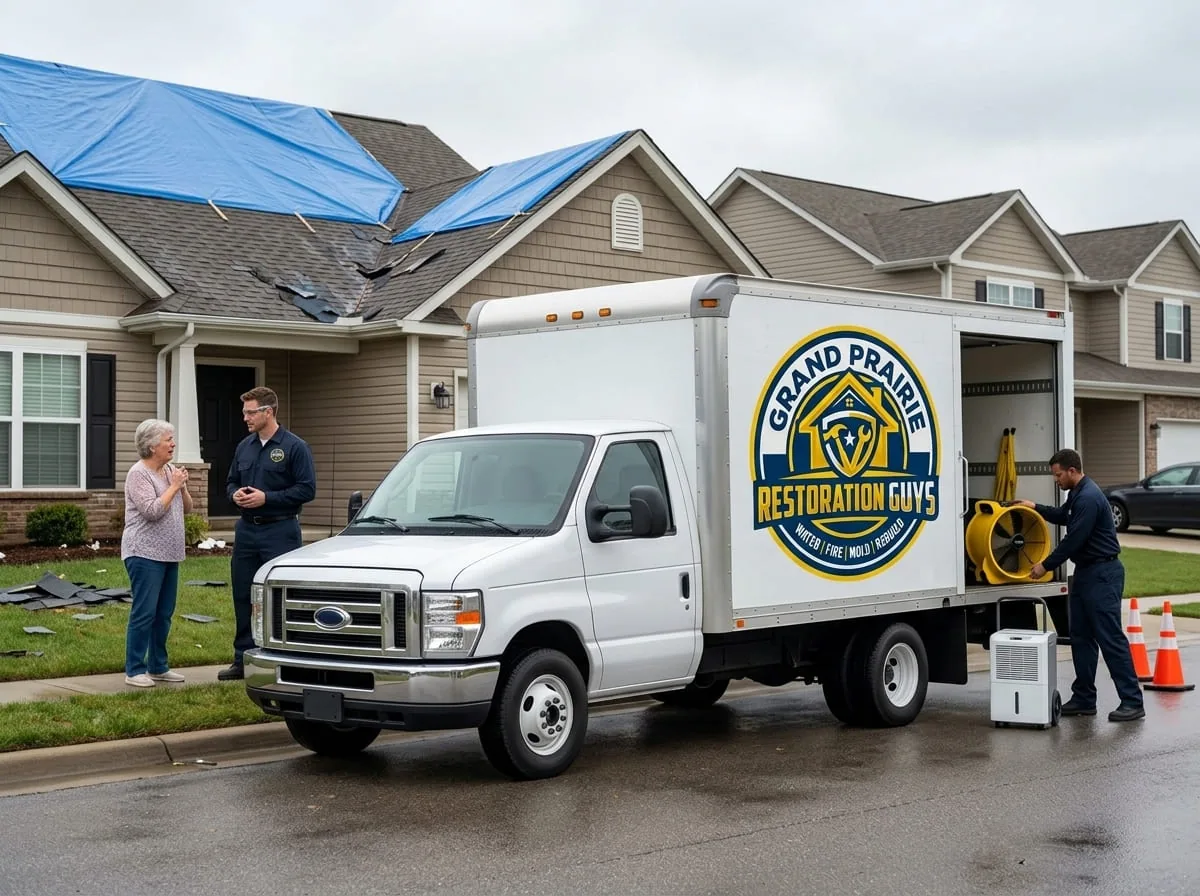
North Texas doesn't need a named hurricane to flood. Its flat terrain and expansive clay soil shed rainfall rather than absorbing it, so a single intense thunderstorm can send water across streets and into properties fast. The well-documented 1995 Fort Worth–Dallas hailstorm and flash flood shows how quickly that can happen, and the pattern hasn't gone away.
Signs of Flood Damage
- A visible waterline stain on walls or baseboards
- Mud or silt residue left behind after water recedes
- Saturated baseboards, drywall, or flooring near an entry point
- A musty odor developing within a day or two of a storm
Why Floodwater Is Different From a Clean-Water Leak
Water entering from outside during a storm typically picks up silt, chemicals, and bacteria from streets and runoff. That makes it category 3 water by industry classification, the same standard used for sewage, which changes what can be cleaned versus discarded.
Risks of Waiting
Contaminated water sitting in a warm, humid Grand Prairie summer speeds up material breakdown and mold growth. Materials not addressed quickly go from a cleaning job to a replacement job, and contamination can spread into subfloor and wall cavities the longer it sits.
The Flood Cleanup Process
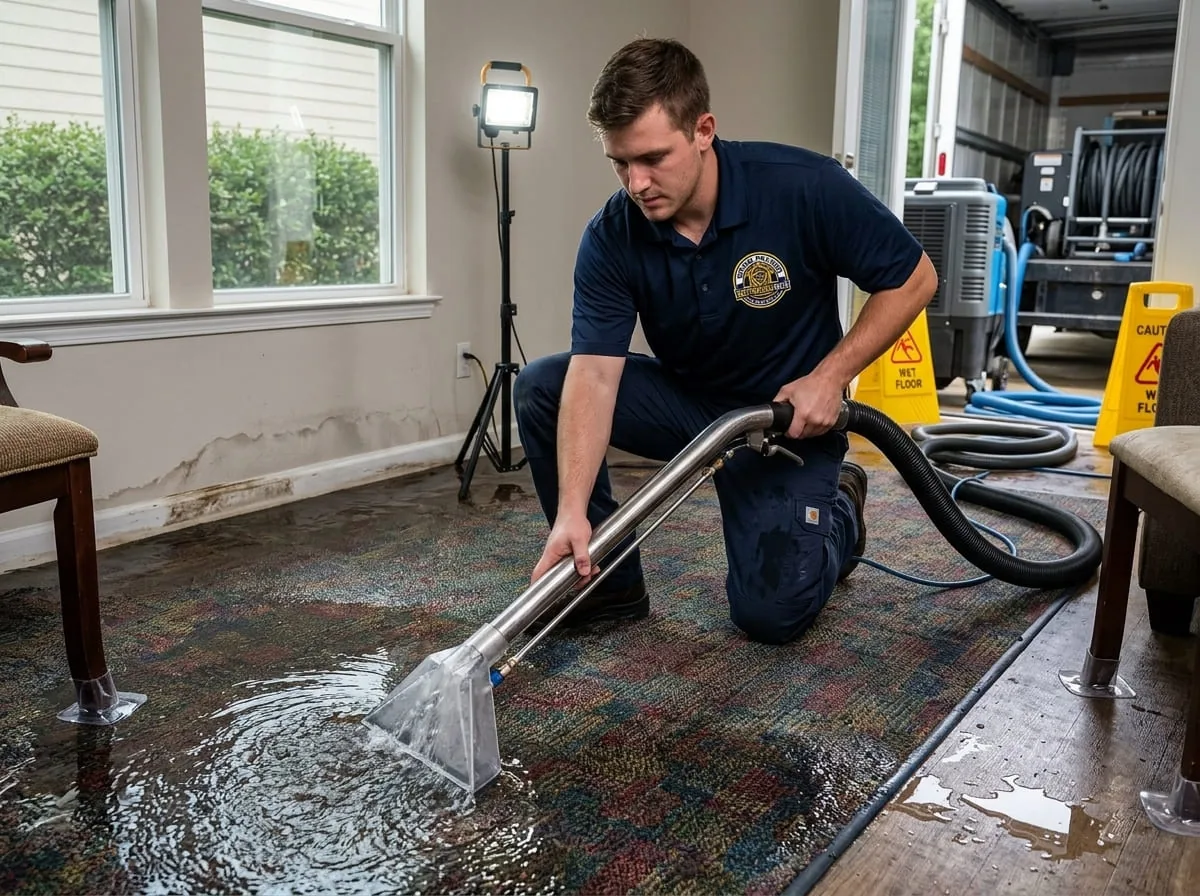
Cleanup starts with extracting standing water, then removing contaminated porous materials that can't be safely cleaned. Hard surfaces are cleaned and sanitized rather than just dried. Structural drying and moisture monitoring follow, with antimicrobial treatment applied where contamination warrants it.
What Can Be Saved vs What Has to Go
- Drywall below the flood line — usually removed and replaced; floodwater saturates the paper facing and gypsum core with contamination that's hard to fully clean
- Hardwood flooring — often lost in a flood-category loss
- Tile and other hard-surface flooring — frequently survives once properly sanitized
- Upholstered furniture, mattresses, and similar porous contents — typically not salvageable after floodwater contact
Residential and Commercial Flood Cleanup
Residential flood cleanup usually focuses on ground-floor living space and garages. Commercial properties with at-grade loading docks or ground-floor retail can see a wider footprint of contaminated water, needing the same sanitizing standard across more square footage.
Before Crews Arrive: Safety First
- Don't wade through floodwater of unknown depth; it can hide missing manhole covers, debris, or drop-offs
- Never touch an electrical panel or outlet in a wet area
- Avoid direct contact with floodwater without gloves and boots; treat it as contaminated
Frequently Asked Questions
Is floodwater always contaminated?
Water that enters from outside during a storm, from storm drains, yards, or streets, is treated as category 3 contaminated water by default, since it's picked up silt, chemicals, or bacteria on the way in.
Does homeowners insurance cover flood damage?
Standard homeowners policies typically exclude flooding from outside water sources, which usually requires separate flood insurance. Check your specific policy to confirm what's covered.
How long does flood cleanup take?
It depends on the extent of contamination and how much material needs to be removed versus dried, but expect several days for extraction, disposal, and sanitizing before structural drying is verified complete.
Can hardwood floors survive a flood?
Sometimes, but it's less likely than with a clean-water leak. Contaminated water and prolonged saturation both work against hardwood's chances.
What if flooding happens without a named storm?
That's the norm in North Texas. Flash flooding from intense rainfall doesn't require a hurricane or tropical system, the region's terrain and soil make it possible during any strong thunderstorm.