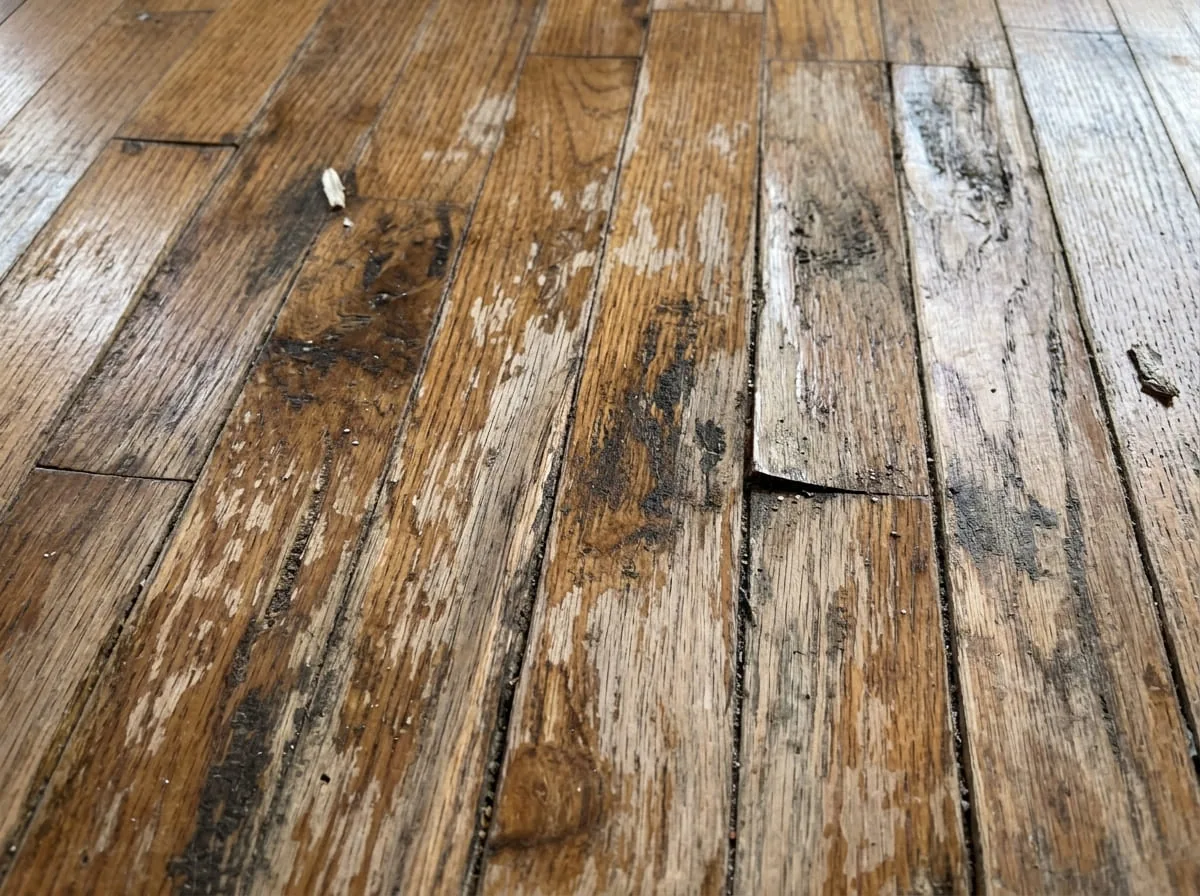
Not all flooring responds to water the same way, which determines whether a floor can be saved or has to come up. Time matters most here for solid hardwood.
Signs of Flooring Water Damage
- Cupping, where board edges rise higher than the center
- Crowning, the opposite pattern, where the center rises above the edges
- Buckling or separation from the subfloor
- Discoloration or dark staining
- Soft spots underfoot
How Different Flooring Types Respond
Different flooring materials respond very differently:
- Solid hardwood — sometimes dried and refinished if caught early, before boards warp beyond repair
- Engineered hardwood — depends on the core material and exposure time
- Laminate — the core almost always swells and delaminates once wet, rarely salvageable
- Tile — typically survives fine; the real concern is the grout and subfloor
- Carpet — often salvageable with quick extraction; the padding underneath almost never is
What's Happening Under the Surface
Subfloor moisture is often the bigger issue hiding under flooring that looks fine on top. Adhesive bonding flooring to a subfloor can fail once wet, and prolonged water can let floor joists start showing early rot, turning a flooring problem into a structural one.
Risks of Waiting
Warping in hardwood becomes permanent past a certain point — drying can't reverse it. Mold can develop under flooring and inside the subfloor without ever becoming visible from above. In severe cases, sustained joist-level moisture can lead to structural sagging.
The Flooring Drying and Restoration Process
Extraction comes first, then specialized drying for hardwood still worth saving, including drying mats or injection systems that pull moisture through the boards. Subfloor moisture is monitored throughout, and unsalvageable flooring is removed rather than complicating nearby drying. Refinishing follows once everything tests dry.
What's Salvageable vs What Has to Come Up
Solid hardwood caught early: often salvageable. Laminate: rarely salvageable once wet. Tile: usually fine, but check the subfloor. Carpet: often salvageable; padding: replace. Engineered hardwood: case by case, depending on the core.
Before Crews Arrive
- Avoid walking heavily on cupped or buckled flooring
- Don't apply direct heat, like a hair dryer or space heater, to wet hardwood, it can worsen warping
- Pull up rugs and move furniture off the affected area
Frequently Asked Questions
Can warped hardwood floors be saved?
Sometimes, if caught early and dried with the right equipment before the warping becomes permanent. Prolonged exposure typically means refinishing won't fully correct the boards, and replacement becomes the better option.
Is laminate flooring ever salvageable after water damage?
Rarely. The core material in most laminate flooring swells and delaminates once wet, and that damage isn't reversible with drying.
How do you dry hardwood without ruining it further?
Specialized drying mats or injection drying systems pull moisture up through the boards gradually, which avoids the rapid temperature swings that direct heat sources like a hair dryer can cause.
What's under my flooring that could also be damaged?
Subfloor material and, in older homes with crawl spaces, the floor joists themselves. Both are checked as part of a full flooring assessment.
Will my floor look the same after drying, or will there be permanent warping?
It depends on how early drying started. Caught quickly, many hardwood floors refinish back to close to normal. Prolonged exposure often leaves some permanent warping that refinishing can't fully correct.