This deserves a straight, non-alarmist answer rather than a scare number designed to rush a phone call. Mold doesn't appear the moment water touches a surface, and it doesn't take weeks to become a real risk either — the honest range is in between, depending on specific conditions rather than a fixed countdown.
The General Timeline
Under favorable conditions — warm temperatures, high humidity, and a porous organic material like drywall paper or carpet padding that's stayed wet — mold growth can begin within roughly 24 to 48 hours. That's a "can," not a "will": plenty of water-damaged materials dried promptly and thoroughly never reach that point.
Why There's a Window, Not a Trigger
The window exists because it takes time for mold spores — present in essentially all indoor and outdoor air — to germinate and establish on a wet surface. That timeline shortens as conditions become more favorable to mold, and lengthens as materials dry out.
Why There's No Single Universal Number
Four things move that window more than anything else: how warm the space is, how humid the air is, what material got wet, and how contaminated the water was to begin with.
Two Very Different Examples
A clean-water spill mopped up within an hour presents essentially no mold risk. Category 2 or 3 water soaked into carpet padding for two days in a warm, humid room is a very different situation. The number that matters isn't a generic "mold grows in X hours" — it's whether your specific conditions line up to support it.
Why North Texas Summers Shrink That Window
This is a genuinely regional point, not a generic scare tactic: North Texas's hot, humid summer stretches slow structural drying compared to a drier climate, because outside air often carries as much moisture as the air inside an affected room, limiting how much passive drying (open windows, ceiling fans) can accomplish.
A Shorter Window, Not a Reason to Panic
That means the practical window between a water event and mold becoming a realistic concern is shorter here during summer months — exactly why professional dehumidification, not just airflow, matters more in this region. It's a reason to treat prompt extraction and drying as more valuable here, not less.
What Actually Needs to Be True for Mold to Take Hold
Four conditions have to line up: a moisture source, an organic material to grow on (drywall paper, wood, dust on nearly any surface), a favorable temperature, and enough time. Removing any one — most practically, moisture and time, through fast extraction and drying — is what actually prevents mold.
Signs Mold May Already Be Starting
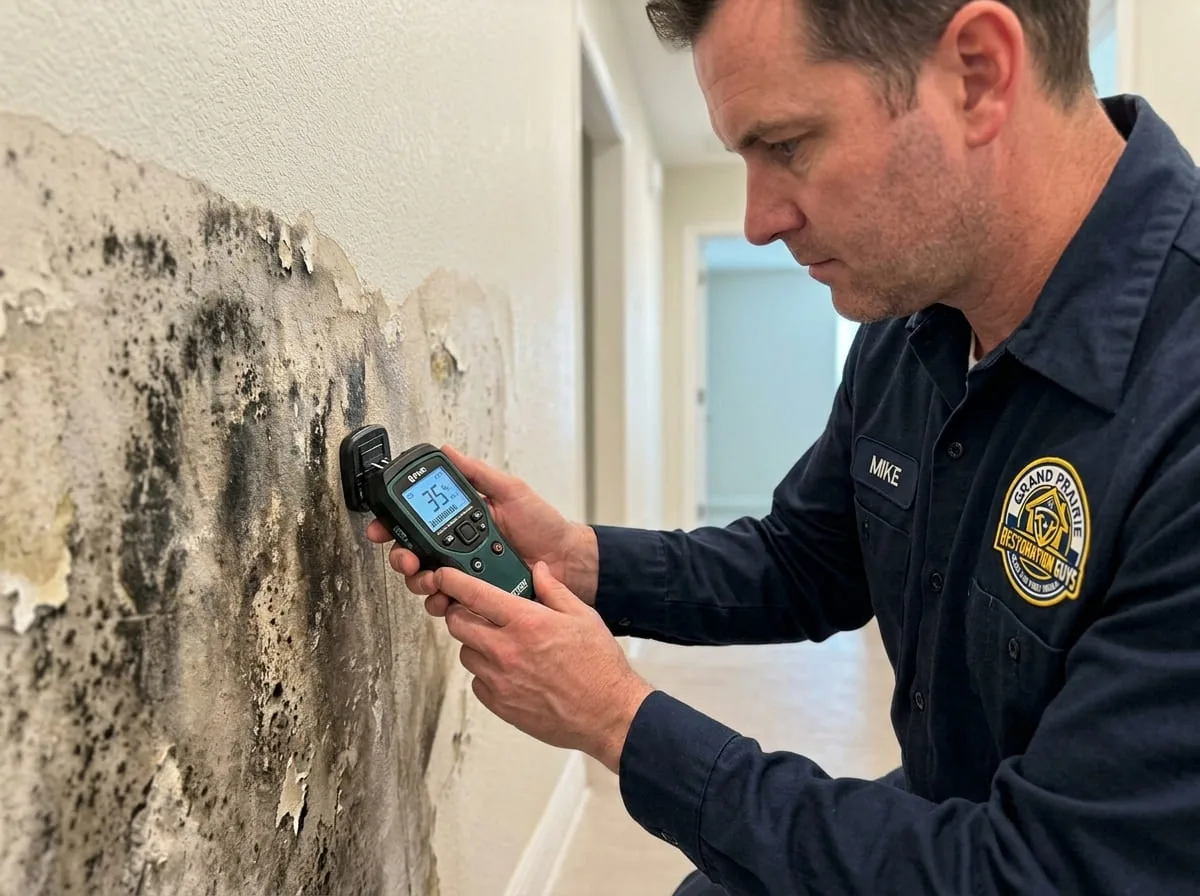
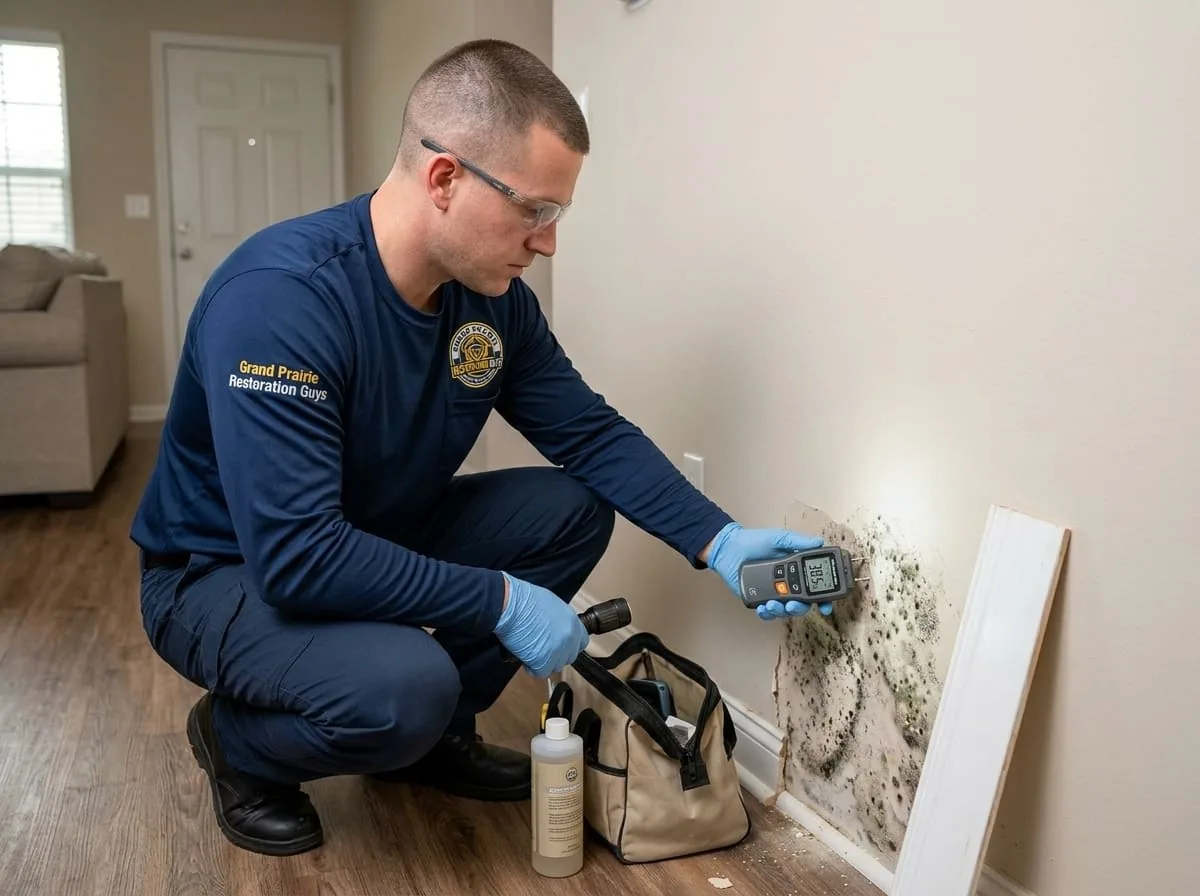
A persistent musty odor that doesn't fade, visible discoloration (ranging from black or green speckling to a fuzzy white or gray growth), or a slimy or fuzzy texture on a previously wet surface are worth a closer look. Don't confuse this with ordinary mildew — discoloration after water damage is a reasonable trigger for an assessment, not a certain diagnosis.
Handle Suspected Mold Carefully
Avoid disturbing anything you suspect may be mold without protective equipment, and avoid running HVAC systems if you suspect contamination in the ductwork.
The Real Prevention Is Speed, Not a Product
The single most effective way to keep water damage from becoming a mold problem is fast, thorough extraction and drying — closing that four-part window before it has time to open. See water extraction and structural drying and dehumidification for how that process works, and mold prevention and moisture control for how it's managed alongside a water damage response.
Why Hidden Water Is the Bigger Mold Risk, Not Obvious Water
Counterintuitively, the water damage that's easiest to see is often the lower mold risk, precisely because it's obvious enough to get addressed quickly. A visible flooded floor gets mopped up and dried the same day.
What Hides Can Sit for a Week
Water that's traveled into a wall cavity, under flooring, or into a crawl space without anyone noticing can sit for a week or more before it's discovered — exactly the scenario the 24-48 hour window was describing. This is a big part of why professional moisture mapping matters even when everything visible looks fine — mold doesn't care whether water was noticed, only whether it was there.
Crawl Spaces and Older Housing Stock Deserve Specific Attention
Grand Prairie and much of North Texas sits on concrete slab foundations, but the area's older housing stock — built roughly from the 1940s through the 1960s — sometimes includes pier-and-beam construction with a crawl space. A crawl space is naturally more humid, has less airflow, and is far less visible day to day, making it one of the more mold-prone areas when water gets in from grading issues or plumbing leaks. See crawl space water damage.
A Practical Way to Think About Risk, Not a Countdown
Three Questions Worth Asking
Rather than fixating on an exact hour count, it's more useful to ask three questions after any water event: how contaminated was the water, how long did it sit before being addressed, and how humid and warm is the space it happened in? The more "yes, that's a concern" answers those three questions produce, the more worth prioritizing a professional assessment becomes — not because mold is guaranteed, but because the conditions that support it are clearly present.
Dehumidifiers Help, But Aren't the Fix
Running a dehumidifier or the home's central air conditioning in the affected area can genuinely help reduce risk in the meantime, since both pull moisture out of the air as a byproduct. Neither is a substitute for actually extracting standing water and directly drying whatever got wet — they support the real fix, they aren't the fix on their own. Err toward a professional call whenever more than one of those three risk factors is present at once.
Frequently Asked Questions
Is 24-48 hours a guarantee that mold will start?
No — it's the earliest point at which mold growth becomes possible under favorable conditions, not a certainty. Materials dried promptly and thoroughly within that window very often never develop mold at all.
Does mold only grow on visibly dirty or old materials?
No — mold spores are present in ordinary air almost everywhere, so any wet organic material (including brand-new drywall or carpet) can support growth given the right moisture, temperature, and time.
Can I speed up drying myself to beat the mold window?
Improving airflow and reducing humidity in the room helps, but in a hot, humid climate, passive methods like open windows often aren't enough on their own — see our guide on how long water damage actually takes to dry for what actually shortens that timeline.
If I don't see or smell anything after a week, am I in the clear?
It's a good sign, but not a guarantee, especially if moisture is hidden inside a wall cavity or under flooring rather than on a visible surface — that's why a moisture check, not just a visual and smell check, is the more reliable approach.
Is mold more of a risk in summer than winter in North Texas?
Generally yes — the combination of heat and humidity in summer months creates more favorable mold conditions and slows passive drying compared to cooler, drier stretches of the year, which is a genuine regional pattern here.
If a leak is fixed quickly, is a mold inspection even necessary?
Not always — a small, clean-water leak caught and dried within a day or so is unlikely to have created a mold problem. It becomes more worth considering when the water was contaminated, sat for an extended period, or affected a humid, poorly ventilated space like a crawl space or closet.