After a house fire, attention naturally goes to what's visibly burned and what smells like smoke. The water used to extinguish it gets far less attention, and that's exactly the problem: it seeps into places nobody's looking, and keeps causing damage long after the smoke has cleared and the crisis feels over.
Why Firefighting Water Hides So Well
Firefighting involves a lot of water applied quickly under pressure, so it doesn't just wet the surface it lands on — it drives into wall cavities, runs along top plates and down inside walls, and follows gravity through floor assemblies into the space below. Add soot and smoke residue coating surfaces, and it becomes even harder to visually distinguish a wet area from a dry one, since everything in the fire zone tends to look damp and dark regardless of actual moisture content.
High-Risk Areas Worth Checking Specifically
A few areas are worth checking specifically:
- The subfloor beneath rooms where hose streams were used — water travels down through floor penetrations far more than most people expect
- Wall cavities near where fire crews directed water at hot spots inside walls
- Ceiling assemblies below an upper-floor fire, especially where sprinkler discharge or hose streams came from above, which routinely hold moisture well after the visible surface looks dry
- A crawl space, if the home has one — water that ran off the structure can pool there and go completely unnoticed without a direct check
Why It Gets Missed During Fire Cleanup
The natural focus after a fire is smoke odor, soot removal, and structural safety — all genuinely urgent priorities. Water, especially once visible puddles have been mopped up, can feel like a solved problem. But a mopped floor and a dry-feeling wall don't mean the cavity behind it is actually dry — see water damage after firefighting for how that water gets there in the first place.
How Professionals Actually Check
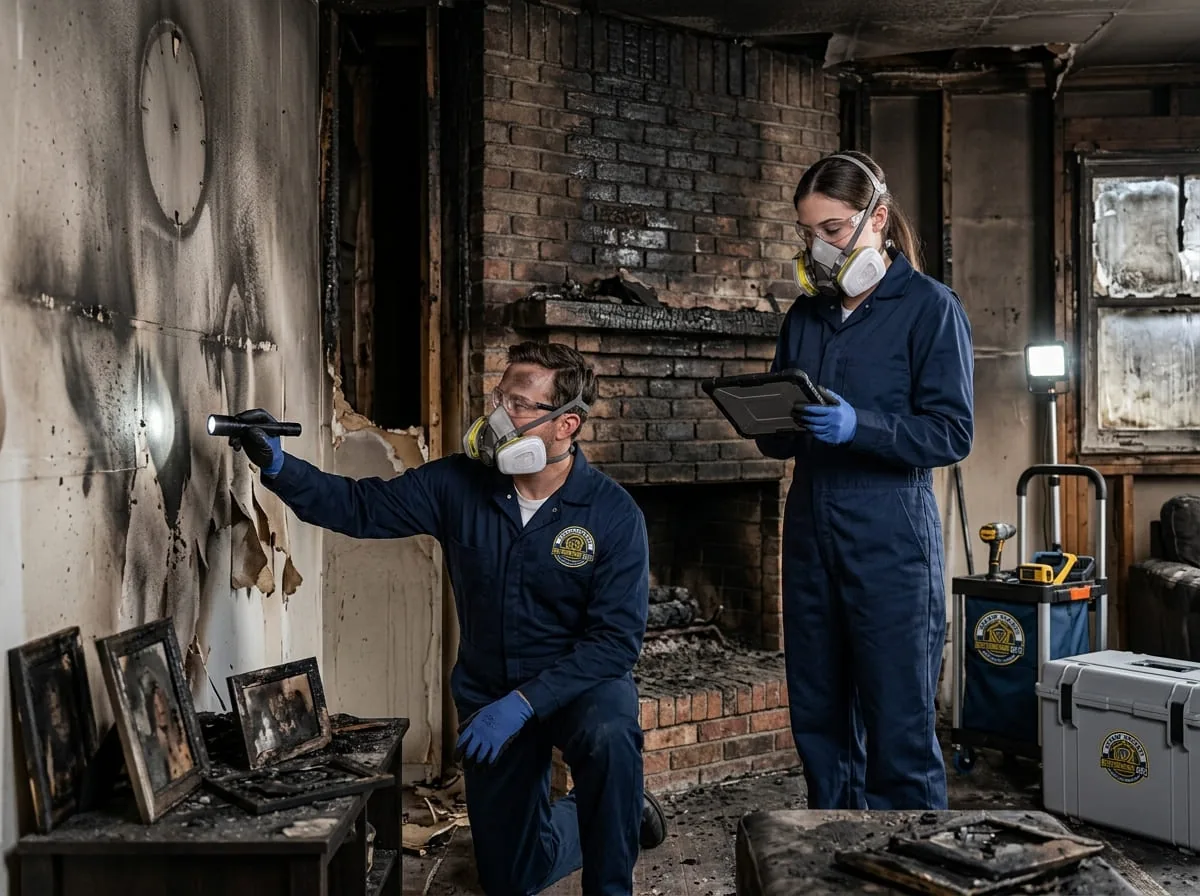
The approach is methodical rather than a quick walk-through: moisture meter readings taken room by room, working outward from where firefighting water was concentrated, with attention to subfloors, wall bases, and any ceiling assembly below a fire that started upstairs. Thermal imaging can help flag areas worth a closer look, though it shows temperature differences rather than moisture directly, so it's paired with meter readings rather than relied on alone. The goal is a documented picture of exactly where moisture is present, not a guess.
What Happens If It's Missed
Moisture trapped inside framing, subfloor, or wall cavities after a fire creates ideal conditions for mold, particularly given the humid conditions that slow general drying in North Texas — see how quickly mold becomes a concern after water damage. Beyond mold, sustained hidden moisture can lead to rot and structural weakening, and smoke odor can seem to return weeks after a repaint if trapped moisture is still off-gassing residual smoke compounds as it slowly dries.
A Safety Note Before Checking Yourself
Only re-enter a fire-damaged structure once the fire department has cleared it as safe. Even after clearance, avoid pulling back charred materials, damaged drywall, or ceiling sections without appropriate protective equipment — this is an area where professional assessment is worth the call.
Why This Gets Overlooked Even in Otherwise Thorough Restoration Work
Even careful fire restoration can miss hidden moisture if the assessment focuses mainly on where the fire itself burned, rather than everywhere firefighting water traveled. A room that never caught fire but sat beneath one that did is easy to underestimate, since there's no soot or char to draw attention to it — just a ceiling and subfloor that quietly absorbed a large volume of water and were never specifically checked.
What a Homeowner Can Reasonably Ask About
If a restoration company is handling the fire and water cleanup, it's reasonable to ask specifically whether moisture readings were taken in rooms below and adjacent to the fire, not just where the fire occurred, and whether the crawl space or subfloor was checked. A specific, confident answer is a good sign the water side of the job is being treated with the same seriousness as the smoke and soot side.
Timeline: How Long This Assessment Typically Takes
For a contained residential fire, a thorough moisture assessment covering the fire area and connected rooms typically takes a few hours as part of the broader initial response, though the full drying process that follows can run several days to a couple of weeks depending on how much moisture is found and how contaminated it is. Skipping it is far more likely to add weeks later than save time now.
How This Connects to the Smoke Odor Question
Homeowners sometimes notice smoke odor fading after initial cleanup, only to have it return weeks or months later — hidden moisture is one of the more common, overlooked explanations. Materials that absorbed both smoke residue and firefighting water can trap odor-causing compounds as they slowly dry, releasing a faint version of that smell as they finally reach a normal moisture level. If odor returns well after restoration work seemed complete, hidden moisture missed during the original assessment is worth checking.
Why an Independent Moisture Check Is Worth Requesting
If a fire restoration job is nearing completion and no one has specifically mentioned moisture readings for rooms below or adjacent to the fire, it's a reasonable, non-confrontational thing to ask about — whether moisture levels have been checked and documented throughout the affected structure, not just where the fire occurred. A thorough restoration company should have a clear, specific answer, since that documentation is typically standard practice.
How the Fire Was Fought Changes Where to Look
Sprinkler discharge tends to stay more localized to the room of origin and whatever is directly below it, while hose streams, depending on how the fire was fought, can push water further through a structure — one more reason a blanket assumption isn't a substitute for an actual room-by-room reading.
Frequently Asked Questions
Is hidden moisture after a fire really that common?
Yes — any fire significant enough to require hose streams or sprinkler discharge typically leaves some degree of moisture in subfloors, wall cavities, or ceiling assemblies that isn't obvious from a visual check.
How long after the fire should moisture be checked?
As soon as it's safe to re-enter and begin the restoration process — the longer moisture sits, the more it raises the risk of mold and material damage, on the same general timeline as any other water event.
Can smoke odor really come from moisture, not just soot?
Materials that absorbed both smoke residue and firefighting water can hold onto odor compounds as they slowly dry, which is one reason lingering smoke smell sometimes seems to return weeks after cleanup looked complete.
Does insurance typically cover checking for hidden moisture after a fire?
This is generally part of a standard fire damage claim's mitigation and restoration scope, but confirm specifics with your adjuster, especially if the check is happening as a distinct step some time after the initial fire response.
What if I don't smell or see anything unusual weeks after the fire?
That's a good sign, but not a guarantee — some hidden moisture issues take longer to become noticeable than others, which is exactly why a professional check during the restoration process is more reliable than waiting to see if a problem shows itself.
Does the fire department check for hidden moisture before they clear a home as safe?
No — their assessment focuses on immediate safety, like structural stability and fire being fully out, not a detailed moisture survey. That's a separate step that falls to the restoration process afterward.