
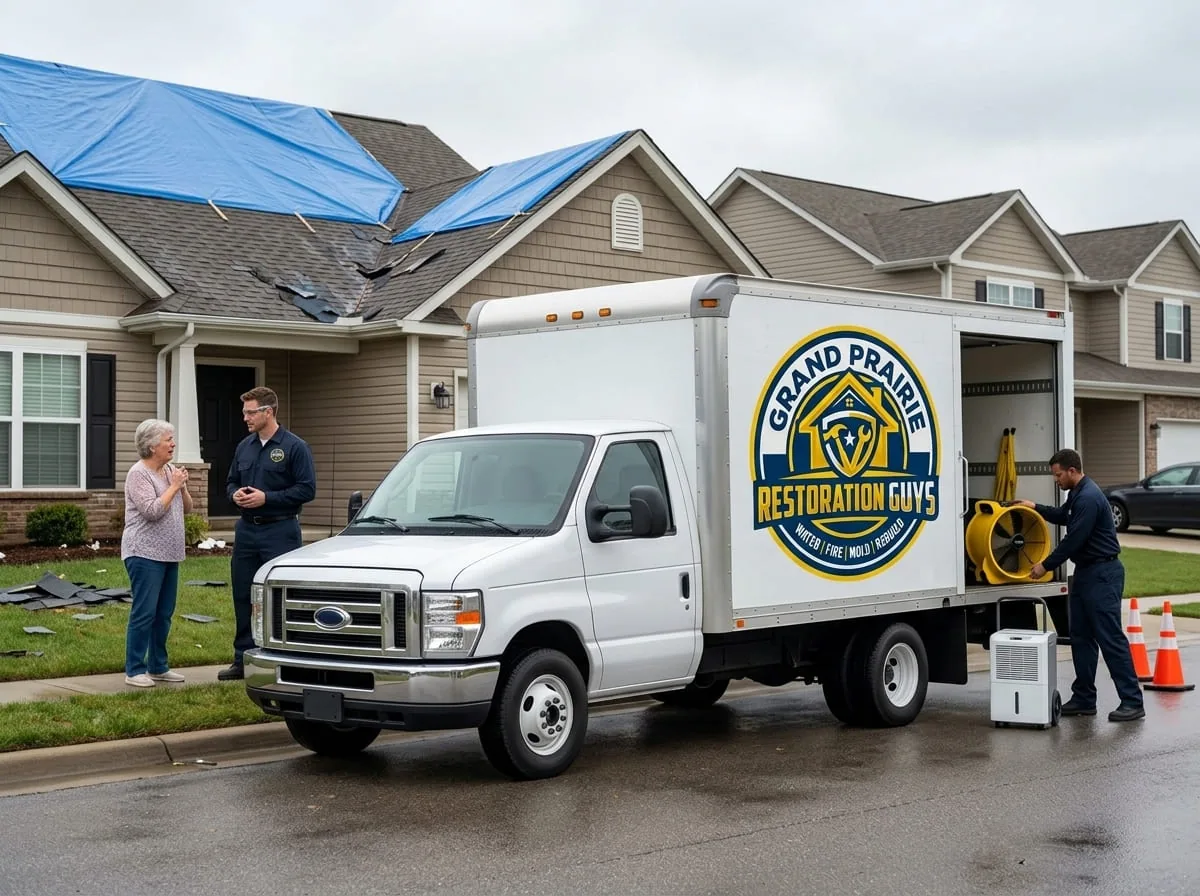
Forest Hill sits just south of Fort Worth along the I-35W corridor, in a part of Tarrant County that, like the rest of North Texas, deals with a genuine flash-flood risk. The region's flat terrain and clay-heavy soil don't absorb heavy rain the way sandier or more permeable soil would — water sheds across streets and yards quickly instead, and intense thunderstorms can push water into a property fast, with or without a named storm system behind it.
Storm Water Doesn't Need a Hurricane to Cause Damage
DFW's flash-flood pattern is well documented in National Weather Service records, and it's a recognized regional risk independent of tropical weather. A hard summer thunderstorm that drops several inches of rain in an hour can overwhelm a yard's drainage and push water against a foundation, under a garage door, or through a low window well before anyone's had time to prepare. Storm and rain water damage in Forest Hill is treated with the same urgency as a burst pipe, because standing storm water inside a structure causes the same kind of harm the longer it sits.

What Gets Done First
The first hours after any flooding event, storm-driven or otherwise, are about extraction and containment — getting standing water out, protecting salvageable belongings, and setting up structural drying and dehumidification equipment to bring humidity down inside the affected rooms. Restoration work is carried out by trained technicians using professional extraction and drying equipment, with moisture readings tracked over the following days to confirm materials are actually dry, not just surface-dry.
Deciding What Can Be Saved
Flooring, baseboards and lower drywall are the most common casualties in a flood event, and the professionals we work with follow recognized industry standards for deciding what can be salvaged and dried versus what needs to be removed and replaced.
Staying Safe Until Crews Arrive
Storm flooding brings its own safety concerns beyond the water damage itself, and a few precautions matter more here than they would with a simple indoor leak:
- Never walk through standing water if there's any chance it's in contact with electrical outlets, extension cords, or a garage's electrical panel.
- Stay away from downed power lines anywhere near the property, even ones that look inactive.
- Move vehicles and outdoor belongings to higher ground if it's safe and there's time before water rises further.
- Photograph the flooding and any visible damage before cleanup begins, for insurance documentation.
- Wait for standing water to be professionally assessed before turning on any electrical system that may have been submerged.
Fire Damage in Forest Hill
Severe storms in this part of Texas also bring a genuine hail risk, which can drive water intrusion through a damaged roof — and separately, house fires from electrical and kitchen causes happen in Forest Hill year-round. The fire damage restoration hub covers smoke, soot and firefighting water cleanup for those situations.
Mold Risk After Flooding
Flood water that sits inside a structure for more than a day or two, especially through a hot, humid Texas summer, is a near-guaranteed mold conversation if drying isn't handled properly. See mold after water damage for what that timeline actually looks like and why fast, complete drying matters more than it might seem in the first day or two.
Coverage Across South Tarrant County
Forest Hill is covered alongside neighboring Everman, Kennedale and Crowley under the same 24/7 dispatch.
Frequently Asked Questions
Does homeowners insurance cover flash-flood damage in Forest Hill?
Coverage depends on your specific policy — sudden storm-water intrusion is often treated differently than rising-water flood damage, which typically requires separate flood insurance. A restoration professional can document the damage either way to support your claim.
How fast does standing storm water need to be removed?
As fast as possible — every hour water sits raises the risk to flooring, drywall and, eventually, mold growth, especially in warm weather.
Can wet carpet and pad be saved after a storm flood?
Sometimes, depending on water cleanliness, how long it sat, and the carpet type. A technician can assess it on site rather than assuming it all has to be replaced.
Can storm water damage a garage or slab foundation even if the house itself stays dry?
Yes — a garage floor, attached storage area, or exterior foundation walls can take on storm water even when the main living space is unaffected, and that water still needs proper extraction and drying to prevent longer-term issues.
What if the flooding affects a rental property in Forest Hill?
The same extraction and drying process applies to rental and owner-occupied properties alike, and documentation can be provided in a format useful for both landlords and tenants coordinating with insurance.
Is there really 24/7 coverage during major storm events?
Yes — storms are exactly when this line is busiest, and it's built to handle it. Call (817) 618-7675 any time, including during active weather.