
Midlothian sits in northern Ellis County, a fast-growing community that's added a large amount of new residential construction over the past two decades while still holding onto a smaller historic core. Severe weather is a genuine factor here — North Texas as a whole falls within a nationally recognized high-hail-frequency zone, and Midlothian isn't exempt from the thunderstorms that come with it.
When Storm Damage Starts as a Roof Problem
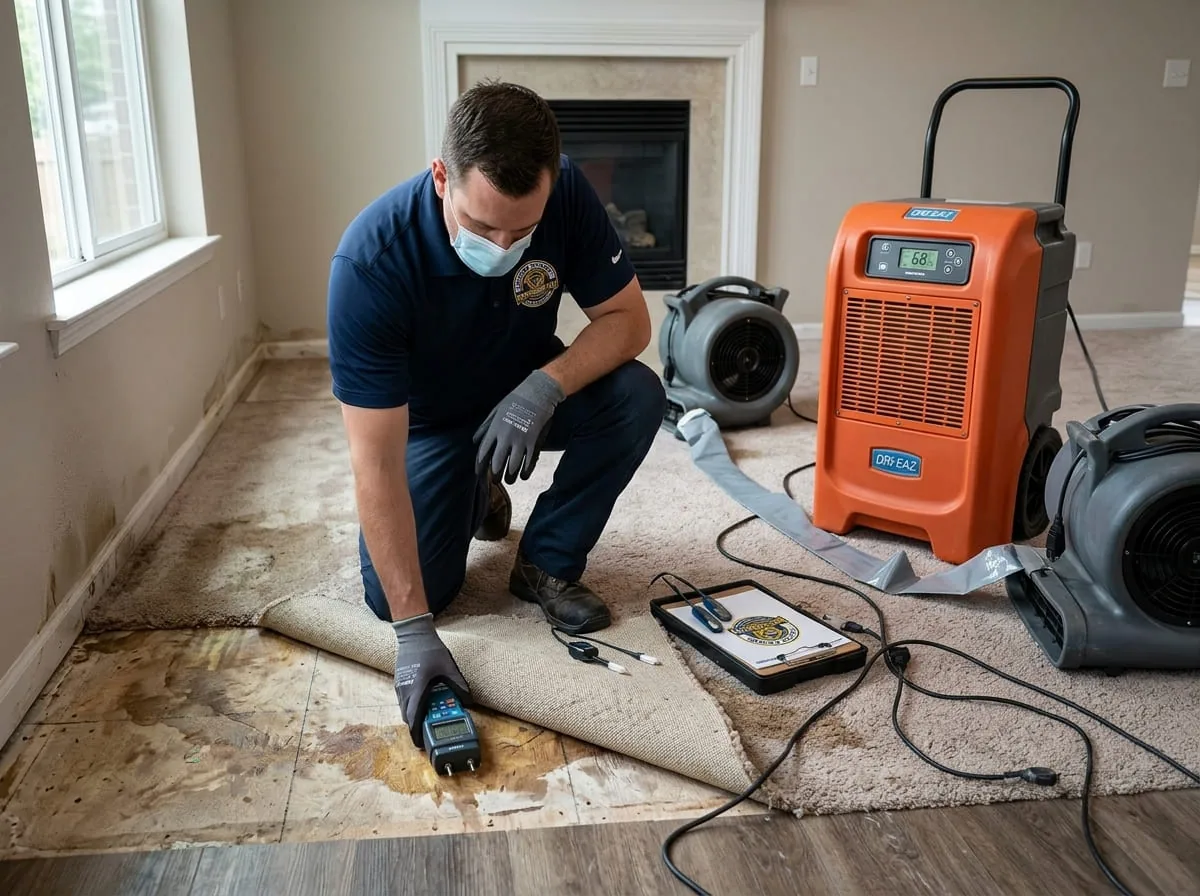
Hail and high wind can compromise roofing and flashing in ways that aren't obvious from the ground, and water can work its way into an attic or through a ceiling for days or weeks after a storm before staining shows up inside the home. By the time a homeowner notices a brown ring on a ceiling, insulation above it may already be soaked and drywall may be holding more moisture than it appears to from below.
Why It Can't Wait
Ceiling and wall water damage from a compromised roof gets treated as urgently as a burst pipe, because trapped moisture above a ceiling is exactly the kind of situation that turns into a bigger structural and mold problem the longer it goes unaddressed.
Drying in a Humid Climate
Midlothian's summers are hot and humid, which slows natural drying and shortens the practical window before mold becomes a realistic concern after any water intrusion. Structural drying and dehumidification equipment is set up specifically to counter that — pulling humidity down mechanically rather than relying on open windows and box fans, which generally isn't enough in North Texas summer conditions.
Slab Movement Adds to the Picture
Beyond storms, Midlothian homes sit on the same expansive clay soil found across the region, which stresses under-slab plumbing over time and is a well-documented cause of slab leaks independent of any storm event. Burst pipe and slab leak calls are handled with the same extraction-and-drying process as storm damage, just with a different starting point.
If a Storm Just Passed Through
A few precautions in the hours right after a storm can help protect a Midlothian property without putting anyone in a risky position:
- Stay off the roof and out of the attic until it's been assessed — storm-damaged framing and wet insulation aren't always obvious from below.
- Place a bucket or container under an active ceiling drip and move furniture out from underneath it.
- Photograph visible roof and ceiling damage before any tarping or repairs begin.
- Avoid using ceiling light fixtures or fans in a room with an active leak above them.
Fire Damage in Midlothian
Lightning strikes during severe storms, along with the usual electrical and kitchen fire causes, bring fire damage calls to Midlothian as well. Visit the fire damage restoration hub for smoke, soot and firefighting water cleanup coverage.
Mold After a Storm or Leak
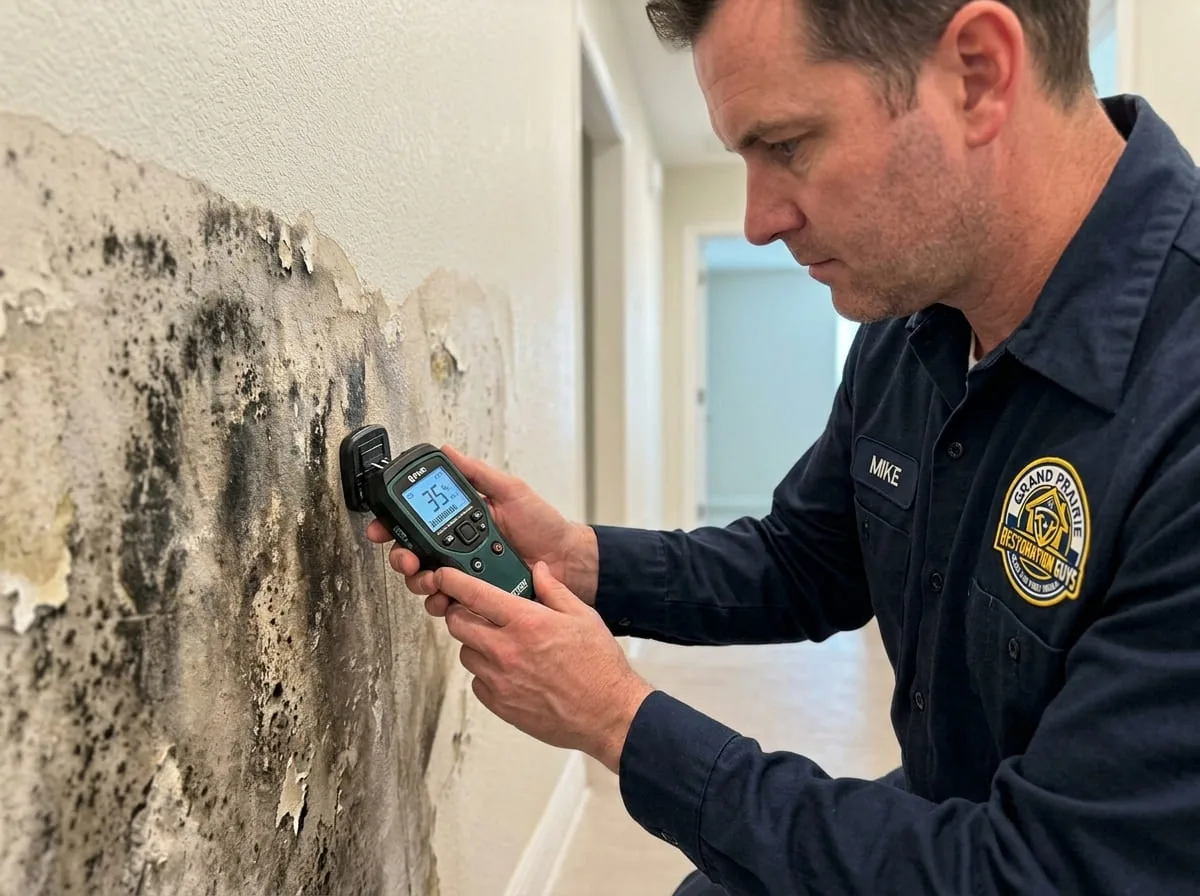
Given how much humidity works against drying efforts here, a Midlothian property that's had standing water or a hidden roof leak for more than a day or two deserves a real look at mold after water damage rather than hoping it dried out on its own.
Coverage Across Ellis County
Midlothian is covered alongside Waxahachie, Red Oak and Lancaster along the Ellis County / I-35E corridor.
Frequently Asked Questions
How do I know if a roof leak has been going on for a while?
A stain on the ceiling, a musty smell in a room, or soft drywall near a ceiling line are all signs moisture has been present longer than a fresh leak. A moisture reading can confirm how far it's spread.
Does storm damage insurance cover the water damage that follows a hail event?
Often yes, as part of the same claim, but documentation matters. Restoration professionals can document both the source damage and the resulting water intrusion.
How long does drying take in Midlothian's climate?
It varies by how much water is involved and which materials got wet, but humid summer conditions generally mean drying takes longer here than in a drier climate, which is why mechanical dehumidification matters.
Can hail damage cause a leak without ever creating a visible hole in the roof?
Yes — hail impact can crack or lift shingles and damage flashing without punching through the roofing material, and that kind of damage can still let water in gradually during the next rain.
Should I try to dry out a water-stained ceiling myself?
It's better to have it assessed first. A stain can mean trapped moisture in insulation or framing that needs proper drying equipment, and painting over it or running a fan doesn't address moisture that's already inside the structure.
Is emergency service available during an active storm in Midlothian?
Yes — call (817) 618-7675 any time, including during severe weather, and a dispatcher will get the right response moving.