

Red Oak sits along the I-35E corridor in Ellis County, one of several fast-growing bedroom communities that have added subdivisions steadily over the past couple of decades. New growth brings new drainage infrastructure that isn't always fully mature yet, and combined with North Texas's flat terrain and clay-heavy soil, that's a real factor in how quickly a heavy storm can turn into standing water on a Red Oak property.
Flash Flooding Doesn't Require a Named Storm
Clay soil sheds rainfall instead of absorbing it, and in a newer development where grading and drainage systems haven't been tested by many years of severe weather, a hard summer thunderstorm can push water toward a foundation faster than expected. This is a well-documented regional pattern, not something specific to any one storm — DFW's flash-flood risk is established in National Weather Service records independent of hurricanes or tropical systems.
Slab Leaks Are Still the Quieter, More Common Cause
Storm flooding gets attention because it's visible immediately, but the same expansive clay soil driving that drainage issue also stresses under-slab plumbing over time, producing slab leaks that are far less dramatic and much easier to miss. A warm spot on the floor or a climbing water bill are often the only early clue, well before there's any visible water.
One Process for Both
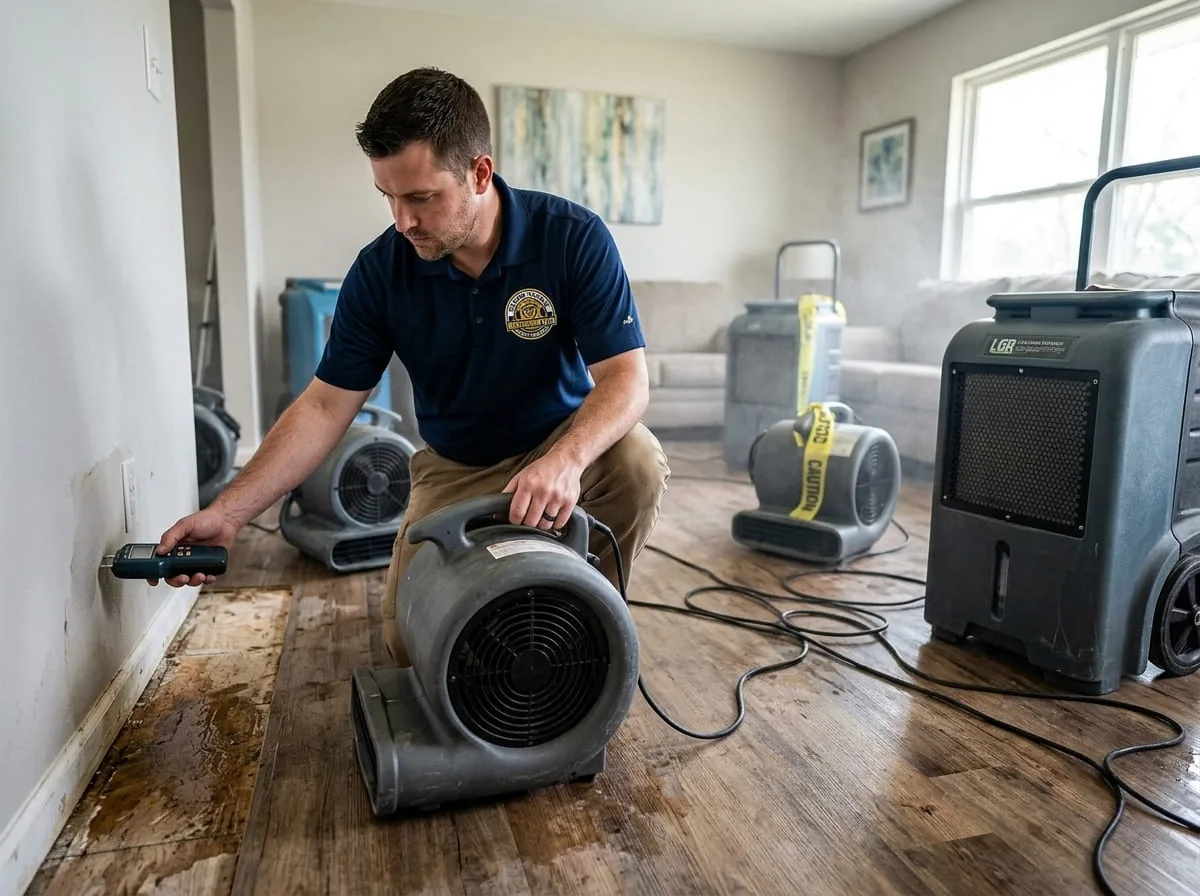
Whether the water came from a storm or from underneath the slab, the response is the same: extract standing water, set up structural drying and dehumidification equipment, and track moisture levels in flooring and drywall until they're back to normal. Restoration work is carried out by trained technicians using professional extraction and drying equipment on every Red Oak call, residential or commercial.
Before Restoration Professionals Arrive
Whether the water is coming from outside or from under the slab, a few steps can help in the first few minutes:
- Avoid walking through standing water near a garage electrical panel, outlets, or extension cords.
- Shut off the main water valve if a slab leak or indoor plumbing failure is suspected.
- Move furniture and belongings away from rising water where it's safe to do so.
- Take photos of the damage as soon as it's safe, before cleanup starts, for your insurance records.
Fire Damage in Red Oak
Fire calls in Red Oak follow the same pattern seen across newer North Texas subdivisions — electrical and kitchen fires most often, occasionally storm-related. The fire damage restoration hub covers everything from board-up to full reconstruction.
Mold Risk After Storm or Slab Water
Standing storm water and a slow slab leak both create the same downstream risk once North Texas's humid summer heat gets involved. Mold after water damage is worth reading regardless of which type of water event a Red Oak property has been through.
Nearby Ellis County Cities
Red Oak is covered alongside Lancaster, Waxahachie and Midlothian along the same I-35E corridor.
Frequently Asked Questions
Can a new subdivision in Red Oak really flood in a storm?
Yes — newer drainage systems haven't always been tested by years of severe weather, and North Texas's clay soil sheds rainfall quickly, so fast street and yard flooding is possible even in newer developments.
How is a slab leak different from storm flooding?
Storm flooding is water coming in from outside the structure; a slab leak is water escaping from a supply line under the foundation. Both need extraction and drying, but the source has to be found and addressed differently.
What should I do first if I find water in my Red Oak home after a storm?
Shut off power to the affected area if it's safe to do so, avoid walking through standing water near outlets or appliances, and call for extraction as soon as possible.
How can I tell if drainage around my Red Oak home is adequate for its age?
Newer subdivisions sometimes have grading or drainage that hasn't been tested by many years of severe weather yet. If water regularly pools near the foundation after moderate rain, it's worth having both the drainage and any related water damage assessed together.
Does a new home warranty cover storm-related water intrusion in Red Oak?
Builder warranties vary and typically cover construction defects rather than storm events themselves, though a drainage or grading defect that contributes to flooding could potentially fall under warranty — a restoration professional can help document the damage regardless of how the claim is eventually handled.
What's the difference between a slab leak and a foundation crack from soil movement?
A slab leak is water escaping from a supply line, while a foundation crack is a structural symptom of soil movement itself — the two are related but distinct, and a foundation repair specialist may need to be involved separately from water damage restoration.
Is response available in Red Oak overnight and on weekends?
Yes, 24/7 covers all hours, every day. Call (817) 618-7675.